
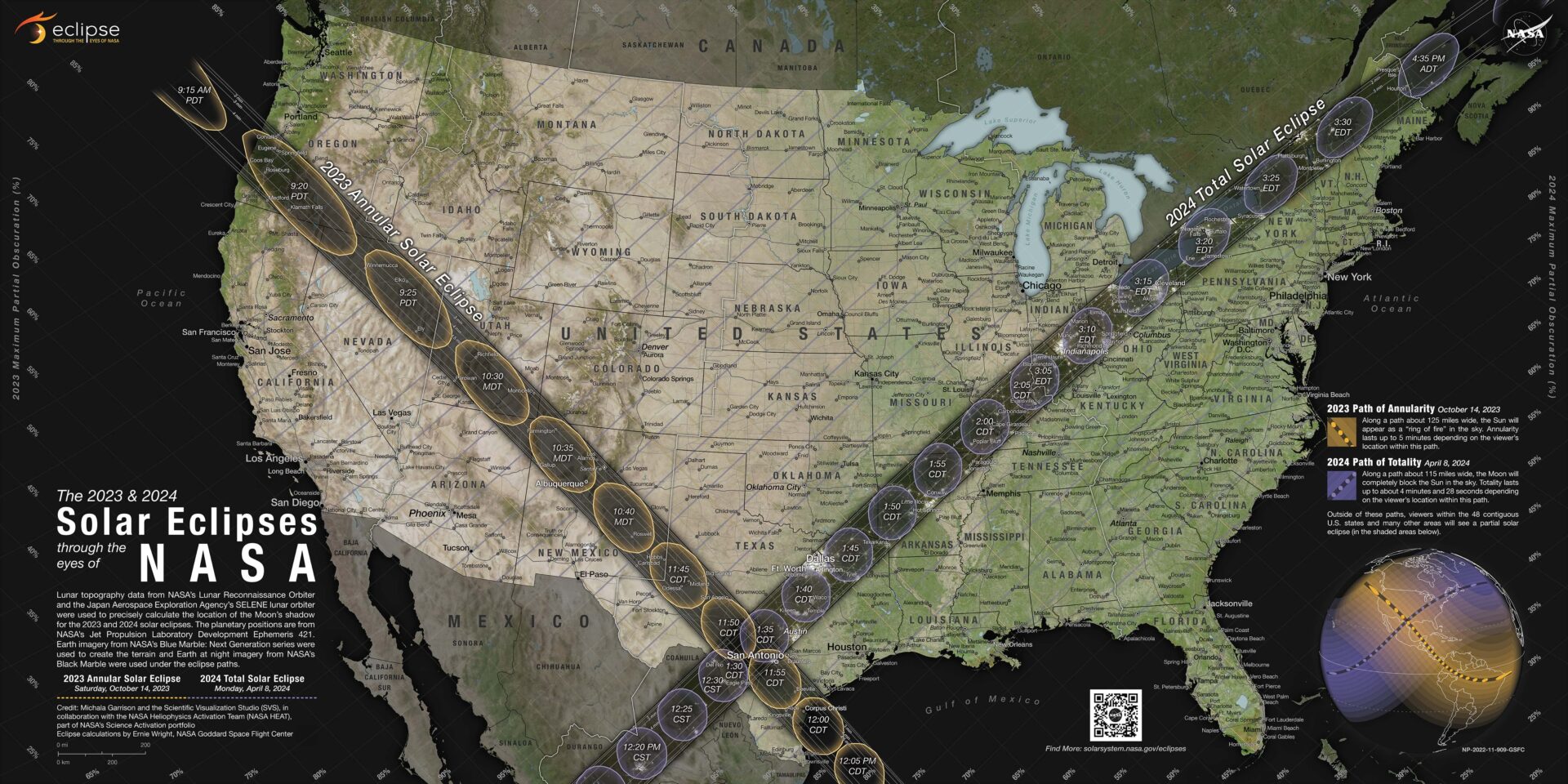
Eclipse Facts Sheet
Describes how a solar eclipse happens when the Moon moves between the Sun and Earth and about different types of solar eclipses, eclipse safety, and eclipse activities.
The post Stop the Summer Slide: 6 Engaging Resources to Keep Kids Learning appeared first on Discovery Education.
]]>



The post Stop the Summer Slide: 6 Engaging Resources to Keep Kids Learning appeared first on Discovery Education.
]]>The post Shifting to Student-Centered Instruction appeared first on Discovery Education.
]]>The post Shifting to Student-Centered Instruction appeared first on Discovery Education.
]]>The post Sparking Student Interest in Space appeared first on Discovery Education.
]]>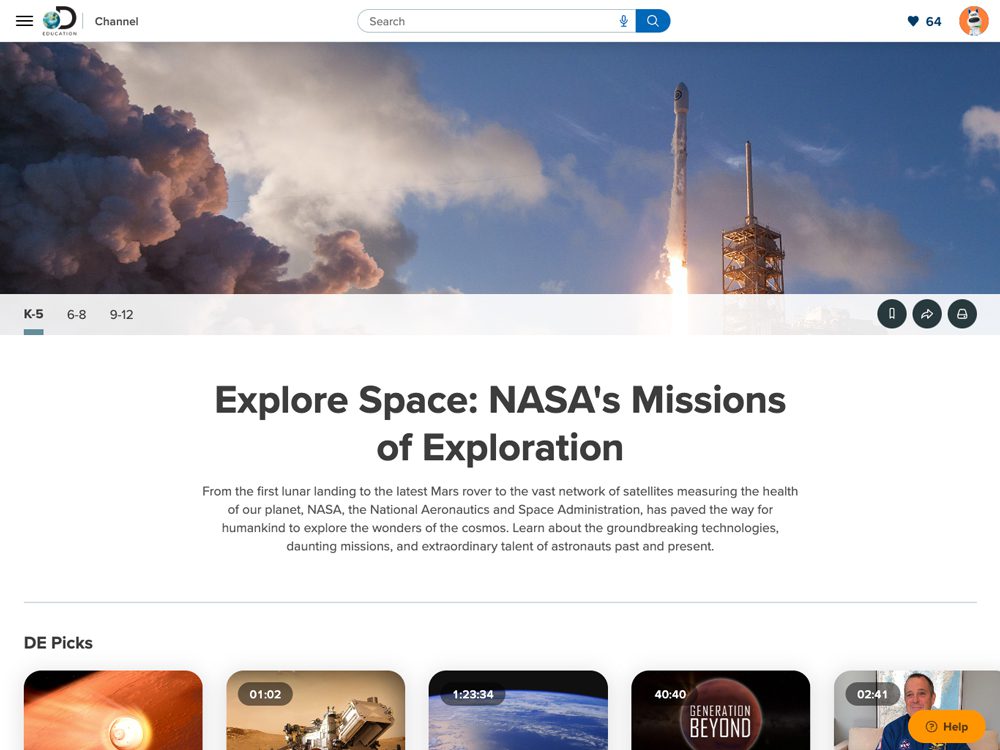



The post Sparking Student Interest in Space appeared first on Discovery Education.
]]>The post Creating a “Cool” Career Studying Polar Bears appeared first on Discovery Education.
]]>


The post Creating a “Cool” Career Studying Polar Bears appeared first on Discovery Education.
]]>The post Making the Move to Digital Resources appeared first on Discovery Education.
]]>


The post Making the Move to Digital Resources appeared first on Discovery Education.
]]>The post Giving Students a Voice with SOS Strategies & Science Techbook appeared first on Discovery Education.
]]>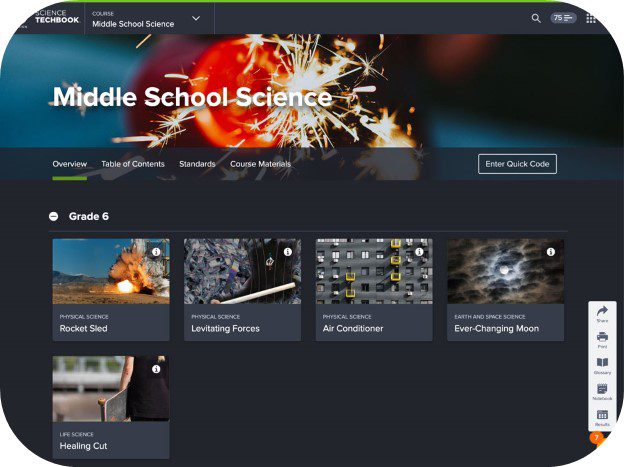


The post Giving Students a Voice with SOS Strategies & Science Techbook appeared first on Discovery Education.
]]>The post Engaging STEM Activities to Extend Learning appeared first on Discovery Education.
]]>


The post Engaging STEM Activities to Extend Learning appeared first on Discovery Education.
]]>The post Developing Disciplinary Literacy Across Core Subjects appeared first on Discovery Education.
]]>
Extensive work has been done on elucidating the skills historians and other social scientists use to do their work. Broadly speaking, historians study documents and other artifacts from the past to develop and communicate an understanding of what was occurring at a particular time in history. They are keenly aware that documents:
Historians want to know more than what happened in the past. They also want to understand why certain events happened. Why did people do what they did? How does what happened in the past connect to and inform the present? What does the past tell us about what might happen in the future?
Key ideas in the Grades 6-12 Literacy in History/Social Studies standards for reading include:
The writing standards do not differ by content area, but assume that the writing will be specific to the content of the discipline. The following is a sample of expectations from the writing standards. These examples are for students in grades 6 to 8.
Many social studies teachers address the literacy standards as they teach social studies content by structuring their classes with a focus on social science inquiry and asking questions. They present students with primary source materials and guide students to ask important questions related to the documents they are reading. The Stanford History Education Group has developed a free online curriculum entitled, “Reading Like a Historian.”[3] Each lesson in the curriculum is focused on a central question and includes a set of primary source documents. Students are expected to investigate the set of documents using historical thinking skills like sourcing, contextualizing, close reading, and corroboration.
Students using the Stanford materials improved their reading comprehension, historical reasoning skills, and factual recall.[4] A major strength of the Stanford materials is that they provide a model that school districts and individual teachers are using to develop additional instructional materials. The historical thinking skills listed above certainly help students who wish to become historians, but they also provide students with reasoning skills that serve them well in a wide range of situations.
The traditional science class has included a number of assignments that appear on the surface to replicate the kinds of reading and writing that scientists do. Students read laboratory investigations to prepare for labs. They develop lab reports to tell about experiments they conducted in class. However, many science educators have worked to eliminate the need for students to struggle with the literacy demands of science laboratory work because they wanted to focus on laboratory skills and the science content.
Well-taught science classes have always emphasized collecting and analyzing data. Students have been taught that scientists respect data; they spend time developing powerful representations of data such as graphs and charts; and they value being able to replicate an experiment and get data that is similar to the data collected by other scientists who did the same experiment. But science classrooms have not always emphasized the literacy skills that are an integral part of the work of scientists.
In their professional work, scientists…
Key ideas in the Grades 6-12 Literacy in Science and Technical Subjects standards for reading include the following:
Although the writing standards are the same as for history/social studies, they assume that the writing will be specific to science and technical content. The following is a sample of expectations from the writing standards. These examples are for students in grades 9 to 10.
Engaging students in well-designed scientific inquiry in the classroom allows them to develop the skills and thought processes of scientists. Helping students identify areas of interest within science and then working with them to conduct in-depth research over time lets them gain detailed insight into how knowledge develops. Teaching students how to question evidence and the logic of others helps them develop a set of skills that serve them well beyond the science classroom. For example, these same reasoning skills can be used in making personal health decisions, in making financial decisions, as well as in making decisions related to civic and political issues.
During the first year of their Carnegie-sponsored research on disciplinary literacy, the Shanahans (see footnote on page 1) worked with experts in history, mathematics, and chemistry to understand more about the specialized literacy skills of each discipline. The mathematicians in the study emphasized the importance of reading and re-reading text. They spoke to the importance of specialized vocabulary and understanding that the meaning of symbols may change depending on the context. Mathematicians also spend much of their professional time reading and interpreting graphs, charts, and tables.
A major goal of the Common Core State Standards for Mathematics is to ensure that students spend time thinking about and solving worthwhile mathematics problems. The goal is to have students develop the habits of mind of the mathematician. The Standards for Mathematical Practice[6] identify eight skills that teachers at all levels should seek to develop in students. The standards state that mathematically proficient students:
In the mathematics classroom, students should have opportunities to address the standards for Grades 6-12 Literacy in Science and Technical Subjects, but the emphasis should be on the mathematics practices. Mathematics educators see practices 1 and 6 as reflecting overarching habits of mind of the mathematician. Many see practices 2 and 3 as practices that all contributing members of the mathematics community use on a regular basis as they communicate with others. They see practices 4 and 5 as being particularly relevant to how people use mathematics in many work settings, while practices 7 and 8 relate more closely to the work of theoretical mathematicians.
When students work with rich, real-world problems, they have the opportunity to use and develop many of the mathematics practices. The modern mathematics class requires students to collaborate and work with others to solve problems. Teachers give students opportunities to discuss different approaches to the same problem and ask them to think and talk about whether the answer makes sense in a real-world setting. Students also discuss whether or not their approach yielded a correct answer. Was the approach efficient? Can it be generalized, and will it work for all numbers? Why or why not? Through rich discussion, students develop mathematical thinking and reasoning skills as well as the ability to critique their own reasoning and the reasoning of others. Again, the reasoning and thinking skills serve students well in a wide range of settings and situations.
The post Developing Disciplinary Literacy Across Core Subjects appeared first on Discovery Education.
]]>The post Connecting Cross-Curricular Content through STEM Projects appeared first on Discovery Education.
]]>

The post Connecting Cross-Curricular Content through STEM Projects appeared first on Discovery Education.
]]>The post Bringing ‘Non-STEM Letter’ Teachers into STEM Teaching appeared first on Discovery Education.
]]>


The post Bringing ‘Non-STEM Letter’ Teachers into STEM Teaching appeared first on Discovery Education.
]]>

