STEM | Discovery Education Nurture Curiosity Mon, 28 Jul 2025 20:25:19 +0000 en-US hourly 1 https://wordpress.org/?v=6.8.3 Taking Steps Toward Stellar Careers https://www.discoveryeducation.com/blog/future-ready-students/taking-steps-toward-stellar-careers/ Thu, 01 May 2025 16:22:11 +0000 https://www.discoveryeducation.com/?post_type=blog&p=190081 A student’s journey from kindergarten through graduation starts with small, but consistent steps. As they take each step, their interests in different topics will spark. And when those interests are nurtured and encouraged, even the smallest steps in career exploration can be a giant leap toward finding the perfect career! Teachers have a unique opportunity […]

The post Taking Steps Toward Stellar Careers appeared first on Discovery Education.

]]>

A student’s journey from kindergarten through graduation starts with small, but consistent steps. As they take each step, their interests in different topics will spark. And when those interests are nurtured and encouraged, even the smallest steps in career exploration can be a giant leap toward finding the perfect career!

Teachers have a unique opportunity to help students explore their interests and turn them into long-term learning opportunities or even their future careers! The DE team sat down with three NASA scientists about their journey to NASA and what advice they have for students who may be interested in pursuing a career in astronomy or aeronautics.

Meet the NASA Scientists

nasa jamie favors

Jamie Favors

I am the Director of the NASA Space Weather Program at NASA headquarters. As we prepare for more human exploration, I help plan how to protect our explorers from the sun, no matter how far or close they are to the sun during their mission. We work on all the things we have here on Earth that monitor the sun, and work with satellites orbiting Earth to make sure they collect data.

nasa kelly korreck

Dr. Kelly Korreck

I am the Program Manager for the Agency for the 2023-2024 solar eclipses at NASA headquarters. In my position, I’m involved with all the different aspects of the eclipse—I work with folks who are building rockets to send up to into the eclipse, and work on citizen science projects, which everyone can do. I also talk about the eclipse to the media and on social media.

nasa alex lockwood simpson

Dr. Alex Lockwood Simpson

I am the Strategic Content Integrator for the Science Engagement and Partnerships Division. I am currently building infrastructure to support engagement for the 2024 solar eclipse across the United States. I am also leading all of NASA’s opportunities for in-person engagement, which will involve millions of people of all ages!

The Journey to NASA

Finding the perfect career isn’t always a straight or obvious path—it can be surprising or even inspiring! Read on to hear about how all three scientists became interested in space, how they were encouraged along the way, and why they were inspired to pursue a career with NASA!

Jamie Favors: I was very young when I begged my mom to buy me a book full of beautiful NASA satellite images and pictures of astronauts in the space shuttle. I still have this book at home today! Along the way, I learned that every challenge is a new opportunity. I’m originally from the Gulf Coast of Mississippi, and while I was attending college away from home, Hurricane Katrina happened. The hurricane impacted our homes and our family, so I transferred to a school closer to home. One day as I walked through the physics building, I noticed a pamphlet about internships with the NASA logo. With no real expectation that I actually would get in, I applied. 17 years later, I’m still here at NASA headquarters, doing things well beyond what I ever imagined at that point! As much as I can look back and remember some of the pain brought on by Hurricane Katrina, so much of it led me down this path to NASA.

Dr. Kelly Korreck: A family camping trip actually sparked my interest in space! I was about 8 years old when we went, and that’s when I saw the Milky Way for the first time. I left that trip wanting to learn more, and after that, I spent a lot of time in our local library reading every astronomy book I could find. Many different people encouraged me—my grandmother was very supportive and I also had great teachers. Specifically, I remember my 5th grade teacher, Mrs. Haley. I was in her class around the time of Haley’s Comet, and she made science relatable for us with fun experiments. The rest of my journey looks like a straight line: I got my degrees from the University of Michigan and I got a post-doc, a time after your doctorate degree where you study more before moving on as a research scientist. All of that was me finding my way! I kept asking myself, “What is the coolest thing that I want to do? Build a rocket? Go to Japan to work on an X-ray telescope?” I just kept following the next interesting project until I found the Parker Solar Probe, the probe that is going to be closest to the sun!

Many different teachers encouraged me or told me, “You can do this!” and, “You can have this as a career!” It really took a lot of people to encourage me to be a NASA scientist
de quote left square filled
Dr. Kelly Korreck
NASA Scientist

Dr. Alex Lockwood: My interest in space started in high school. I had always looked up at the sky, but I never thought that it was something I could study! In high school, I took an astronomy class where we mapped the constellations on the ceiling of our classroom. I began to wonder how I could continue my interest in space and found that there were jobs studying space. I went to college to study physics and astronomy, then I got my PhD in planetary sciences. I left research and wanted to pursue communications and engagement and outreach because I wanted to contribute to sharing aspiration and science with other people. I took a job in the Middle East to gain some communications experience, and then I came back to the US and started working on NASA’s Joint Polar Satellite System before switching to the James Webb Space Telescope. From there, an opportunity to support NASA science more broadly came up, and that led me to my current position!

Advice for Aspiring Astronomers

If students have set their sights on the stars, their goals can feel very far off from the four walls of your classroom! The NASA scientists each have advice for students interested in pursuing a career in astronomy or have big career aspirations.

Jamie Favors: Be ready to learn! The best surprise that has come from working with NASA is all of the continual learning. You interact with people you never thought you would, working on things you never even knew about. There are often interesting lunch talks about different studies, like the “twin study.” A NASA research team shared how they studied a set of twins. One twin was an astronaut who lived on the space station for a year while his twin brother stayed here on Earth, and the study measured them for that year to see how they changed. Here at NASA you’re always so close to things that are really captivating!

Dr. Kelly Korreck: Follow your passions! There are so many ways to be a NASA scientist! You can even be a NASA scientist right now by participating in a citizen science project. You can find these projects online, which give the opportunity to do science related to NASA. When working toward a big goal like working at NASA, stay consistent about your passions, because if you’re not passionate about it, it’s not going to shine through!

Dr. Alex Lockwood: Work hard! I didn’t think that I had what it took, but there are many  opportunities in NASA that aren’t just being a scientist. Having a science background at any level helps! Whether that’s high school physics, a bachelor’s degree in astronomy, master’s, or PhD, any amount of science that you know will help you succeed in NASA. If you work hard and you’re doing something that you love, you’ll find a place to succeed and a way to get there. It’s not always going to be the path that you thought it was going to be, and that’s OK!

The school year is packed with exciting opportunities to help students research new career paths or harness students’ interests into further learning. Encourage your students to think about what topics they find interesting and help them leap forward to a future career goal!

Inspire the next generation of NASA scientists with tips from Tim Needles, innovative STEM education leader

The post Taking Steps Toward Stellar Careers appeared first on Discovery Education.

]]>
nasa-jamie-favors nasa-kelly-korreck nasa-alex-lockwood-simpson de-quote-left-square-filled
Spring 2025 Virtual Field Trip Lineup https://www.discoveryeducation.com/blog/teaching-and-learning/spring-2025-virtual-field-trip-lineup/ Tue, 08 Apr 2025 20:24:45 +0000 https://www.discoveryeducation.com/?post_type=blog&p=186836 This Spring, supercharge students’ curiosity and wonder with an incredible lineup of Virtual Field Trips! We’ll be exploring super storytelling with DC and Warner Bros. Studios, experimenting with magnets with Sesame Workshop and the U.S. National Science Foundation, and getting pumped up about health with the NBA.  Check out the line up below and be […]

The post Spring 2025 Virtual Field Trip Lineup appeared first on Discovery Education.

]]>
This Spring, supercharge students’ curiosity and wonder with an incredible lineup of Virtual Field Trips! We’ll be exploring super storytelling with DC and Warner Bros. Studios, experimenting with magnets with Sesame Workshop and the U.S. National Science Foundation, and getting pumped up about health with the NBA

Check out the line up below and be sure to save the date so your students don’t miss out on these incredible interactive learning experiences!

Check Out the Spring 2025 Premiere Schedule

From supercharged storytelling to hanging with NBA greats, we’ve got something for everyone. Sign up today to gain access! Every Virtual Field Trip can be watched on-demand at any time, starting on the premiere dates. 

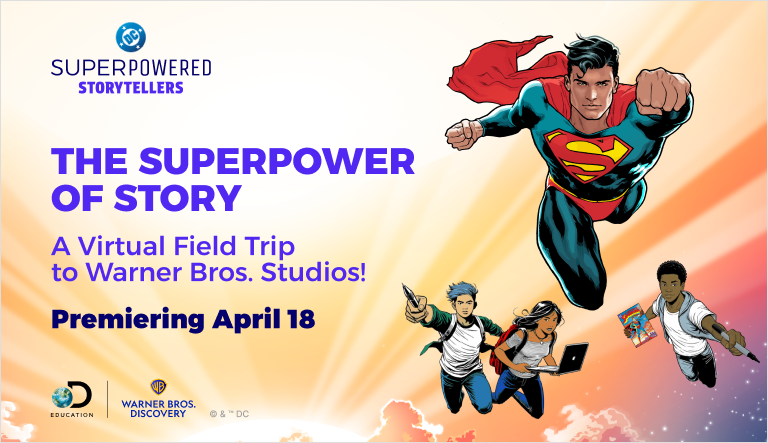
The Superpower of Story: A Virtual Field Trip to Warner Bros. Studios

Premieres Friday, April 18
Grades 6-12

Transport students on this exclusive Virtual Field Trip to DC headquarters at Warner Bros. Studios in Burbank, CA! They’ll step into the world of DC Super Heroes, uncovering the secrets of how stories evolve from bold ideas to iconic comics to jaw-dropping blockbuster films. Sign up today to unlock access starting on April 18!

Meet the Magnets: A Virtual Field Trip to the U.S. National Science Foundation Mag Lab

Premieres Tuesday, May 6
Grades: 1-5

Join Discovery Education and Sesame Workshop as we explore the National High Magnetic Field Lab! Meet the Magnets Virtual Field Trip helps young learners connect STEM concepts to the world around them, and includes standards-aligned resources for teachersSign up now to unlock access starting on May 6! 

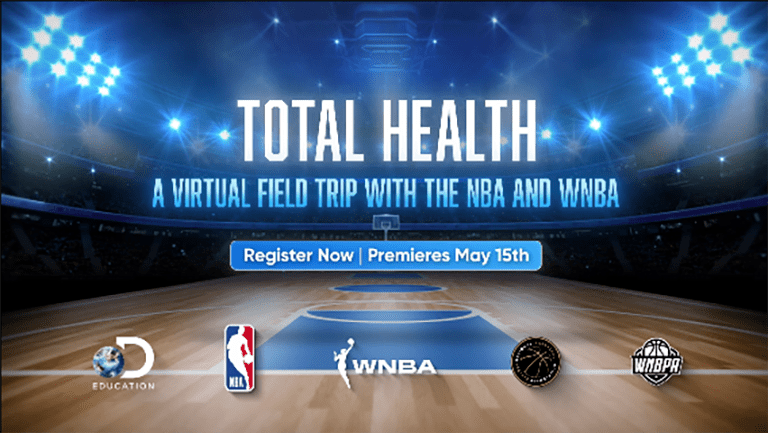
Total Health: A Virtual Field Trip with NBA and WNBA

Premieres Thursday, May 15
Grades: 3-8

Dive into total health with an exclusive behind-the-scenes look at how players from the NBA Timberwolves and WNBA Lynx maintain their health on and off the court! Students will get special access to state-of-the-art facilities, learn from health and fitness experts, and meet Timberwolves Center Rudy Govert! Sign up now to unlock access starting on May 15.

In Case You Missed It

Check out the Virtual Field Trips that are currently available to watch on-demand!

Unleashing Life Skills with Golf: A Virtual Field Trip to LIV Golf's Team Championship

Premieres Nov. 21
Grades: 6-8

Students learn about the surprising ways golf can teach them about fundamental life and career skills of communication, problem-solving, and teamwork.

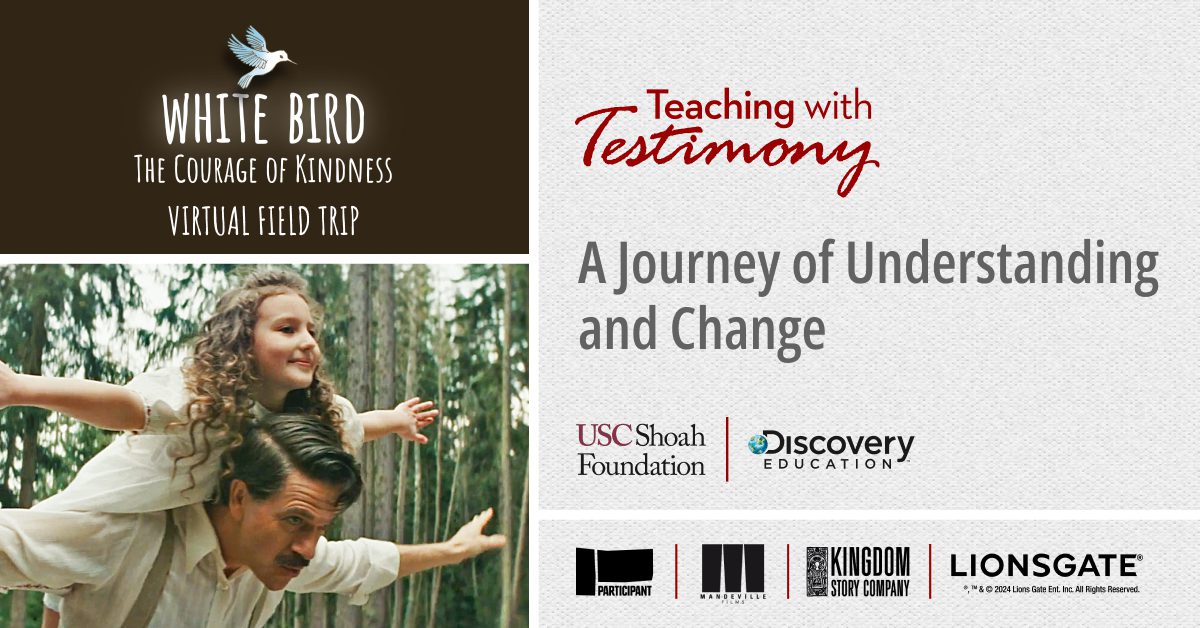
White Bird: The Courage of Kindness Virtual Field Trip

Grades: 6-12

White Bird: The Courage of Kindness offers students a multi-media journey to explore kindness, courage, and resilience. Through historical testimonies, fictional characters from the film White Bird, and contemporary perspectives, students learn how kindness impacts our world.

Find more Virtual Field Trips available on-demand!

The post Spring 2025 Virtual Field Trip Lineup appeared first on Discovery Education.

]]>

Strategies for Encouraging Girls to Explore STEAM https://www.discoveryeducation.com/blog/future-ready-students/strategies-for-encouraging-girls-to-explore-steam/ Sun, 06 Apr 2025 19:20:22 +0000 https://www.discoveryeducation.com/?post_type=blog&p=183623 Educators, administrators, and corporate leaders all agree: we need to encourage girls to explore STEAM skills and consider STEM careers for their futures. But how? We asked members of the Discovery Educator Network to share content, programs, and ideas they have found to be successful in bringing more girls to the world of STEAM! Infusing STEAM […]

The post Strategies for Encouraging Girls to Explore STEAM appeared first on Discovery Education.

]]>
Educators, administrators, and corporate leaders all agree: we need to encourage girls to explore STEAM skills and consider STEM careers for their futures. But how? We asked members of the Discovery Educator Network to share content, programs, and ideas they have found to be successful in bringing more girls to the world of STEAM!

Infusing STEAM Content in All Classrooms

girls in STEAM tile jpg

A major goal of the K-12 experience is to prepare students for their next step in life. So, when thinking about how to encourage girls to explore STEAM topics or pursue STEM careers, bringing these concepts into the classroom is top of mind for educators. Exposing students to STEAM experiences frequently will help them see how their personal interests align with process used in STEM careers, like researching concepts, testing ideas, and sharing results.

Check out these top four recommendations from the DEN for infusing STEAM into all classrooms:

  1. Offer a variety of opportunities for creative expression in the planning phase of projects. Consider how students can draw, sketch, or creatively outline plans for projects to help bring the “A” of “STEAM” into the learning process early. Some students may choose to create sketch notes from their research on a topic while others may choose to draw a prototype for a model they will create later in the process—offering a variety of arts-forward options for planning helps students connect all letters of STEAM throughout a project.
  2. Find creative outlets for students to share their learning. On the tail end of a project or unit, allow students to use an artistic method—like designing posters, writing songs, performing skits, or creating digital visual aids—as an opportunity for them to reflect on and share their learning. STEAM learning can inspire innovation—sharing the successes should be an exciting part of the process and easily lends itself to artistic expression.
  3. Designate a Maker Space for students to work on independent and collaborative projects. Creating a Maker Space in your school or classroom can sound overwhelming, but it should just be a place where students can gather to collaborate on projects and access a variety of art supplies. It can be a space in a common area such as the media center or just a corner in a classroom!
  4. Find opportunities for all teachers to utilize content or concepts. Collaborative planning can help all teachers find inspiration for future lessons. For instance, if your students are studying laws of motion in science class, the Physical Education teacher may have some motion-focused games where students can test the hypotheses and theories introduced in science class!

STEAM lessons will pave the way for new innovations and collaborative experiences, and it can also help girls picture themselves as scientists, tech-wizards, artists, mathematicians, and engineers. Use content that puts successful STEM women in the spotlight so students can envision how their interests can align with a career they may not have considered or even heard of before.

Project STEM's course through the Amazon Future Engineers' program isa great way to showcase women in STEAM. I also incorporate this content for 6th grade, which includes a lot of videos and resources that discuss girls in STEAM and provide examples of accomplished women in STEAM fields.
de quote left square filled
Alexis Teitelbaum
PreK-6 Technology Explorations Teacher, PA

Explore STEM Career Resources

mastercard jpg

Girls4Tech

Girls4Tech provides resources to educate, inspire, and equip young girls with the skills and confidence they need to envision themselves as future professionals in STEM fields.
amazon career tours tile jpg

Career Tours by Amazon

Career Tours are free, interactive virtual field trips that showcase the real-life people and cutting-edge technology behind Amazon’s innovations.
ifthen jpg

If/Then STEM Professionals

Have you ever wondered who creates your favorite video game, or protects the animals in the jungle, or works to cure cancer? The IF/THEN® Initiative is committed to showing young girls exactly what a scientist looks like.

Five Ideas for Dynamic STEAM Programming

Finding space for girls to comfortably explore STEAM topics and collaborate with other girls can mean extending your programming in new ways through clubs, contests, and special events. Read on for five ideas from the DEN to make your STEAM programming fun and flexible for girls!

We cannot hope that girls turn their graduation tassel and suddenly take an interest in STEAM topics. Instead, we need to find ways for them to explore STEAM early, frequently, and in encouraging settings. STEAM learning can be exciting for all students when there are clear connections between the different letters and students’ interests!

Learn More about What Educato Leaders are Saying

The post Strategies for Encouraging Girls to Explore STEAM appeared first on Discovery Education.

]]>
girls-in-STEAM-tile.jpg de-quote-left-square-filled mastercard.jpg amazon-career-tours-tile.jpg ifthen.jpg
Reflections on a Conversation about Advancing STEM Opportunities for Girls https://www.discoveryeducation.com/blog/future-ready-students/reflections-on-a-conversation-about-advancing-stem-opportunities-for-girls/ Sun, 06 Apr 2025 19:00:16 +0000 https://www.discoveryeducation.com/?post_type=blog&p=183512 The need for STEM jobs is expected to grow by 11% through 2032, creating more than 1 million STEM occupations in the U.S. alone. With women making up half of the college-educated workforce, but only 34% of the STEM workforce, now is the time to identify and address barriers to STEM education for girls and […]

The post Reflections on a Conversation about Advancing STEM Opportunities for Girls appeared first on Discovery Education.

]]>

The need for STEM jobs is expected to grow by 11% through 2032, creating more than 1 million STEM occupations in the U.S. alone. With women making up half of the college-educated workforce, but only 34% of the STEM workforce, now is the time to identify and address barriers to STEM education for girls and young women. Research by The National Girls Collaborative Project shows that girls’ achievement levels in math and science are the same as boys. Yet there is a notable difference in their interests, confidence, and sense of belonging in the STEM areas. Two key questions come to mind: 

1. How can we encourage girls to pursue their interests in STEM?  
2. How can we close this clear gap in STEM opportunities?
what does curiosity look like png

District and Corporate Efforts: A Combined Approach

During Discovery Education’s webinar in partnership with EducationWeek, Women Leaders Advancing STEM Opportunities for Girls, a panel of district and corporate leaders shared their combined efforts to close the STEM gap for girls and encourage them to explore their STEM interests. Dr. Monique Darrisaw-Akil, Superintendent of Schools at Uniondale Free School District, Dr. Elizabeth Alvarez, Superintendent at Forest Park School District, and Susan Warner, Vice President of Community Engagement at Mastercard, Girls4Tech all came together to share insights from their experiences encouraging and advancing STEM opportunities for girls.

The webinar underscored the power of collective action among corporations, districts, and educators. It has become increasingly apparent that increasing girls’ access to the STEM career pipeline requires a concerted, multi-dimensional approach. The panelists shared some ways corporate and educational partners can support one another: 

4 Ways Corporate and Educational Partners Can Support Each Other

  1. Retire old STEM models.

    STEM is more than math and science; it is a multidisciplinary approach to how students learn and understand the world around them. There are many skills people need in STEM careers—communication, logic, creativity, and analytics to name a few. We can help learners hone these skills through different resources and activities, like those available through Discovery Education’s STEM Careers Coalition

  2. Engage students early.

    The panelists stressed the importance of getting girls involved in STEM from an early age, leveraging the power of curiosity, exploration, and play. Early engagement can take various forms – science fairs, robotics clubs, family programming, and community events. Plus, these are materials and moments that corporate partners can help develop for the K – 12 space.  

  3. Elevate STEM industries.

    The effect of seeing someone who looks like you in a field cannot be underestimated. Districts and corporations need to work together to increase representation of women in STEM. It’s critical that teachers showcase more women STEM leaders in everyday lessons to shift perceptions of what a typical STEM professional looks and sounds like. And when districts collaborate with corporate partners, there’s more opportunity to bring guest speakers, mentors, and hands-on engagement with successful women in STEM directly into our classrooms as well as afterschool programs. 

  4. Walk the talk.

    If we want more girls to enter STEM careers, it’s essential that we introduce them to the wide variety of STEM careers and the growing demand for these jobs. Educators need to dedicate time for students to explore careers, and corporate partners need to support educators by developing and providing those classroom resources. Webinar speaker, Susan Warner, shared that we should provide girls with hands-on experiences that allow them to learn about a wide variety of STEM industries, such as data science, AI, data security, cyber security, computer science, and coding. For example, Discovery Education’s Career Connect provides educators with the opportunity to infuse careers into their instruction by connecting their classrooms directly with industry volunteers. These connections nurture student curiosity and empower students to visualize themselves in the many career paths that power our world. 

Discovery Education's Corporate Education Partnerships

SCC Facebook 1200x628a png

Discovery Education strongly believes that the K – 12 system and corporate landscape are aligned in regard to diversifying and expanding the STEM workforce. The work we’re doing with our corporate partnerships is bridging classrooms to industries and closing the STEM gap for girls. For example, our partnership with Mastercard’s Girls4Tech program works to close the gap between opportunity, awareness, and readiness by providing schools and community organizations with free resources to educate, inspire, and equip young girls with the skills and confidence they need to envision themselves as future professionals in STEM fields. 

Additionally, the STEM Careers Coalition (SCC) works to support the STEM workforce by providing educators with accessible, ready to use resources and content and creating equitable opportunities for students to explore STEM. By bridging invested corporate and non-profit partners directly with schools, the SCC is uniquely positioned to create conditions for girls to see themselves in the future STEM workforce.  

While it’s undeniable that more work needs to be done, the recent webinar highlighted the power of districts and corporations working together to advance STEM opportunities for girls. I left this webinar feeling inspired and excited about the work to come.

The post Reflections on a Conversation about Advancing STEM Opportunities for Girls appeared first on Discovery Education.

]]>
what-does-curiosity-look-like.png SCC-Facebook-1200x628a.png Picture of Amy Nakamoto
Connecting Cross-Curricular Content through STEM Projects https://www.discoveryeducation.com/blog/teaching-and-learning/connecting-cross-curricular-content-through-stem-projects/ Fri, 04 Apr 2025 19:33:55 +0000 https://www.discoveryeducation.com/?post_type=blog&p=182987 A 2018 study by the International Journal of STEM Education found that when students had the opportunity to participate in STEM activities, they were engrossed in the learning and inspired to think about potential real-world applications for the concepts they explored. Encouraging students to research topics, apply critical thinking skills, and generate solutions to real-world problems […]

The post Connecting Cross-Curricular Content through STEM Projects appeared first on Discovery Education.

]]>

A 2018 study by the International Journal of STEM Education found that when students had the opportunity to participate in STEM activities, they were engrossed in the learning and inspired to think about potential real-world applications for the concepts they explored. Encouraging students to research topics, apply critical thinking skills, and generate solutions to real-world problems can help bring new meaning to what students have learned.

Cross-curricular STEM projects allow students to represent their learning in exciting ways, while also connecting the concepts studied in different subjects. And along the way, they can make (and learn from) mistakes! Here to share her ideas for creating cross-curricular STEM projects is DEN STAR and Louisiana teacher, Mindy Kernahan.

Extending Learning with STEM Projects

STEM projects can create relevant learning experiences by encouraging students to explore local problems within their community, while practicing cross-curricular skills. For instance, a science teacher may propose a STEM project centered on investigating and developing solutions related to a local invasive species affecting their local environment. Students can conduct research, propose solutions, and develop criteria for testing their proposed solutions. While these project steps are related to a scientific process, they also require students to practice reading, writing, and math skills and ultimately, make a difference in their community. 

One great way to make a clear cross-curricular connection is by proposing, generating, and testing solutions found in novels or historical events that are being studied in English Language Arts or Social Studies class. The novel A Long Walk to Water by Linda Sue Park could certainly lead to a STEM project after reading and discussing the novel Students can investigate and develop solutions that ensure access to water for all communities, which aligns to the content of the novel, a social/community application, and a scientific study. All great makings of a STEM project!

Discovery Education offers fantastic resources to guide and support educators in incorporating cross-curricular STEM activities in the classroom. For example, the STEM Unplugged video series highlights ways that professionals develop solutions to problems and provides skills that students can apply in all facets of life. The STEM Forward Channel and the Future U. by Boeing Channel both make it easy to incorporate interactive and hands-on STEM activities, with virtual field trips and real-world career profiles that can be used in an exploration phase of a new project.

Assessing Student Progress

Cross-curricularSTEM projects can create innovative ways to assess student learning. Using rubrics for outlining and assessing specific criteria within the STEM project can help students have a clear understanding of what skills will be assessed and guide teachers in giving clear feedback. Additionally, peer- and self-reflections allow students to take ownership of their learning and reflect on areas where they are thriving and consider areas where they may need help. Student-created project portfolios give students an opportunity to practice organization skills while assessing their participation and learning. Throughout the school year, there are times to use traditional tests to assess mastery but using projects as unit assessments bring something new to the learning cycle!

Whether it’s a mini-skills lesson or an integrated learning project, incorporating STEM activities into cross-curricular projects keeps students engaged and building knowledge in all subject areas.

Mindy Kernahan headshot scaled jpg

Mindy Kernahan

Mindy Kernahan earned a Master of Education in special education with a focus on gifted curriculum and instruction from Southeastern Louisiana University. She is currently in her third year as a Talented and Gifted Teacher for primary and middle school students at multiple schools in Louisiana. With eleven years of experience as a classroom teacher, she taught in the academically gifted setting and served in multiple leadership roles to develop curriculum aligned to gifted learners’ needs in multiple subject areas as well as participated as a member of multiple schools’ leadership teams. Additionally, Mindy implemented a service-learning project with fourth grade gifted students in science through the Joe W. and Dorothy Dorsett Brown Foundation in collaboration with Lake Pontchartrain Conservancy and Mandeville Public Water Works. Most recently, she participated as a member of the Believe and Prepare Science Collaborative for the 2022-2023 school year, was a Coastal Fellow for the 2021-2022 school year, and is currently a DEN STAR and a member of the Louisiana Science Teachers Association and the National Marine Educators Association.

The post Connecting Cross-Curricular Content through STEM Projects appeared first on Discovery Education.

]]>
future-u.jpg Mindy-Kernahan-headshot-scaled.jpg
Computers, Coding, and Careers https://www.discoveryeducation.com/blog/teaching-and-learning/computers-coding-and-careers/ Fri, 04 Apr 2025 19:33:54 +0000 https://www.discoveryeducation.com/?post_type=blog&p=182984 Teaching technology is a wonderful and sometimes tricky endeavor. There is so much information and it’s always changing. While everything about my favorite subject is fun, in my 20-plus years of teaching computer science in a K-8 school, the one thing that has been the most exciting for me is Coding. Coding has opened the […]

The post Computers, Coding, and Careers appeared first on Discovery Education.

]]>

Teaching technology is a wonderful and sometimes tricky endeavor. There is so much information and it’s always changing. While everything about my favorite subject is fun, in my 20-plus years of teaching computer science in a K-8 school, the one thing that has been the most exciting for me is Coding. Coding has opened the door to a variety of new activities for students, including robotics, 3D printing, and much more! And, there are so many fascinating career paths, especially ones that students are fired up about, that stem from this one subject. So, of course I'm always looking for engaging ways to share this topic with students and the careers that fall under it. And what better time to start than Computer Education Week!

How to get middle schoolers excited about coding.

Middle school students, as most teachers know, require a bit more finesse to keep their attention. Traditionally, I roll out Coding in December. I have been doing this for nearly 10 years and wanted to bring a spark to the curriculum for my older students. My thoughts centered on real-world careers that might be interesting for them as they prepare for high school.

Discovery Education has the perfect combination of tools and resources to help me deliver my ideas. For a particular project, I used the Studio tool to put together a series of topics related to computing and coding, while dedicating a second page to careers. I also used short videos—just enough to get students’ attention and draw them in—along with images and articles. Discovery Education offers a lot of learning resources to choose from in creating the Studio Board, and the variety of resources covers a host of interests.

I also used the SOS Activity 25 Things You Didn’t Know as a reflection piece. Students watched the Objective video first and then were given a week to explore the Board and its varied topics. As a wrap up they were tasked with creatively summarizing 25 things they learned from the Board.

Setting the stage for student agency.

The best part of the project was the engagement and discovery (pun intended) of the students. My favorite phrase became, “I didn’t know that!”  At some point in every class, I was asked, “Did you know you need coding for this cool job?” to which I responded, “No, tell me.”  I encouraged students to follow up on anything that really interested them in a personal project. The takeaway for my students was a broader sense of careers they never knew existed. Overall, it was a successful lesson for both me and my students.

Creating lessons for such a diverse curriculum is an exciting part of my teaching. I am passionate about my subject area and want others to see its value as well. Discovery Education has given me the tools to do just that—share with students and other teachers.

December is upon us again and I am excited to start a month (or more) of Coding!

Tell us how you’re using @DiscoveryEd to celebrate #CSEdWeek!

About the Author

Suzanne Casey, Technology Coach/Teacher, NJ

Suzanne Casey is a Technology teacher, Coordinator, and Coach at a PreK-8 private school in Moorestown, New Jersey. She’s been teaching for 21 years and was previously a New Jersey Teacher of the Year. Suzanne has been a member of the Discovery Educator Network since it started and loves to share its benefits in and out of the classroom!

The post Computers, Coding, and Careers appeared first on Discovery Education.

]]>

DE-Blog-Computers-Coding-Careers-Studio.jpg Blog-25-Things-You-Didnt-Know-Student-Activity-Studio.jpg Suzanne Casey, Technology Coach/Teacher, NJ
Bringing ‘Non-STEM Letter’ Teachers into STEM Teaching https://www.discoveryeducation.com/blog/teaching-and-learning/bringing-non-stem-letter-teachers-into-stem-teaching/ Fri, 04 Apr 2025 19:33:51 +0000 https://www.discoveryeducation.com/?post_type=blog&p=182930 No matter how many times we say STEM is “strategies that engage all minds” it is still viewed as simply science, technology, engineering, and math. How do we include ‘non-STEM letter’ teachers in STEM lessons to showcase the strategies that really do engage all minds? How do we increase their confidence in using project-based learning […]

The post Bringing ‘Non-STEM Letter’ Teachers into STEM Teaching appeared first on Discovery Education.

]]>

No matter how many times we say STEM is “strategies that engage all minds” it is still viewed as simply science, technology, engineering, and math. How do we include ‘non-STEM letter’ teachers in STEM lessons to showcase the strategies that really do engage all minds? How do we increase their confidence in using project-based learning and inquiry? Here to share her ideas for bringing teachers of all content areas into STEM lesson planning is DEN STAR and middle school science teacher, Karen Clark!

Screenshot 2023 10 24 at 9 12 28 AM png

Karen Clark

Karen Clark teaches middle school science in North Carolina. This is her 20th year teaching, and she’s been reaching out to other subject area teachers long before it became the thing to do. Karen has helped lead her school to the National Green Ribbon certification and is a key member of two accreditation teams for her school. She is also the author of a recently published children’s book, Justin’s Tea Party.

This is my 20th year teaching middle school science, and I always made it a priority to look for ways to connect my class topics with other teachers. While I found it challenging sometimes to connect with teachers in other subjects, I’ve discovered two promising ways to bring Social Studies and English Language Arts teachers into STEM planning conversations!

1. Reach Out!

The first step to collaborating is simply reaching out! Flexibility and a willingness to compromise from all teachers is essential. It can be challenging, but it is worth it to create lessons where students can make connections and thrive where they didn’t before. Simply ask what Social Studies and English Language Arts (ELA) teachers will cover in the next quarter and see how you can connect to it or have further planning conversations.

My own daughter hated to read, and last year her first required book was Wonder by R. J. Palacio. Along with the reading, her ELA teacher had students design and create a paper mâché mask. They had to wear it in public for at least an hour and write about how it felt, connecting to the main character of the book. This year they are making these masks in their STEM class to free up ELA time, which helps the ELA and STEM teachers collaborate and unify their plans. The science teacher is also involved by having the students design their own lab to test paper mâché recipes! 

Shortly after this unit we noticed my daughter reading in the car, or while sitting at her brother’s baseball game. It was amazing to see the switch flip! I truly believe her new interest in reading is due to her making a connection to a subject with which she felt comfortable.

2. Search for New Connections

Where are these possible cross-curricular connections? Everywhere! While bringing together two different subjects with unique sets of standards can seem overwhelming, start by considering where there is natural overlap in the topics of study.

For example, I connect my study of evolution and conservation with the Spanish teacher’s coursework. In Spanish class, students look at differences and similarities among islands in the Galapagos and create presentations in Spanish for cruise ship passengers visiting the islands. In my class we study how these islands use conservation principles and how their animals have evolved.

In Social Studies, they study Asian cultures and the importance of tea for trading, so in my class we can build on that! I designed a lab to learn about making tea and determining what makes the ‘best’ cup of tea. This lab goes well with my standards on understanding diffusion and chemical reactions!

There are so many ways to create seemingly small connections between all content areas, and over time, they can grow into larger projects and learning moments. One great example is the study of ancient Egypt where students get to build a sarcophagus. One year some creative kids wrote an ancient Egyptian funeral song when they “interned” our chicken legs in the school garden!

Another great example is when the 8th grade students read The Martian by Andy Weir. They design a lab about heat retention and specific heat capacity so the main character can keep his potatoes warm in emergencies. Building on what students are studying in other classes helps me reinforce concepts in my class and make sure my lessons are relevant! 

This school year, when you’re supervising the playground or helping with car line, talk to your co-workers about what they’re teaching! That quick conversation could lead to an open line of communication for new collaborative, cross-curricular lessons!

The post Bringing ‘Non-STEM Letter’ Teachers into STEM Teaching appeared first on Discovery Education.

]]>
Screenshot-2023-10-24-at-9.12.28-AM.png STEM-lesson-students.jpg Tea-video.jpg
#CelebrateWithDE: National STEM Day https://www.discoveryeducation.com/blog/teaching-and-learning/celebratewithde-national-stem-day/ Fri, 04 Apr 2025 19:33:44 +0000 https://www.discoveryeducation.com/?post_type=blog&p=182761  Do your students ever imagine themselves as a pilot, video game designer, environmentalist, or surgeon? STEM professionals work in nearly all industries and for a variety of organizations. In their everyday lives, people with STEM backgrounds engage in investigative and diagnostic experiences to seek solutions to real-world problems and enhance technological innovations—sharing their exciting findings […]

The post #CelebrateWithDE: National STEM Day appeared first on Discovery Education.

]]>

 Do your students ever imagine themselves as a pilot, video game designer, environmentalist, or surgeon? STEM professionals work in nearly all industries and for a variety of organizations. In their everyday lives, people with STEM backgrounds engage in investigative and diagnostic experiences to seek solutions to real-world problems and enhance technological innovations—sharing their exciting findings and successes with the world. It’s no wonder that today’s students are easily captivated by the rich variety of STEM career paths they can take.

Step into the World of STEM

National STEM Day is a great chance to start your STEM journey! The Siemens STEM Day Channel offers a variety of tools and resources that will help you reinvent your STEM curriculum. You’ll find over 175+ hands-on activities spanning grades K-12 and a teacher support center with educator activities!

Exploring STEM topics can be fun and offer students a brain break to practice thinking outside the box. The N*GEN video series teaches younger students about a variety of STEM topics. Learn about the wetlands, robots, food, bees, and more through these engaging videos!

To excite older students about STEM, dig into the Dig into Mining Channel! Created in partnership between Freeport-McMoRan and Discovery Education, this interactive educational program for students grades 6-12 uncovers the use of metals such as copper in our everyday life and provides students a deeper understanding of today’s hard rock mining industry with dynamic resources. A new STEM learning game, HAUL! Interactive, lets students take the wheel of a 2-story high mining truck to practice mathematics and explanation skills.

Connect the Classroom to the Real World

A great part of STEM learning is the potential for connections to the real world. Make your lessons relevant by helping students connect their in-class learning to out-of-class challenges and topics! Discovery Education has resources to help explore real-world topics that could have a direct impact on your community! 

  • Futurelab+ connects students and teachers from all communities to the breadth of education and career pathways across biotechnology. With these ready-to-use resources, students can discover the possibilities of biotech— from molecule to medicine!
  • With videos that highlight topics like forces and motion, stability and instability, and interactions between different materials, the Innovation at Play Channel helps students embrace STEM problem-solving in any learning environment through standards-aligned interactive digital resources centered around creativity and collaboration. 

More Engaging Resources for Exciting STEM Activities

engineering dreams scaled jpg

Engineering Dreams

ASME and Discovery Education are partnering to engage K-12 students nationwide in the biggest challenges of today while helping them unlock success tomorrow using the universal key of Engineering. Join us as we teach students to turn passion into an in-demand career in Engineering with standards-aligned resources designed for ALL learners and communities.
API png

American Petroleum Institute

Explore the American Petroleum Institute, the only national trade association representing all facets of the natural gas and oil industry, with career profiles and instructional activities. API’s more than 600 members include large integrated companies, as well as exploration and production, refining, marketing, pipeline, and marine businesses, and service and supply firms.
SCC Twitter 1200x675a png

STEM Careers Coalition

Did you know November is Career Development Month? Celebrate National STEM Day and Career Development Month with the STEM Careers Coalition! The STEM Careers Coalition's mission is to empower educators to teach STEM effectively in the classroom, focusing on equity and access to quality education, and building the next generation of solution-seekers at no cost to schools.

Take a Virtual Field Trip

Virtual Field Trips can create an exciting learning experience to highlight real-world STEM professionals in action! No need to schedule a bus to pick your students up for a National STEM Day field trip on November 8—Discovery Education helps bring the field trip to your classroom!

Step into the world of Extended Reality (XR) where innovation bridges our physical and digital worlds! Join experts at Verizon Innovation Labs to discover how XR is more than gaming. XR is saving lives, revolutionizing education, and impacting industries as well as how cyber experts are ensuring responsible technology development to prepare for this new digital landscape.

With the STEM Forward Channel, students can join Katie Ledecky, 3-time Olympian, 7-time Olympic Gold Medalist swimmer, proud STEM advocate and Team Panasonic athlete, for an immersive deep dive into game-changing tech that’s creating better ways forward for all people. The Winning with STEM Virtual Field Trip transports students to five Panasonic Innovation Centers around North America for a behind-the-scenes glimpse into the everyday inspiration Panasonic’s team uses to power groundbreaking new ideas that improve people’s lives and make the world a better place.

The Illumina Foundation and Discovery Education partnered to create DNA Decoded to inspire middle and high school teachers to unlock the power of genomics and impact the future of their students. The Virtual Field Trip Genomics: Decoding the Language of Life transports students to the Illumina labs in San Diego, California to meet real-world experts who are harnessing the power of the genome to improve lives and support the Earth’s natural resources.

Inspire the Next Generation with Career Exploration

What are some ways you show students how STEM skills can lead to life-changing careers? Perhaps you can invite local STEM professionals to give a presentation on their career paths and how they achieved it or ask students to select a famous STEM professional for a report! There are many creative ways to engage students with STEM career paths, starting with the career resources in Discovery Education Experience.

Next, dive into the energy-water nexus with the Conservation Station Channel, an educational initiative from Itron and Discovery Education. This innovative, standards-aligned program encourages middle school students to explore the relationship between water and energy through the lens of conservation, with career profiles and STEM sit downs to highlight people who are making cities smarter and moving us toward a more energy-efficient future.

Get Girls Interested in STEM

Inspiring all students to explore STEM careers is important, but a recent survey by Girls Who Code and Logitech shows that early influences have a big impact on women entering STEM careers. 60% of women surveyed said a parent or a teacher encouraged them to study computer science, demonstrating the pivotal role particular adults play in supporting women at a young age. Discovery Education has great resources to help girls see (and learn from) real women working in STEM careers!

The IF/THEN Initiative is committed to showing young girls exactly what a scientist looks like. The IF/THEN Channel seeks to further advance women in science, technology, engineering, and math (STEM) by empowering current innovators and inspiring the next generation of pioneers. 

I teach with the ‘see it, be it mentality.’ I believe we need to show students, particularly girls, that their ideas are valid, and they already have the power to make their dreams come true. With curated resources from Discovery Education and their partners, I can empower my students today to become the leaders of tomorrow.”
Cecilia Wilburn-Davis
South Carolina 5th Grade Teacher

Girls4Tech helps bridge the gap between opportunity, awareness, and readiness by providing schools and community organizations with free resources to educate, inspire, and equip young girls with the skills and confidence they need to envision themselves as future professionals in STEM fields. Find classroom activities, careers profiles, digital lesson bundles, and more in the Girls4Tech Channel!

Don’t miss National STEM Day on November 8! Sparking students’ interest in STEM careers and topics can extend past one holiday and you never know—it could create a lifelong passion!

The post #CelebrateWithDE: National STEM Day appeared first on Discovery Education.

]]>
HAUL.jpg engineering-dreams-scaled.jpg API.png SCC-Twitter-1200x675a.png Verizon-NextGenPD-Webinar-400×300-1.png Panasonic-CEP-Featured-Image.jpg DNA-Decoded.jpg conservation-station.jpg
4 Key Components of Quality STEM Projects https://www.discoveryeducation.com/blog/teaching-and-learning/4-key-components-of-quality-stem-projects/ Fri, 04 Apr 2025 19:33:40 +0000 https://www.discoveryeducation.com/?post_type=blog&p=182711 As educators, it is our role to create an environment conducive to high student engagement. In my classroom, one way I have learned to maintain student interest in a subject is by putting them in the driver’s seat. Developing quality STEM projects requires an investment from the student in their learning. By giving students ownership […]

The post 4 Key Components of Quality STEM Projects appeared first on Discovery Education.

]]>

As educators, it is our role to create an environment conducive to high student engagement. In my classroom, one way I have learned to maintain student interest in a subject is by putting them in the driver’s seat.

Developing quality STEM projects requires an investment from the student in their learning. By giving students ownership of the content, they’ll be more motivated to learn.

Rather than asking students to memorize abstract concepts, STEM-based projects allow students to solve problems in the context of the real world. Using real-world problems answers the commonly asked question, “Why is this important, especially if I can Google it?” However, as educators embarking on a new way to approach lessons, we have to reverse our ways of planning with the end in mind. STEM-based projects cannot be planned in a traditional format where teachers have a specific end goal for students to reach. I have discovered that learning with STEM is a journey, and it cannot be confined to preconceived barriers.

When launching a quality STEM project, consider the following four components.

1. A Driving Question

What part of our curricula is most attractive to our students? This answer will be different depending on each and every student. Structuring the lesson around a driving question will direct the path of your students’ learning. A driving question can be around a real world phenomenon or a topic which students have some knowledge of, but want to explore further. Some driving questions I have used in my classroom include, “How have human choices impacted the environment?” and “How can we help reverse the effects of pollution on our local environment?”

2. Solve A Problem

Problem-based learning creates a context for students to relate their knowledge to the problems of the real world. Solving a problem helps to instill a confidence in students that they can impact change. I have found this success is incredibly rewarding to students. It piques their interest and cultivates curiosity in the solutions to other real-world problems.

3. Opportunities to Redesign

Teaching and learning with a question in mind takes patience and effort. Students need opportunities and time to process feedback and use the feedback to reflect, revise, and refine their work. This cycle will highlight areas that can be improved through redesign. For example, I have former students tasked with designing rain barrel models to help conserve water and limit runoff pollution. After building their initial model, students tested their model with water. Several groups noted some leaky areas and used this evidence to redesign the next version of their rain barrel model.

4. Multiple Assessment Methods

Driving questions lend themselves to a variety of assessment methods. One student’s findings may be represented using a Google Slides presentation, while another student may need to create a physical model to explain his work. In an increasingly digitally dependent world, many students are more engaged and comfortable with using digital technology to share their knowledge. Both methods are acceptable as long as the same criteria for success are used to assess each project.

A sample criteria for success may be:

  • The project accurately and appropriately answers the driving question.
  • The project shows deep understanding of the unit concept.
  • The project includes a minimum of two cited research sources.

A driving question hooks your students and pulls their learning into a real world format. STEM projects facilitate connections to be made in the journey of learning rather than at the beginning or end of an instructional sequence. This sense of ownership helps to build the 21st century learners that are leading our future.

About the Author

Ginger Berry is a middle school teacher in Montgomery County Public Schools.

The post 4 Key Components of Quality STEM Projects appeared first on Discovery Education.

]]>
Announcing Discovery Education’s New Environmental Education Initiative https://www.discoveryeducation.com/blog/de-news/announcing-discovery-educations-new-environmental-education-initiative/ Fri, 04 Apr 2025 19:33:32 +0000 https://www.discoveryeducation.com/?post_type=blog&p=182447 Why Environmental Education Matters Environmental education goes beyond the traditional classroom subjects; it helps students understand the interconnectedness of human and natural systems. By learning about topics such as conservation, biodiversity, and sustainable practices, students can make responsible decisions. This content fosters critical thinking and problem-solving skills. Plus, it’s a topic that naturally piques students’ curiosity and […]

The post Announcing Discovery Education’s New Environmental Education Initiative appeared first on Discovery Education.

]]>

Why Environmental Education Matters

Curiosity 5 scaled jpg

Environmental education goes beyond the traditional classroom subjects; it helps students understand the interconnectedness of human and natural systems. By learning about topics such as conservation, biodiversity, and sustainable practices, students can make responsible decisions. This content fosters critical thinking and problem-solving skills. Plus, it’s a topic that naturally piques students’ curiosity and passion, making learning more enjoyable and impactful. 

4 Pillars of Innovation

The Environmental Education Initiative's standards-aligned learning resources focus on four fundamental aspects of environmental innovation:

1. Human: Fulfilling the needs of humanity without compromising the needs of future generations.  

2. Civics: Encouraging civic engagement among all learners.  

3. Economic: Building a stable economy that supports housing, health care, transportation, and employment.  

4. Environmental: Preserving natural resources like clean air, water, land, and wildlife.  

Comprehensive Resources for Educators and Students

We’ve designed our resources to be standards-aligned, user-friendly, and easily adaptable to various educational settings. Here’s a glimpse of what you can find:  

Video Bundles: This growing collection of multimodal resources engages learners with real-world challenges and potential solutions when it comes to environmental protection. 

Ready-to-Use Activities: A variety of interactive resources for students PreK-12 empower them to explore their curiosity around various environmental topics. These resources provide easy-to-follow instructions and are designed to spark interest and activate students’ prior knowledge.  

How to Integrate These Resources

Our resources are designed to fit seamlessly into your daily lesson plans. Whether you’re teaching elementary school students or high schoolers, you can easily tailor the materials to meet your needs. For example: 

  • Elementary Level: Introduce basic concepts like recycling and water conservation through interactive games and storytelling. 
  • Middle School Level: Explore topics such as renewable energy and ecosystem dynamics with project-based assignments and virtual labs. 
  • High School Level: Delve into complex issues through debates, research projects, and advanced simulations. 

We are thrilled to bring these innovative resources to you and your studentsReady to get started? Visit the Environmental Education Resource Hub to access your materialsWe’ll be launching more soon. Thank you for being part of this exciting journey.

Explore the Environmental Education Resource Hub

The post Announcing Discovery Education’s New Environmental Education Initiative appeared first on Discovery Education.

]]>
Curiosity-5-scaled.jpg CEP-Image-Card-560×560-EEI-2.jpg