Career Readiness | Discovery Education Nurture Curiosity Mon, 06 Oct 2025 19:21:34 +0000 en-US hourly 1 https://wordpress.org/?v=6.8.3 Building Career Confidence: Helping Students Explore What’s Possible https://www.discoveryeducation.com/blog/future-ready-students/career-finder-helps-students-explore-career-options/ Wed, 01 Oct 2025 03:24:34 +0000 https://www.discoveryeducation.com/?post_type=blog&p=200049 Middle and high school students often face a daunting question: What do you want to be when you grow up? For many, the pressure to have a clear answer comes far too early – long before they’ve had the chance to explore what options even exist. But what if we shifted the goal from choosing […]

The post Building Career Confidence: Helping Students Explore What’s Possible appeared first on Discovery Education.

]]>

Middle and high school students often face a daunting question: What do you want to be when you grow up? For many, the pressure to have a clear answer comes far too early – long before they’ve had the chance to explore what options even exist. But what if we shifted the goal from choosing a career to building the confidence that one will suit them someday?

As educators, we’re in a powerful position to open that door. By providing space for students to explore a wide variety of career pathways – without pressure or expectation – we help them develop a mindset of curiosity and possibility.

Student Walking on Road Toward Question Mark

Exploring Careers for the Sake of Possibility

For today’s students, the world of work is bigger – evolving faster – than ever before. There are jobs in industries that didn’t exist ten years ago, and many more that students won’t hear about in everyday conversation. That’s why it’s essential to offer them guided ways to explore widely, before they feel pressured to decide.

Career exploration isn’t just about making decisions. It’s about building belief: belief that they’ll find something meaningful. Belief that their unique interests and strengths are valuable. Belief that there’s a place for them in the world of work, even if they don’t know what it’s called yet.

Career Finder from Discovery Education

Career Finder

Designed specifically for middle and high school students, this free, web-based tool helps students explore dozens of careers – especially within the wide world of STEM – through short videos and adaptive prompts. It’s a personalized, video-driven journey that puts students in the driver’s seat.

Using a mix of real-life job stories, engaging media, and thoughtful questions, Career Finder gives students a “conversation-like” experience – meeting real professionals and learning what they do, how they got there, and why they love it.

How It Works: A Journey of Self-Discovery

The Career Finder is built around four key themes that shape how students think about future jobs:

  • Workplace Environment – Do they want to work indoors or outdoors? With people or on their own?
  • Communication Style – Are they comfortable presenting? Do they like collaborating?
  • Motivation – What drives them: building relationships, pursuing their passion, learning new skills?
  • Level of Education – Are they thinking about college, apprenticeships, or on-the-job training?

Through each of these themes, students interact with the content by selecting preferences, watching short, high-quality videos, and providing feedback. They’ll meet a Minecraft Engineer, a Fire Sprinkler Fitter, a Bat Conservationist, and many more – each bringing something unexpected and inspiring to the table.

At the end, students receive a summary of their preferences, plus links to even more careers and learning resources. This open-ended structure means students can return again and again, discovering new paths each time.

Feet with Arrows Pointing All Directions

Why It Matters: The Benefits for Students

Girl Checking Hydroponic Plants

This Career Finder isn’t about locking students into one “perfect” job. It’s about inviting them to explore, reflect, and imagine the future on their own terms. Here’s what makes it such a valuable tool:

  • Confidence in the Future – Students hear directly from real people who once had the same questions they do now. That representation matters: it builds confidence that there’s a career out there they’ll connect with.
  • Early Exposure to Career Pathways – Whether or not students are thinking about jobs yet, seeing the variety of options early on helps them connect the dots between school and the real world.
  • Student Agency – The experience is self-directed, letting students choose what they watch and how they respond. This freedom supports authentic engagement.
  • Accessibility for All Classrooms – The interactive is browser-based, requires no log-in, and works on any device, making it a great fit for classrooms with limited tech or time.
  • Open-Ended Seat Time – With many branching pathways to explore, the Career Finder works well during advisory periods, enrichment blocks, substitute plans, or career readiness lessons.
  • Personalized Reflection – The interactive adapts to each student’s input and provides a summary they can use to spark follow-up discussions or guide further research.

How Teachers Are Using It

Here are just a few ways the Career Finder can be woven into everyday classroom moments:

  • Career Readiness Lessons – Use it as a launch point for classroom discussion or journaling about interests and goals.
  • STEM Classrooms – Show the diversity of careers connected to science, tech, engineering, and math – even ones students wouldn’t expect!
  • Social-Emotional Learning – Support self-awareness and confidence by helping students explore their communication styles and motivations.
  • Advisory or Homeroom Time – Let students explore independently, then share one new job they found interesting with a peer.
  • Virtual or Hybrid Settings – Assign Career Finder as an asynchronous activity with a follow-up reflection or class discussion.
Girl Looking Through Microscope

Starting the Conversation

The new Career Finder ends with a strong message: This is just the beginning.

Helping students explore careers isn’t about pressuring them to decide early – it’s about building curiosity, confidence, and clarity. When students understand that there’s a whole world of jobs they’ve never even heard of, they begin to see possibility in their future.

Discovery Education’s Career Finder gives them a safe, engaging, and empowering way to start that journey. It’s free, flexible, and designed with student voice at its core.

The post Building Career Confidence: Helping Students Explore What’s Possible appeared first on Discovery Education.

]]>

Student Walking on Road Toward Question Mark Career Finder Feet with Arrows Pointing All Directions Girl Checking Hydroponic Plants Girl Looking Through Microscope
Opening Doors to the Future: Celebrating Workforce Development Month in the Classroom  https://www.discoveryeducation.com/blog/teaching-and-learning/opening-doors-to-the-future-celebrating-workforce-development-month-in-the-classroom/ Fri, 19 Sep 2025 20:31:02 +0000 https://www.discoveryeducation.com/?post_type=blog&p=199194 September is Workforce Development Month—a time to recognize the importance of preparing today’s students for tomorrow’s careers. For educators, it’s a powerful reminder that career readiness starts early, and that exposure to real-world opportunities can be the spark that ignites a student’s future.  Imagine a classroom where students not only learn about math, science, and […]

The post Opening Doors to the Future: Celebrating Workforce Development Month in the Classroom  appeared first on Discovery Education.

]]>
September is Workforce Development Month—a time to recognize the importance of preparing today’s students for tomorrow’s careers. For educators, it’s a powerful reminder that career readiness starts early, and that exposure to real-world opportunities can be the spark that ignites a student’s future. 

Imagine a classroom where students not only learn about math, science, and history—but also meet astronauts, engineers, designers, and data scientists. For many students, especially those in underserved communities, this kind of exposure can be life-changing. 

Why Career Exposure Matters

Educators know that curiosity is the spark that ignites lifelong learning. But curiosity needs fuel—and one of the most powerful sources is real-world relevance. When students meet professionals from diverse industries, they begin to see possibilities they may never have imagined. They start asking questions like: 

  • What does it take to become an astronaut? 
  • How do you design technology for space exploration? 
  • Could I do something like that one day? 

For students who may not have role models in high-tech or emerging industries, these moments of connection can be transformative. They don’t just learn about careers—they begin to see themselves in them. 

Career Connect: Bringing the Future into the Classroom

When you’re missing individuals in classrooms due to vacancies, your principals have to be very creative on how we ensure our kids are safe and continue to receive a high-quality education.

Teacher Interview jpg

Discovery Education’s Career Connect feature in Discovery Education Experience is designed to do exactly that. By linking K–12 classrooms with innovative industry leaders, Career Connect helps educators build students’ career readiness while sparking engagement and curiosity. 

Thousands of professionals have already shared their stories with classrooms across the country. And this October, students will have the chance to hear from one of the most inspiring voices in space exploration for a special spotlight virtual experience. 


Career Connect Spotlight: Bob Behnken

On October 7 at 1:00 PM ET, students in grades 6–12 can tune in live to hear from Bob Behnken, Vice President for Exploration, Products, and Technology Strategy at Lockheed Martin Space Systems—and a retired NASA astronaut. 

Bob will share what it’s like to do a spacewalk, fly a shuttle mission to the International Space Station, and train for space exploration right here on Earth. He’ll also talk about the skills needed to work in space—and answer student questions submitted in advance. 

Register Now to submit questions and join the event. 

Additionally, check out IF/THEN® STEM video profiles and student choice boards to spark curiosity, then explore a wide network of STEM volunteers ready to virtually visit your classroom with Career Connect. With support from Lyda Hill Philanthropies, you’ll help students see themselves in STEM and build bold futures.

More Ways to Explore Careers in STEM

Teacher Interview 1 jpg

Discovery Education and the STEM Careers Coalition offer even more tools to help students explore future-ready careers: 

Career Finder Interactive 

Wondering where to begin the journey toward a STEM career? The Career Finder interactive helps students discover in-demand careers that align with their interests. By answering a few simple questions, students can explore personalized career paths and learn what skills and education they’ll need to succeed. 

 Try Career Finder and start exploring today 

Forging Innovation: A Mission Possible Virtual Field Trip

On October 9, 2025, unlock access starting at 7:00 AM ET to a brand-new virtual field trip: 

Forging Innovation: A Mission Possible Virtual Field Trip
(Grades 6–12 | 22 minutes)
 

Take your students on a virtual journey into the world of steel—how it’s made, shaped, and used to build the future. This immersive experience introduces students to the science, engineering, and innovation behind one of the world’s most essential materials. 

Can’t join on the premiere date? No worries—watch at a time that’s most convenient for your class. 

Resources for Educators

Career Connect and the STEM Careers Coalition provide curated classroom resources—videos, ready-to-use activities, lessons, and interactive tools—to support career exploration and workforce readiness. These materials help educators integrate career learning into everyday instruction, making it accessible and engaging for all students.

This Workforce Development Month let’s celebrate the educators who are opening doors for students—connecting them with careers they may never have known existed and helping them build the skills to thrive in a changing world. Programs like Career Connect and tools like Career Finder make it easier than ever to bring the future into the classroom—and to show students that their future is full of possibility. 

Sign up to access the Virtual Field Trip and classroom resources - delivered straight to your inbox.

The post Opening Doors to the Future: Celebrating Workforce Development Month in the Classroom  appeared first on Discovery Education.

]]>

Teacher-Interview.jpg Teacher-Interview-1.jpg
Empowering Financial Futures https://www.discoveryeducation.com/blog/future-ready-students/empowering-financial-futures/ Fri, 30 May 2025 14:54:24 +0000 https://www.discoveryeducation.com/?post_type=blog&p=192039 Summer is almost here, and while the school doors may be closed, the opportunity for learning remains wide open! The Pathway to Financial Success program is dedicated to empowering students with essential financial literacy skills, and summer is the perfect time to elevate this initiative. Let’s dive into how we can support students during these […]

The post Empowering Financial Futures appeared first on Discovery Education.

]]>

Summer is almost here, and while the school doors may be closed, the opportunity for learning remains wide open! The Pathway to Financial Success program is dedicated to empowering students with essential financial literacy skills, and summer is the perfect time to elevate this initiative. Let’s dive into how we can support students during these sunny months and ensure they continue to build a brighter financial future. 

CEP Image Card 560x560 Discover

Pathway to Financial Success, supported by Discover Financial Services and Discovery Education, has been making a significant impact on financial literacy. The program is designed to bring financial education into classrooms across the country, providing funding for curriculum, materials, and teacher training. The goal is simple: equip students with the skills they need to succeed long after they leave the classroom. 

Why Summer Learning Matters: Summer learning is crucial to prevent the “summer slide,” where students lose academic skills gained during the school year. By integrating financial education into summer activities, we can keep students engaged and help them retain valuable knowledge. Plus, it’s a fantastic way to make learning fun and relevant! 

Strategies for Summer Learning

To keep students engaged and learning throughout the summer, it’s essential to incorporate fun and interactive financial education activities. Here are some effective strategies to ensure students continue to build their financial literacy skills during the summer months: 

  • Interactive Workshops: Host engaging workshops that combine financial education with hands-on activities. Think budgeting games, investment simulations, and money management challenges. These can be held at community centers, libraries, or even online. 
  • Reading Programs: Encourage students to explore books and resources on financial literacy. Partner with local libraries to create a summer reading list focused on money management, saving, and investing. Audiobooks and interactive e-books can also be great tools for learning on the go.
  • Family Involvement: Get families involved by providing resources and activities they can do together. Create fun challenges like “Family Budgeting Week” or “Savings Goals Month” to foster a collaborative learning environment at home. 
  • Online Learning Platforms: Utilize online platforms like Khan Academy, Duolingo, or Scratch to offer courses and modules on financial topics. These platforms provide interactive and engaging content that can be accessed anytime, anywhere. 

Support Teens This Summer with Financial Goals

Summer is a special time for teens as they embark on exciting adventures to test the waters on what it’s like to be independent and away from home. Here are a few resources that can help families support their teens this summer—from establishing good credit and strong savings to considering career options and life beyond high school!

Summer is a time for fun, growth, and learning. By integrating financial education into summer activities, we can help students stay engaged, retain valuable skills, and build a foundation for a successful financial future.  

Let’s make this summer a season of empowerment with the Pathway to Financial Success program! 

Explore Pathways to Financial Literacy Success Resources this Summer

The post Empowering Financial Futures appeared first on Discovery Education.

]]>
CEP-Image-Card-560×560-Discover Picture of DE Staff
Taking Steps Toward Stellar Careers https://www.discoveryeducation.com/blog/future-ready-students/taking-steps-toward-stellar-careers/ Thu, 01 May 2025 16:22:11 +0000 https://www.discoveryeducation.com/?post_type=blog&p=190081 A student’s journey from kindergarten through graduation starts with small, but consistent steps. As they take each step, their interests in different topics will spark. And when those interests are nurtured and encouraged, even the smallest steps in career exploration can be a giant leap toward finding the perfect career! Teachers have a unique opportunity […]

The post Taking Steps Toward Stellar Careers appeared first on Discovery Education.

]]>

A student’s journey from kindergarten through graduation starts with small, but consistent steps. As they take each step, their interests in different topics will spark. And when those interests are nurtured and encouraged, even the smallest steps in career exploration can be a giant leap toward finding the perfect career!

Teachers have a unique opportunity to help students explore their interests and turn them into long-term learning opportunities or even their future careers! The DE team sat down with three NASA scientists about their journey to NASA and what advice they have for students who may be interested in pursuing a career in astronomy or aeronautics.

Meet the NASA Scientists

nasa jamie favors

Jamie Favors

I am the Director of the NASA Space Weather Program at NASA headquarters. As we prepare for more human exploration, I help plan how to protect our explorers from the sun, no matter how far or close they are to the sun during their mission. We work on all the things we have here on Earth that monitor the sun, and work with satellites orbiting Earth to make sure they collect data.

nasa kelly korreck

Dr. Kelly Korreck

I am the Program Manager for the Agency for the 2023-2024 solar eclipses at NASA headquarters. In my position, I’m involved with all the different aspects of the eclipse—I work with folks who are building rockets to send up to into the eclipse, and work on citizen science projects, which everyone can do. I also talk about the eclipse to the media and on social media.

nasa alex lockwood simpson

Dr. Alex Lockwood Simpson

I am the Strategic Content Integrator for the Science Engagement and Partnerships Division. I am currently building infrastructure to support engagement for the 2024 solar eclipse across the United States. I am also leading all of NASA’s opportunities for in-person engagement, which will involve millions of people of all ages!

The Journey to NASA

Finding the perfect career isn’t always a straight or obvious path—it can be surprising or even inspiring! Read on to hear about how all three scientists became interested in space, how they were encouraged along the way, and why they were inspired to pursue a career with NASA!

Jamie Favors: I was very young when I begged my mom to buy me a book full of beautiful NASA satellite images and pictures of astronauts in the space shuttle. I still have this book at home today! Along the way, I learned that every challenge is a new opportunity. I’m originally from the Gulf Coast of Mississippi, and while I was attending college away from home, Hurricane Katrina happened. The hurricane impacted our homes and our family, so I transferred to a school closer to home. One day as I walked through the physics building, I noticed a pamphlet about internships with the NASA logo. With no real expectation that I actually would get in, I applied. 17 years later, I’m still here at NASA headquarters, doing things well beyond what I ever imagined at that point! As much as I can look back and remember some of the pain brought on by Hurricane Katrina, so much of it led me down this path to NASA.

Dr. Kelly Korreck: A family camping trip actually sparked my interest in space! I was about 8 years old when we went, and that’s when I saw the Milky Way for the first time. I left that trip wanting to learn more, and after that, I spent a lot of time in our local library reading every astronomy book I could find. Many different people encouraged me—my grandmother was very supportive and I also had great teachers. Specifically, I remember my 5th grade teacher, Mrs. Haley. I was in her class around the time of Haley’s Comet, and she made science relatable for us with fun experiments. The rest of my journey looks like a straight line: I got my degrees from the University of Michigan and I got a post-doc, a time after your doctorate degree where you study more before moving on as a research scientist. All of that was me finding my way! I kept asking myself, “What is the coolest thing that I want to do? Build a rocket? Go to Japan to work on an X-ray telescope?” I just kept following the next interesting project until I found the Parker Solar Probe, the probe that is going to be closest to the sun!

Many different teachers encouraged me or told me, “You can do this!” and, “You can have this as a career!” It really took a lot of people to encourage me to be a NASA scientist
de quote left square filled
Dr. Kelly Korreck
NASA Scientist

Dr. Alex Lockwood: My interest in space started in high school. I had always looked up at the sky, but I never thought that it was something I could study! In high school, I took an astronomy class where we mapped the constellations on the ceiling of our classroom. I began to wonder how I could continue my interest in space and found that there were jobs studying space. I went to college to study physics and astronomy, then I got my PhD in planetary sciences. I left research and wanted to pursue communications and engagement and outreach because I wanted to contribute to sharing aspiration and science with other people. I took a job in the Middle East to gain some communications experience, and then I came back to the US and started working on NASA’s Joint Polar Satellite System before switching to the James Webb Space Telescope. From there, an opportunity to support NASA science more broadly came up, and that led me to my current position!

Advice for Aspiring Astronomers

If students have set their sights on the stars, their goals can feel very far off from the four walls of your classroom! The NASA scientists each have advice for students interested in pursuing a career in astronomy or have big career aspirations.

Jamie Favors: Be ready to learn! The best surprise that has come from working with NASA is all of the continual learning. You interact with people you never thought you would, working on things you never even knew about. There are often interesting lunch talks about different studies, like the “twin study.” A NASA research team shared how they studied a set of twins. One twin was an astronaut who lived on the space station for a year while his twin brother stayed here on Earth, and the study measured them for that year to see how they changed. Here at NASA you’re always so close to things that are really captivating!

Dr. Kelly Korreck: Follow your passions! There are so many ways to be a NASA scientist! You can even be a NASA scientist right now by participating in a citizen science project. You can find these projects online, which give the opportunity to do science related to NASA. When working toward a big goal like working at NASA, stay consistent about your passions, because if you’re not passionate about it, it’s not going to shine through!

Dr. Alex Lockwood: Work hard! I didn’t think that I had what it took, but there are many  opportunities in NASA that aren’t just being a scientist. Having a science background at any level helps! Whether that’s high school physics, a bachelor’s degree in astronomy, master’s, or PhD, any amount of science that you know will help you succeed in NASA. If you work hard and you’re doing something that you love, you’ll find a place to succeed and a way to get there. It’s not always going to be the path that you thought it was going to be, and that’s OK!

The school year is packed with exciting opportunities to help students research new career paths or harness students’ interests into further learning. Encourage your students to think about what topics they find interesting and help them leap forward to a future career goal!

Inspire the next generation of NASA scientists with tips from Tim Needles, innovative STEM education leader

The post Taking Steps Toward Stellar Careers appeared first on Discovery Education.

]]>
nasa-jamie-favors nasa-kelly-korreck nasa-alex-lockwood-simpson de-quote-left-square-filled
How Schools and Corporations Can Work Together to Build Student Career Readiness https://www.discoveryeducation.com/blog/future-ready-students/how-schools-and-corporations-can-work-together-to-build-student-career-readiness/ Tue, 08 Apr 2025 19:34:07 +0000 https://www.discoveryeducation.com/?post_type=blog&p=183256 In today’s fast-paced, technology-driven world, preparing students for their future careers is more critical than ever. While textbooks and standard curricula provide foundational knowledge, connecting students with industry professionals can ignite curiosity, inspire career exploration, and build essential career readiness skills. Here’s how educators and corporations can work together to bridge the gap between classrooms and […]

The post How Schools and Corporations Can Work Together to Build Student Career Readiness appeared first on Discovery Education.

]]>

In today’s fast-paced, technology-driven world, preparing students for their future careers is more critical than ever. While textbooks and standard curricula provide foundational knowledge, connecting students with industry professionals can ignite curiosity, inspire career exploration, and build essential career readiness skills. Here’s how educators and corporations can work together to bridge the gap between classrooms and the workforce, especially when using platforms like Discovery Education’s Career Connect.

what does curiosity look like png

The Importance of Career Readiness

Career readiness is about equipping students not only with the academic knowledge they need but also with the practical skills and insights that will enable them to thrive in their chosen fields. Enhancing student career readiness involves engaging students with real-world experiences and professional insights. This approach helps students understand the relevance of their studies and envision potential career paths. 

According to the Hechinger Report and surveys from American Student Assistance, a nonprofit focused on career readiness, about two-thirds of high school graduates said they would have benefited from more career exploration in middle or high school. Additionally, 80% of high school guidance counselors said their students were “overwhelmed” by decisions about college and career. By incorporating career readiness programs earlier in education, we can better align student skills with employer expectations, ultimately enhancing employability and career confidence and success. 

Question Icon Lined Space svg

Why should corporations get involved in fostering students’ career readiness?

Build a Stronger Workforce for the Future: Corporations play a crucial role in shaping students’ career readiness by sharing insights and opportunities. By collaborating with educational institutions, they can provide valuable resources and mentorship that bridge the gap between academia and the workforce. This partnership not only equips students with essential skills but also helps companies cultivate a talent pool that meets their future needs.

Strengthen Employee Engagement Through Volunteerism: Corporations have a unique opportunity to contribute to student career readiness by encouraging their employees to share their expertise with students. Employee volunteerism programs provide a win-win situation for both the community and the company. Companies that support skills-based volunteer programs benefit from increased employee engagement and retention, while students gain valuable insights into potential career paths. A virtual platform like Career Connect is designed to connect skilled industry volunteers with K-12 classrooms, offering a streamlined solution for educators and professionals to collaborate.

Question Icon Lined Space svg

How can schools engage students with industry professionals?

Implement a career readiness program: Introducing students to industry professionals through a career readiness program can profoundly impact their future career choices. For example, when students hear directly from a software engineer about their daily challenges and successes, they can better understand what a career in technology entails. This firsthand knowledge can spark a student’s interest in a particular field and motivate them to pursue related studies.  

When developing a career readiness program, here are key steps to consider:

1. Assess Student Needs: Before launching a career readiness program, it’s essential to understand the specific needs and interests of your students. Conduct surveys or focus groups to gather insights into the careers they’re interested in and the skills they want to develop.

2. Partner with Corporations: Reach out to local businesses and corporations to explore potential partnerships. Many companies, like those who partner with Discovery Education, are eager to support education initiatives and can provide valuable resources and expertise.

3. Utilize Platforms like Career Connect: Leverage platforms like Career Connect to facilitate interactions between students and professionals. These platforms offer many resources and simplify the process of organizing and scheduling sessions.

4. Prepare Students: Ensure that students are well-prepared for their interactions with professionals. Provide them with background information on the professionals they’ll be meeting and encourage them to develop thoughtful questions.

5. Collect Feedback: After each session, gather feedback from students and professionals to assess the program’s impact and identify areas for improvement. Continuous evaluation and refinement will help ensure the program’s success. 

Building student career readiness is a collaborative effort that requires the support of educators, corporations, and the community. By leveraging the expertise of industry professionals and utilizing innovative platforms, we can inspire the next generation of professionals and equip them with the skills and knowledge they need to succeed. 

Bring Skilled Industry Professionals and Leaders into the Classroom with Career Connect

The post How Schools and Corporations Can Work Together to Build Student Career Readiness appeared first on Discovery Education.

]]>
what-does-curiosity-look-like.png Question-Icon-Lined-Space.svg Question-Icon-Lined-Space.svg
Future-Ready Classrooms for Future-Ready Students https://www.discoveryeducation.com/blog/educational-leadership/future-ready-classrooms-for-future-ready-students/ Mon, 07 Apr 2025 19:34:34 +0000 https://www.discoveryeducation.com/?post_type=blog&p=186785 The disconnect between today’s classrooms and the demands of the modern workforce has become impossible to ignore—and students agree. According to the latest Education Insights Report from Discovery Education, 80% of students believe that learning content tied to real-world experiences is essential. Yet over 60% doubt the skills they’re learning in school prepare them for […]

The post Future-Ready Classrooms for Future-Ready Students appeared first on Discovery Education.

]]>
The disconnect between today’s classrooms and the demands of the modern workforce has become impossible to ignore—and students agree. According to the latest Education Insights Report from Discovery Education, 80% of students believe that learning content tied to real-world experiences is essential. Yet over 60% doubt the skills they’re learning in school prepare them for the workforce, and 71% aren’t excited about entering it.

But what if classrooms operated differently and weren’t confined by brick walls or a single campus? That’s the mission driving Dr. Romules Durant, CEO and Superintendent of Toledo Public Schools (TPS). Through his innovative vision for future-ready classrooms, Dr. Durant is courageously transforming education to raise graduation rates, ensure students are career ready, and build a strong community.

Ohio DOE Progress Ratings of
Toledo Public Schools

TPS leads Ohio urban districts in assessment progress with 4 stars.

45% of TPS schools scored at least 3 stars for the progress rating on closing the gap.

TPS Magnets and Academies are On Par or Exceeding the local high school on state testing.

Dr. Durant knows it can feel risky taking on a new approach, especially if stakeholders don’t fully see the vision yet, but he isn’t afraid to explore new avenues for bridging the gap between classrooms and industries. He actively collaborates with industry leaders who share his vision and are eager to partner with him. “It’s about taking calculated risks to change how schools operate,” he explains. 

Since Dr. Durant started in his role as Superintendent, Toledo Public Schools has turned into a top-rated school district in the state, and a model for others in how to implement successful work-ready programs, magnet schools, and specialized academies. In the latest Progress Rating from the Ohio Department of Education, nearly half of Toledo Public Schools received an Overall Rating of 3 or more stars, meaning they meet, exceed, or significantly exceed state standards.

Bridging Industry and Classroom​

The concept of future-ready classrooms starts with an “outside the box” perspective on bringing industries into the learning environment, and the determination to build strategic relationships with those who can make the concept a reality.  Dr. Durant and his team at TPS saw an opportunity to integrate the resources and expertise of their community to create hands-on, real-world learning experiences and work-based learning programs that focus on career exploration. This type of innovation requires thoughtful planning, relationship building, and of course, bravery. For Dr. Durant, that meant building trust and collaboration with all stakeholders, like the school board and local business leaders. Together, they decided to invest in initiatives that may not yet be the norm in K-12 education but show tremendous promise.

Redefining the Classroom

Classrooms don’t have to be just spaces for textbooks and whiteboards—envision multi-functional learning campuses that serve students, families, and communities alike.  

The Community Hubs at Toledo Public Schools are the perfect example of redefining the classroom. Today, six hubs offer academic and work-based learning opportunities for students as well as services and programs for the community, like financial management, childcare, homecare for senior citizens, mental health services, and even entertainment. It’s a dual-benefit model that exemplifies how blending education with community resources can make a tangible difference.

"Community members, like our senior citizens, can utilize the trades and services that are available. For example, we're finding out through local studies that what keeps a senior from owning their own home is the inability to do maintenance. We have a construction academy and landscaping program here on this campus. Put a ticket in, and a student, alongside a professional, will handle the issue."
Romules Durant headshot e1741024422319 jpeg
Dr. Romules Durant
CEO & Superintendent, Toledo Public Schools

The Power of Work-Based Learning

Career exploration should be central to every student’s academic journey, starting as early as elementary school. In fact, according to the Education Insights Report, 90% of middle schoolers today want more exposure to different career paths, while 88% wish they had more resources to better prepare them.  

Many countries around the world provide young students the opportunity to explore careers through work-based learning such as apprenticeships, intern- and externships, and immersive, future-ready classrooms. After an externship in Germany to study their workforce development programs, Dr. Durant implemented a strong emphasis on immersion. “That trip really helped set the stage for how to go about workforce development,” explains Durant. “We started erasing boundaries of communities and putting education at the place of industry . . . Imagine if you were able to go to school from 7-12th grade AND earn a degree at that place of industry. How better prepared you would be for the workforce!”

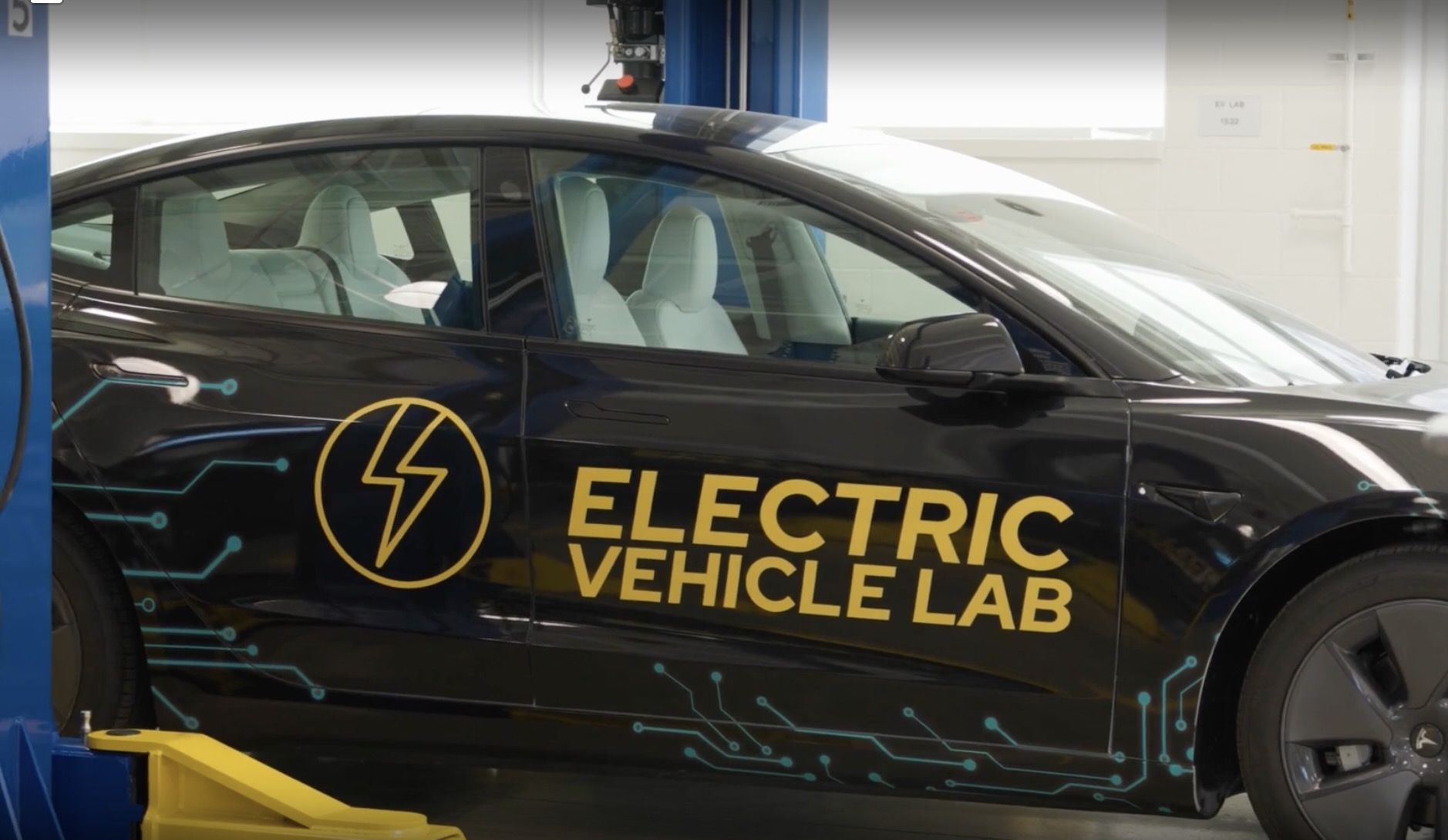
For example, the Toledo Technology Academy of Engineering for grades 7-12 allows students to explore engineering in a fully immersive learning environment with the Electric Vehicle lab, the first of its kind for an Ohio public school. With 11,000 sq. ft. of space, including six vehicle lifts for hands-on learning and a classroom, this lab gives students the opportunity to learn firsthand about cutting-edge technology, as well a current mechanics and displaced autoworkers a chance to enhance their own skillsets and careers. 

Another inspiring example is the Aerospace & Natural Science Academythe aerospace campus is located at the airport where students can work on airplanes and even earn their pilot’s license, while the natural science campus is just next door to the Toledo Botanical Gardens.

“It’s about aligning kids to things they have an interest in, exposing them to career pathways, and that excitement is what brings them to school,” explains Dr. Durant. “I tell other superintendents that if you connect a student to a career pathway, that’s an increase in your graduation rate . . . the student is aligned to something where they can see and understand why this science experiment or this math skill they are learning matters.”

Through these programs, learning feels relevant. Students aren’t memorizing equations in isolation; they’re applying them on the job floor, in hospitals, and in labs. They’re building confidence as they earn credits toward 2- and 4-year degrees, as well as trade certifications, all while seeing firsthand how their future-ready classrooms tie directly to real-world careers.

Funding Innovation Through Relationships

None of these innovations are possible without financial stability and support. And Dr. Durant has proven that calculated risks yield remarkable rewards by establishing strong relationships with those who hold the purse strings“It’s through a strong relationship with the school board,” Dr. Durant says, “that we’ve been able to mitigate risks and ensure we have the resources we need to launch programs that truly change how students learn.”

Securing local funding for future-ready classrooms also needs strong relationships with the community. Partnerships with local businesses, nonprofits, civic organizations, school boards, and city councils provide a wealth of opportunity for funding because all those involved have the same goal: ensuring students become successful members of the community.

Empowering Students. Strengthening Communities.

The goal of future-ready classrooms is clear—prepare students to thrive in a dynamic world. Students get a head start on building skills and earning credits, so upon graduation, they’re equipped with knowledge and experience to jumpstart their careers. Communities benefit, too. When young people feel supported, they want to work and live in the same neighborhoods that nurtured their potential, creating a strong, thriving local workforce. 

At TPS, this isn’t just a vision—it’s happening. Leaders like Dr. Durant are setting the standard, offering a clear model for schools and communities to follow. Discovery Education is proud to stand alongside courageous leaders like Dr. Durant to prepare future-ready students. We are continually innovating career exploration resources like Career Connect and the STEM Careers Coalition, as well as building partnerships with industry leaders that share our vision, to support career and workforce programs designed for 21st century students.   

With unique partnerships between Discovery Education and industry leaders, those same schools and communities can deliver students their holistic vision of what it means to be ready for the future.  Together, we’re rethinking education, one calculated risk at a time.

Jean Johnson

Jean Johnson

Access the Discovery Education career readiness guide, Expanding Opportunities: How District Leaders Can Champion Career Readiness, to learn key strategies for developingand maintaining career readiness programs in your district.

The post Future-Ready Classrooms for Future-Ready Students appeared first on Discovery Education.

]]>
Romules-Durant_headshot-e1741024422319.jpeg Jean Johnson
Encouraging Career Exploration in the Classroom https://www.discoveryeducation.com/blog/future-ready-students/encouraging-career-exploration-in-the-classroom/ Mon, 07 Apr 2025 19:00:00 +0000 https://www.discoveryeducation.com/?post_type=blog&p=183142 What kind of skills are needed for your career? Does your position require strong communication skills, knowledge of software, efficient teamwork, or an understanding of machinery? While these skills are strengthened over time, the journey starts with exploring career options and considering which path is most interesting! Here to share how she introduces career skills […]

The post Encouraging Career Exploration in the Classroom appeared first on Discovery Education.

]]>

What kind of skills are needed for your career? Does your position require strong communication skills, knowledge of software, efficient teamwork, or an understanding of machinery? While these skills are strengthened over time, the journey starts with exploring career options and considering which path is most interesting!

Here to share how she introduces career skills in her classroom and encourages her students to explore various careers is Delaware business educator, Heidi Corbin!

what does curiosity look like png

The Importance of Career and Technical Education

Career & Technical Education is important for K-12 students because these classes help to connect core content classes such as English and math to real life lessons and situations. As students progress through different courses, it may be difficult for them to connect how these courses will prepare them for careers or even which career will be best for them. The moment to make a career choice is far off for middle school students, but that means starting to consider career options early just gives them a head start!

CTE programs give students a chance to explore careers that they might be interested in after graduation. The exploration lessons and curriculum give them insight into careers they may already be familiar with as well as careers they may not have been aware of. As a middle school teacher, I help to prepare students to possibly earn an official credential in a career field of interest through high school coursework.

Career Paths and Skills

I like to focus primarily on the talents and strengths of the individual student and how it can help them have a better understanding and comfort level when navigating various core classes. My students first take a learning styles quiz and a personality quiz. I reiterate that their answers should be true to their own likes and dislikes, not their friends or family or even teachers’ opinions. Their honest answers are then analyzed, and they get specific input on what career paths and/or industries may be a good fit for them. I’ve used a variety of personality and learning styles quizzes with my students, and the Myers–Briggs personality assessment is one of my favorites!

There are many “lightbulb moments” when students get an analysis of possible careers based on their honest input about their own likes and dislikes! More often than not, they are surprised since they are at an age where they have a more challenging time seeing themselves for who they are instead of trying to fit in.

One personality quiz created by Major Clarity gives insight into the student by offering percentages of how much the following categories relate to the student’s personality – Conventional, Social, Realistic, Investigative, Enterprising, Artistic. I remember one student being upset about having a high percentage for being “conventional.” However, after reading the category description, the student actually agreed with it! 

The quiz also shared that conventional people (titled “Organizers”) like to work with data, have clerical or numerical ability, carry out tasks in detail, or follow through on others’ instructions. They often prefer precise, rule-regulated, orderly, and unambiguous activities and their traits often include conforming, efficient, practical, unimaginative, and inflexible. The quiz recommended a possible career path in legal services, education, and healthcare. This student was set on a career in nursing, but the quiz helped them come to an understanding of how legal services and education might be a match too. Learning a career in education could be a good fit was the biggest surprise for this student because as the student said to me, “I would never want your job!” This helped open a conversation about the other ways to be a part of the world of education, which led to another epiphany—that working in education doesn’t just mean teaching!

I educate students about career paths that will require various levels of education which can range from apprenticeship, certifications, two-year degrees, four-year degrees and so on. A four-year college degree is not the only way to reach success, and shining a light on careers that have different requirements can help students plan for a next step that is right for them. However, students don’t always know what type of formal training or schooling is required for careers they find interesting, so I offer information on careers spanning all types of training programs.

Career skills are infused into my lessons and curriculum via real-life simulations and questions of the day. Both give me insight into their level of understanding and how to further direct the learning and exploration. Offering students the chance to look “behind the scenes” on real-life careers can help them explore the limitless career possibilities that exist for them! From the new heights in aerospace innovation to the work being done to protect our waterways, there are many Discovery Education resources that help highlight career paths and skills!

Advice to Other Educators

For teachers just getting started, I would recommend the Career Profile videos, Interactives, Virtual Field Trips, and the investigative videos such as Calculating Different Types of Pay. There are also many Channels that focus on a wide variety of topics that may interest students and spark interest in a possible future career, like animals, music, and video games!

My advice to teachers planning career exploration lessons is to make it as authentic as possible. Utilizing virtual career field trips, videos from experts or even providing real-life simulations to connect school to the real world. Students can feel that the “real world” is so far away that it isn’t worth thinking about, but bringing the real world into the classroom can help make learning relevant and inspire student engagement! 

I’ve found that financial literacy lessons that include real-life simulations give students insight into what comes with working, and don’t just focus on making an income or fun ways to spend the money they earn. Earning and budgeting money is a big part of being a successful adult with a career! One of my favorite lessons is a gift budgeting activity where students are given $300 to spend on five people. Students are required to find a total of five gifts (one gift per person) that fit into their budget—and no cash or gift cards are allowed to be gifted! These real-world scenarios also help students better understand why adults say “no” to buying items children may want in the moment and help them set their sights on the future!

Middle school students have many milestones to meet before they enter the workforce, but it all starts with exploring different careers! Finding ways to nurture your students’ interests and help them learn about skills needed to excel in their career of choice can set them up for success—and start their journey early!

Learn More about Discovery Education’s Partnership with Otus!

The post Encouraging Career Exploration in the Classroom appeared first on Discovery Education.

]]>
what-does-curiosity-look-like.png science-reading-tile.jpg Picture of Heidi Corbin
Bringing Industry Innovators to Classrooms with Career Connect by Discovery Education https://www.discoveryeducation.com/blog/de-news/bringing-industry-innovators-to-classrooms-with-career-connect-by-discovery-education/ Sun, 06 Apr 2025 19:33:50 +0000 https://www.discoveryeducation.com/?post_type=blog&p=182928 At Discovery Education, we are always looking to meet educator’s needs. Educators require flexible, reliable, and high-quality services that fit in wherever learning takes place and really ignite student curiosity. We know that when students have early exposure to careers, it transforms how they explore and enter the workforce. Yet research shows that 83% of today’s […]

The post Bringing Industry Innovators to Classrooms with Career Connect by Discovery Education appeared first on Discovery Education.

]]>
At Discovery Education, we are always looking to meet educator’s needs. Educators require flexible, reliable, and high-quality services that fit in wherever learning takes place and really ignite student curiosity. We know that when students have early exposure to careers, it transforms how they explore and enter the workforce. Yet research shows that 83% of today’s learners can’t connect the skills they have and learn in school to future employment. Career Connect represents a new model in education in which career awareness and exposure start as a first stitch in the fabric of learning.

We’re offering a new solution that will drive student engagement by helping both educators and private sector partners better connect students to real-life experiences.

Career Connect is a groundbreaking new platform that connects educators to the industries, people, and skills that power our world. Career Connect breaks down barriers between companies and classrooms, directly connecting Discovery Education’s educators to our partners’ workforce like never before.

With Career Connect, teachers can request virtual classroom visits from industry professionals based on job types, industries, language preferences, and location. In addition, this new digital platform provides companies with a unique workforce development and employee engagement solution that supports their social impact strategy. Initial partners include Sanofi and Genentech whose workforce volunteers are currently on the platform ready to connect with educators.

Discovery Education is the worldwide education technology leader. Our K-12 team works to provide access to cutting-edge, multi-media curricular tools to our global audience of 4.5 million educators and 45 million students.

At Discovery Education, our work is amplified through private sector partnerships with over 75 like-minded companies and organizations bringing concepts of industry (like biotechnology, aerospace, modern agriculture, manufacturing, automotive, etc.) through no-cost, standards-aligned digital resources. With over 25 years of bringing innovative instructional tools and support to classrooms globally alongside industry-leading organizations, Discovery Education is the only organization with the existing infrastructure and educator trust to deliver such an ambitious reimagining of education.

We are always looking for ways for our partners to shed light on their industry and the durable skills needed to compete in today’s global market. Career Connect brings that to scale and empowers employees to feel the intrinsic value of leveraging their unique story to make a difference. Organizations partnering with Discovery Education to bring Career Connect are poised to improve employee engagement by simplifying skills-based volunteerism and offering employees rewarding experiences. Research demonstrates that employee volunteerism increases engagement, productivity, and overall sense of company mission.

And, for students, they learn the ‘why’ behind what they are learning in school in order to build on their transferrable skills as they grow in life and in their careers. Career Connect will assist with career exploration, equipping students with connections to the skills and knowledge they need to pursue their desired careers effectively by introducing them to the industry professionals they want to become. It’s an invaluable resource that helps classrooms explore different industries and career paths, ultimately helping them make informed decisions about their futures.

Today’s K-12 educators are in desperate need of meaningful and easy-to-implement career connectivity options. Likewise, the private sector seeks to build a future-ready workforce, highlight career opportunities, and drive social impact. Career Connect is the solution. 

Learn how to connect your students with industry leaders!

The post Bringing Industry Innovators to Classrooms with Career Connect by Discovery Education appeared first on Discovery Education.

]]>
career-connect-for-blog.jpg Career-connect-tile-scaled.jpg Picture of Amy Nakamoto
Strategies for Encouraging Girls to Explore STEAM https://www.discoveryeducation.com/blog/future-ready-students/strategies-for-encouraging-girls-to-explore-steam/ Sun, 06 Apr 2025 19:20:22 +0000 https://www.discoveryeducation.com/?post_type=blog&p=183623 Educators, administrators, and corporate leaders all agree: we need to encourage girls to explore STEAM skills and consider STEM careers for their futures. But how? We asked members of the Discovery Educator Network to share content, programs, and ideas they have found to be successful in bringing more girls to the world of STEAM! Infusing STEAM […]

The post Strategies for Encouraging Girls to Explore STEAM appeared first on Discovery Education.

]]>

Educators, administrators, and corporate leaders all agree: we need to encourage girls to explore STEAM skills and consider STEM careers for their futures. But how? We asked members of the Discovery Educator Network to share content, programs, and ideas they have found to be successful in bringing more girls to the world of STEAM!

Infusing STEAM Content in All Classrooms

girls in STEAM tile jpg

A major goal of the K-12 experience is to prepare students for their next step in life. So, when thinking about how to encourage girls to explore STEAM topics or pursue STEM careers, bringing these concepts into the classroom is top of mind for educators. Exposing students to STEAM experiences frequently will help them see how their personal interests align with process used in STEM careers, like researching concepts, testing ideas, and sharing results.

Check out these top four recommendations from the DEN for infusing STEAM into all classrooms:

  1. Offer a variety of opportunities for creative expression in the planning phase of projects. Consider how students can draw, sketch, or creatively outline plans for projects to help bring the “A” of “STEAM” into the learning process early. Some students may choose to create sketch notes from their research on a topic while others may choose to draw a prototype for a model they will create later in the process—offering a variety of arts-forward options for planning helps students connect all letters of STEAM throughout a project.
  2. Find creative outlets for students to share their learning. On the tail end of a project or unit, allow students to use an artistic method—like designing posters, writing songs, performing skits, or creating digital visual aids—as an opportunity for them to reflect on and share their learning. STEAM learning can inspire innovation—sharing the successes should be an exciting part of the process and easily lends itself to artistic expression.
  3. Designate a Maker Space for students to work on independent and collaborative projects. Creating a Maker Space in your school or classroom can sound overwhelming, but it should just be a place where students can gather to collaborate on projects and access a variety of art supplies. It can be a space in a common area such as the media center or just a corner in a classroom!
  4. Find opportunities for all teachers to utilize content or concepts. Collaborative planning can help all teachers find inspiration for future lessons. For instance, if your students are studying laws of motion in science class, the Physical Education teacher may have some motion-focused games where students can test the hypotheses and theories introduced in science class!

STEAM lessons will pave the way for new innovations and collaborative experiences, and it can also help girls picture themselves as scientists, tech-wizards, artists, mathematicians, and engineers. Use content that puts successful STEM women in the spotlight so students can envision how their interests can align with a career they may not have considered or even heard of before.

Project STEM's course through the Amazon Future Engineers' program isa great way to showcase women in STEAM. I also incorporate this content for 6th grade, which includes a lot of videos and resources that discuss girls in STEAM and provide examples of accomplished women in STEAM fields.
de quote left square filled
Alexis Teitelbaum
PreK-6 Technology Explorations Teacher, PA

Explore STEM Career Resources

mastercard jpg

Girls4Tech

Girls4Tech provides resources to educate, inspire, and equip young girls with the skills and confidence they need to envision themselves as future professionals in STEM fields.
amazon career tours tile jpg

Career Tours by Amazon

Career Tours are free, interactive virtual field trips that showcase the real-life people and cutting-edge technology behind Amazon’s innovations.
ifthen jpg

If/Then STEM Professionals

Have you ever wondered who creates your favorite video game, or protects the animals in the jungle, or works to cure cancer? The IF/THEN® Initiative is committed to showing young girls exactly what a scientist looks like.

Five Ideas for Dynamic STEAM Programming

Finding space for girls to comfortably explore STEAM topics and collaborate with other girls can mean extending your programming in new ways through clubs, contests, and special events. Read on for five ideas from the DEN to make your STEAM programming fun and flexible for girls!

We cannot hope that girls turn their graduation tassel and suddenly take an interest in STEAM topics. Instead, we need to find ways for them to explore STEAM early, frequently, and in encouraging settings. STEAM learning can be exciting for all students when there are clear connections between the different letters and students’ interests!

Learn More about What Educato Leaders are Saying

The post Strategies for Encouraging Girls to Explore STEAM appeared first on Discovery Education.

]]>
girls-in-STEAM-tile.jpg de-quote-left-square-filled mastercard.jpg amazon-career-tours-tile.jpg ifthen.jpg
Reflections on a Conversation about Advancing STEM Opportunities for Girls https://www.discoveryeducation.com/blog/future-ready-students/reflections-on-a-conversation-about-advancing-stem-opportunities-for-girls/ Sun, 06 Apr 2025 19:00:16 +0000 https://www.discoveryeducation.com/?post_type=blog&p=183512 The need for STEM jobs is expected to grow by 11% through 2032, creating more than 1 million STEM occupations in the U.S. alone. With women making up half of the college-educated workforce, but only 34% of the STEM workforce, now is the time to identify and address barriers to STEM education for girls and […]

The post Reflections on a Conversation about Advancing STEM Opportunities for Girls appeared first on Discovery Education.

]]>

The need for STEM jobs is expected to grow by 11% through 2032, creating more than 1 million STEM occupations in the U.S. alone. With women making up half of the college-educated workforce, but only 34% of the STEM workforce, now is the time to identify and address barriers to STEM education for girls and young women. Research by The National Girls Collaborative Project shows that girls’ achievement levels in math and science are the same as boys. Yet there is a notable difference in their interests, confidence, and sense of belonging in the STEM areas. Two key questions come to mind: 

1. How can we encourage girls to pursue their interests in STEM?  
2. How can we close this clear gap in STEM opportunities?
what does curiosity look like png

District and Corporate Efforts: A Combined Approach

During Discovery Education’s webinar in partnership with EducationWeek, Women Leaders Advancing STEM Opportunities for Girls, a panel of district and corporate leaders shared their combined efforts to close the STEM gap for girls and encourage them to explore their STEM interests. Dr. Monique Darrisaw-Akil, Superintendent of Schools at Uniondale Free School District, Dr. Elizabeth Alvarez, Superintendent at Forest Park School District, and Susan Warner, Vice President of Community Engagement at Mastercard, Girls4Tech all came together to share insights from their experiences encouraging and advancing STEM opportunities for girls.

The webinar underscored the power of collective action among corporations, districts, and educators. It has become increasingly apparent that increasing girls’ access to the STEM career pipeline requires a concerted, multi-dimensional approach. The panelists shared some ways corporate and educational partners can support one another: 

4 Ways Corporate and Educational Partners Can Support Each Other

  1. Retire old STEM models.

    STEM is more than math and science; it is a multidisciplinary approach to how students learn and understand the world around them. There are many skills people need in STEM careers—communication, logic, creativity, and analytics to name a few. We can help learners hone these skills through different resources and activities, like those available through Discovery Education’s STEM Careers Coalition

  2. Engage students early.

    The panelists stressed the importance of getting girls involved in STEM from an early age, leveraging the power of curiosity, exploration, and play. Early engagement can take various forms – science fairs, robotics clubs, family programming, and community events. Plus, these are materials and moments that corporate partners can help develop for the K – 12 space.  

  3. Elevate STEM industries.

    The effect of seeing someone who looks like you in a field cannot be underestimated. Districts and corporations need to work together to increase representation of women in STEM. It’s critical that teachers showcase more women STEM leaders in everyday lessons to shift perceptions of what a typical STEM professional looks and sounds like. And when districts collaborate with corporate partners, there’s more opportunity to bring guest speakers, mentors, and hands-on engagement with successful women in STEM directly into our classrooms as well as afterschool programs. 

  4. Walk the talk.

    If we want more girls to enter STEM careers, it’s essential that we introduce them to the wide variety of STEM careers and the growing demand for these jobs. Educators need to dedicate time for students to explore careers, and corporate partners need to support educators by developing and providing those classroom resources. Webinar speaker, Susan Warner, shared that we should provide girls with hands-on experiences that allow them to learn about a wide variety of STEM industries, such as data science, AI, data security, cyber security, computer science, and coding. For example, Discovery Education’s Career Connect provides educators with the opportunity to infuse careers into their instruction by connecting their classrooms directly with industry volunteers. These connections nurture student curiosity and empower students to visualize themselves in the many career paths that power our world. 

Discovery Education's Corporate Education Partnerships

SCC Facebook 1200x628a png

Discovery Education strongly believes that the K – 12 system and corporate landscape are aligned in regard to diversifying and expanding the STEM workforce. The work we’re doing with our corporate partnerships is bridging classrooms to industries and closing the STEM gap for girls. For example, our partnership with Mastercard’s Girls4Tech program works to close the gap between opportunity, awareness, and readiness by providing schools and community organizations with free resources to educate, inspire, and equip young girls with the skills and confidence they need to envision themselves as future professionals in STEM fields. 

Additionally, the STEM Careers Coalition (SCC) works to support the STEM workforce by providing educators with accessible, ready to use resources and content and creating equitable opportunities for students to explore STEM. By bridging invested corporate and non-profit partners directly with schools, the SCC is uniquely positioned to create conditions for girls to see themselves in the future STEM workforce.  

While it’s undeniable that more work needs to be done, the recent webinar highlighted the power of districts and corporations working together to advance STEM opportunities for girls. I left this webinar feeling inspired and excited about the work to come.

The post Reflections on a Conversation about Advancing STEM Opportunities for Girls appeared first on Discovery Education.

]]>
what-does-curiosity-look-like.png SCC-Facebook-1200x628a.png Picture of Amy Nakamoto