Cross-Curricular | Discovery Education Nurture Curiosity Thu, 16 Oct 2025 22:03:15 +0000 en-US hourly 1 https://wordpress.org/?v=6.8.3 The State of AI in Education: Dealing with Disruption https://www.discoveryeducation.com/blog/teaching-and-learning/state-of-ai-in-education-dealing-with-disruption/ Thu, 16 Oct 2025 21:47:19 +0000 https://www.discoveryeducation.com/?post_type=blog&p=201647 “Welcome, how can I help?” This may look familiar if you’ve used generative artificial intelligence (AI). Whether you’re currently using AI or not, you likely recognize that AI is affecting every industry, including education. For example, the 2025–2026 Education Insights report revealed that 40% of students admit using AI on assignments without permission. Based on […]

The post The State of AI in Education: Dealing with Disruption appeared first on Discovery Education.

]]>


“Welcome, how can I help? This may look familiar if you’ve used generative artificial intelligence (AI). Whether you’re currently using AI or not, you likely recognize that AI is affecting every industry, including education. For example, the 2025–2026 Education Insights report revealed that 40% of students admit using AI on assignments without permission. Based on this report and other news, it’s clear that AI in education is reshaping what it means to teach, learn, and engage. Let’s explore how schools can adapt now to prepare students for the future. 

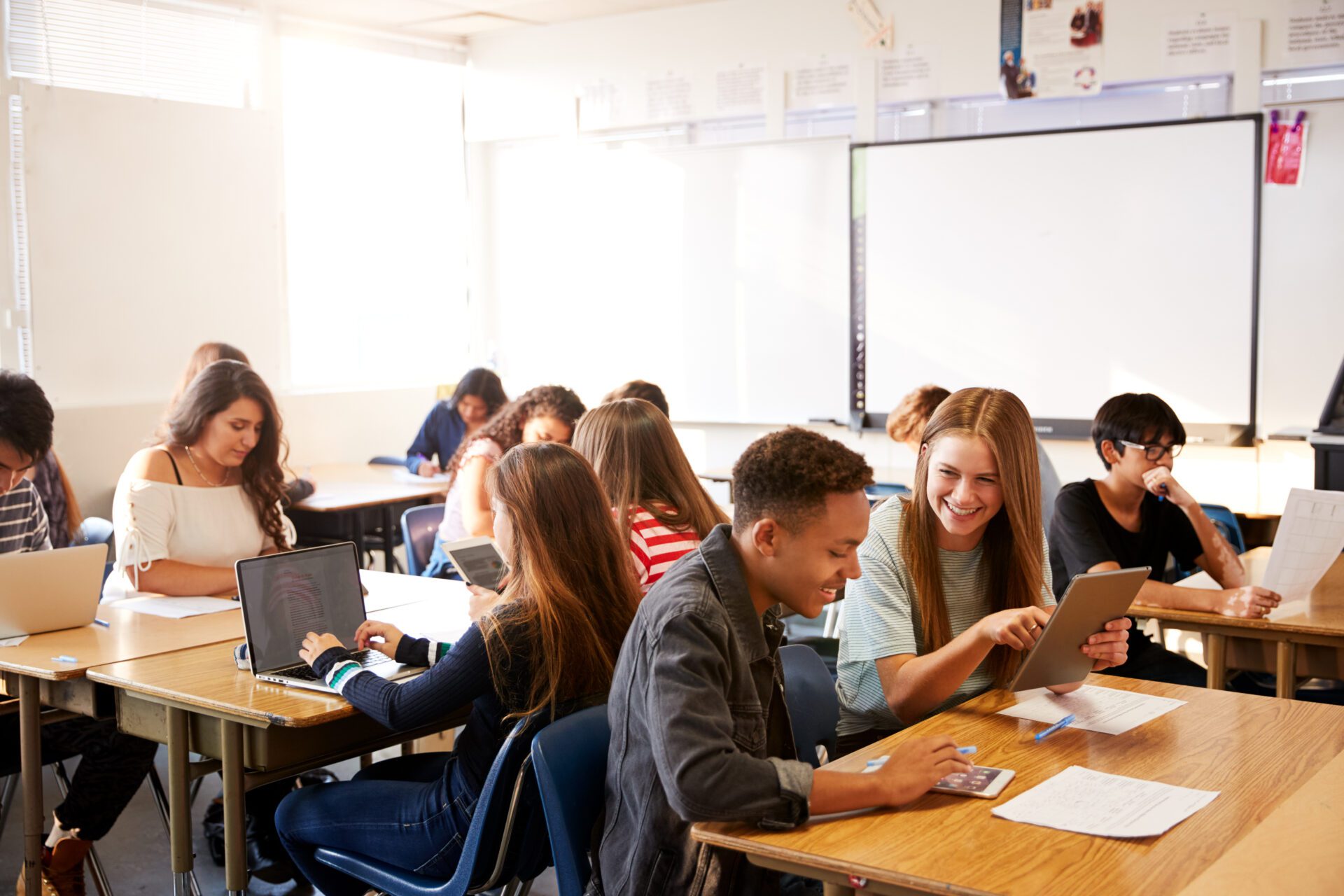
Teacher and Students Using Laptop During Class

AI in Education Today

If a significant number of students are using AI to help them complete assignments without permission, are teachers aware of this? Yes, according to the 2025–2026 Education Insights report: 65% say they have caught their students doing so. Even if they haven’t caught students cheating using AI, teachers are aware that the potential exists. 

Not all students have embraced AI in education, whether for cheating or for approved uses. Some are concerned that using AI will dull their critical-thinking skills, and others don’t find using AI to be fulfilling or a part of meaningful learning. Many students question the usefulness of the skills they’re currently learning based on what AI is already able to do. In fact, 70% of high school students surveyed for the Education Insights report agreed with the statement, “I believe the skills I’m learning will be something AI can do.” This belief may play a role in disengagement for some learners in the classroom. 

Student Working on Laptop in Library

Ultimately, the ease of student access to AI means that educators find themselves needing to find a balance between limiting misuse and exploring potential. Based on Education Insights report findings, educator familiarity with AI and AI tools may affect classroom usage:  

  • Only 49% of teachers report using AI to complete tasks at school 
  • Just 53% of teachers feel optimistic about AI’s possibilities  

In contrast, 70% of the high school students who reported that they have used AI with approval believe it was helpful, saying they’ve been able to learn and complete schoolwork faster. 

The Engagement Connection: Why AI Matters Beyond Technology

Research shows that engaged students learn and achieve more than peers who aren’t actively involved in their learning. Because engagement is so important, educators may wonder whether including AI in their classroom is a good idea. One challenge that AI presents is that it can complicate how teachers see and measure student engagement. For example, AI can make student thinking harder to observe where teachers only see the final output of completed assignments. And getting to that final output doesn’t mean that the student put in the necessary effort for deep learning to occur, like with traditional approaches to teaching and learning.

Challenges and Opportunities with AI in Education

Like many technological innovations, AI presents both risks and opportunities when students have access to it in the classroom. Primary risks come from misuse and include:

  • Deliberately using AI in ways that are not approved or intended
  • Convenient ways to plagiarize
  • Overreliance on AI that stunts critical thinking
  • Shortcuts that undermine authentic learning experiences

Notable opportunities include:

  • Personalized learning
  • Scaffolding when students need it
  • Increased efficiency in completing assignments and research
  • New forms of creativity and inquiry

Despite the risks, AI is here to stay, and educators are learning to define its role in teaching and learning. In doing so, they can guide students to use it thoughtfully so that it enhances, rather than replaces, meaningful engagement.

Classroom of Students Using Technology

AI Strategies for Schools

Here are six recommended strategies to increase your chances of success:

  • Establish clear policies and shared language for AI use
  • Focus on process and thinking during assessment, not just output
  • Teach AI literacy explicitly
  • Design assignments that AI can’t easily solve
  • Use AI to support differentiation and feedback
  • Continuously evaluate and adapt practices

Note that you don’t have to figure all of this out on your own. Prominent companies can provide guidance and even work side by side with you to evaluate challenges, needs, and resources. For example, Norton, a leader in online safety, has joined the Digital Citizenship Initiative by Discovery Education and will offer free standards-aligned classroom resources supporting safe student engagement with AI.

Here’s what one teacher told us about AI in her classroom:

I always look for ways to engage students in using AI effectively—for example, to generate ideas, organize thoughts, and clarify questions—rather than relying on it to write papers or complete assignments.

Shaping the Future, Not Simply Reacting

Most likely, AI is already being used in your school or district’s classrooms, and its presence will only continue to grow as the technology develops. So the question about AI is “How do we best use it to enhance teaching and learning?” rather than “How do we deal with it?” As we’ve seen in our exploration of the state of AI in education, when educators approach it with clarity, creativity, and intentionality, they can turn disruption into opportunity.

There’s more about AI in education and a wealth of fascinating insights into student engagement in our full Education Insights 2025–2026 report!

The post The State of AI in Education: Dealing with Disruption appeared first on Discovery Education.

]]>
Teacher and Students Using Laptop During Class Student Working on Laptop in Library Classroom of Students Using Technology Picture of DE Staff
Building Career Confidence: Helping Students Explore What’s Possible https://www.discoveryeducation.com/blog/future-ready-students/career-finder-helps-students-explore-career-options/ Wed, 01 Oct 2025 03:24:34 +0000 https://www.discoveryeducation.com/?post_type=blog&p=200049 Middle and high school students often face a daunting question: What do you want to be when you grow up? For many, the pressure to have a clear answer comes far too early – long before they’ve had the chance to explore what options even exist. But what if we shifted the goal from choosing […]

The post Building Career Confidence: Helping Students Explore What’s Possible appeared first on Discovery Education.

]]>

Middle and high school students often face a daunting question: What do you want to be when you grow up? For many, the pressure to have a clear answer comes far too early – long before they’ve had the chance to explore what options even exist. But what if we shifted the goal from choosing a career to building the confidence that one will suit them someday?

As educators, we’re in a powerful position to open that door. By providing space for students to explore a wide variety of career pathways – without pressure or expectation – we help them develop a mindset of curiosity and possibility.

Student Walking on Road Toward Question Mark

Exploring Careers for the Sake of Possibility

For today’s students, the world of work is bigger – evolving faster – than ever before. There are jobs in industries that didn’t exist ten years ago, and many more that students won’t hear about in everyday conversation. That’s why it’s essential to offer them guided ways to explore widely, before they feel pressured to decide.

Career exploration isn’t just about making decisions. It’s about building belief: belief that they’ll find something meaningful. Belief that their unique interests and strengths are valuable. Belief that there’s a place for them in the world of work, even if they don’t know what it’s called yet.

Career Finder from Discovery Education

Career Finder

Designed specifically for middle and high school students, this free, web-based tool helps students explore dozens of careers – especially within the wide world of STEM – through short videos and adaptive prompts. It’s a personalized, video-driven journey that puts students in the driver’s seat.

Using a mix of real-life job stories, engaging media, and thoughtful questions, Career Finder gives students a “conversation-like” experience – meeting real professionals and learning what they do, how they got there, and why they love it.

How It Works: A Journey of Self-Discovery

The Career Finder is built around four key themes that shape how students think about future jobs:

  • Workplace Environment – Do they want to work indoors or outdoors? With people or on their own?
  • Communication Style – Are they comfortable presenting? Do they like collaborating?
  • Motivation – What drives them: building relationships, pursuing their passion, learning new skills?
  • Level of Education – Are they thinking about college, apprenticeships, or on-the-job training?

Through each of these themes, students interact with the content by selecting preferences, watching short, high-quality videos, and providing feedback. They’ll meet a Minecraft Engineer, a Fire Sprinkler Fitter, a Bat Conservationist, and many more – each bringing something unexpected and inspiring to the table.

At the end, students receive a summary of their preferences, plus links to even more careers and learning resources. This open-ended structure means students can return again and again, discovering new paths each time.

Feet with Arrows Pointing All Directions

Why It Matters: The Benefits for Students

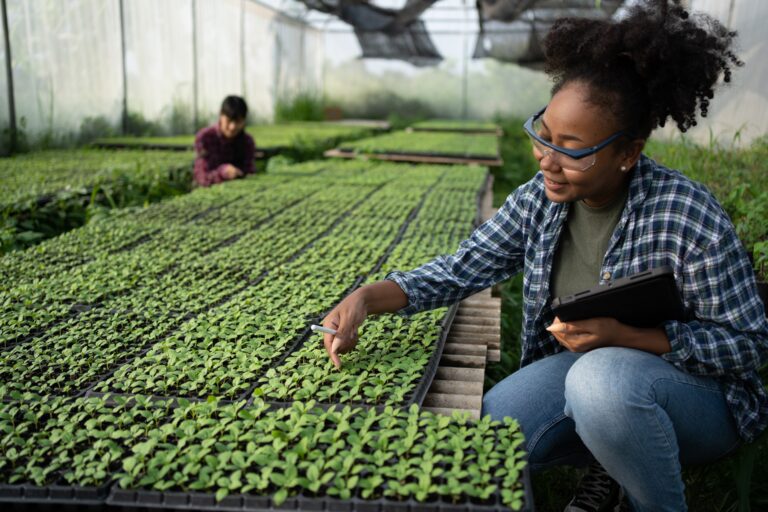
Girl Checking Hydroponic Plants

This Career Finder isn’t about locking students into one “perfect” job. It’s about inviting them to explore, reflect, and imagine the future on their own terms. Here’s what makes it such a valuable tool:

  • Confidence in the Future – Students hear directly from real people who once had the same questions they do now. That representation matters: it builds confidence that there’s a career out there they’ll connect with.
  • Early Exposure to Career Pathways – Whether or not students are thinking about jobs yet, seeing the variety of options early on helps them connect the dots between school and the real world.
  • Student Agency – The experience is self-directed, letting students choose what they watch and how they respond. This freedom supports authentic engagement.
  • Accessibility for All Classrooms – The interactive is browser-based, requires no log-in, and works on any device, making it a great fit for classrooms with limited tech or time.
  • Open-Ended Seat Time – With many branching pathways to explore, the Career Finder works well during advisory periods, enrichment blocks, substitute plans, or career readiness lessons.
  • Personalized Reflection – The interactive adapts to each student’s input and provides a summary they can use to spark follow-up discussions or guide further research.

How Teachers Are Using It

Here are just a few ways the Career Finder can be woven into everyday classroom moments:

  • Career Readiness Lessons – Use it as a launch point for classroom discussion or journaling about interests and goals.
  • STEM Classrooms – Show the diversity of careers connected to science, tech, engineering, and math – even ones students wouldn’t expect!
  • Social-Emotional Learning – Support self-awareness and confidence by helping students explore their communication styles and motivations.
  • Advisory or Homeroom Time – Let students explore independently, then share one new job they found interesting with a peer.
  • Virtual or Hybrid Settings – Assign Career Finder as an asynchronous activity with a follow-up reflection or class discussion.
Girl Looking Through Microscope

Starting the Conversation

The new Career Finder ends with a strong message: This is just the beginning.

Helping students explore careers isn’t about pressuring them to decide early – it’s about building curiosity, confidence, and clarity. When students understand that there’s a whole world of jobs they’ve never even heard of, they begin to see possibility in their future.

Discovery Education’s Career Finder gives them a safe, engaging, and empowering way to start that journey. It’s free, flexible, and designed with student voice at its core.

The post Building Career Confidence: Helping Students Explore What’s Possible appeared first on Discovery Education.

]]>

Student Walking on Road Toward Question Mark Career Finder Feet with Arrows Pointing All Directions Girl Checking Hydroponic Plants Girl Looking Through Microscope
Literacy and Math Strategies in the U.S.: What’s Working and What Isn’t https://www.discoveryeducation.com/blog/educational-leadership/literacy-and-math-strategies-whats-working-and-what-isnt/ Tue, 30 Sep 2025 22:39:38 +0000 https://www.discoveryeducation.com/?post_type=blog&p=199958 Taking Time to Assess Instructional Impact Educators must always balance urgent needs in classrooms with the longer-term goal of improving student outcomes. As part of a regular series on the state of education in the U.S., we asked four passionate leaders in K–12 education to join us for a conversation about literacy and math instruction […]

The post Literacy and Math Strategies in the U.S.: What’s Working and What Isn’t appeared first on Discovery Education.

]]>

Taking Time to Assess Instructional Impact

Educators Collaborating

Educators must always balance urgent needs in classrooms with the longer-term goal of improving student outcomes. As part of a regular series on the state of education in the U.S., we asked four passionate leaders in K–12 education to join us for a conversation about literacy and math instruction and student achievement: 

  • Dr. Emily Hare, Director of PreK–12 Mathematics for Guilford County Schools 
  • Dr. Amanda Malone, K–12 Literacy Director for the Mississippi Department of Education 
  • Dr. Melissa Sadorf, Executive Director of the National Rural Education Association and professor at Northern Arizona University 
  • Dr. Rufus Hill, State Director of K–12 Mathematics Coaching for the Mississippi Department of Education 

Host Dr. Karen Beerer, Senior Vice President of State and Strategic Partnerships at Discovery Education, opened the discussion by outlining what educators are observing and the pressures they’re experiencing in schools and districts of all kinds: 

  • The declines evident in the 2024 NAEP reading and math scores 
  • Legislation in many states that requires evidence-based instruction in curricula and sets aside funding for curriculum, tutoring, and acceleration efforts.  
  • Technology fatigue for educators driving demand for simpler, integrated solutions 
  • Teacher shortages and the effects on educators, schools, and districts 

But these challenges also create opportunities for using personalization and data-driven strategies to close gaps, making conversations like this one essential for driving progress in literacy and math.

What’s Currently Working?

Dr. Beerer said, “I thought we’d start with Mississippi, because when you read about the amazing growth that Mississippi students have achieved over the past decade, they often call it the ‘Mississippi Miracle.’ [But] it really wasn’t a miracle. It was planned, strategic systems of change.” Dr. Amanda Malone explained that everything began with legislation focused on K–3. Now schools throughout the state have literacy coaches who focus on “the whole child and the whole teacher.” In addition, they’ve found having access to high-quality instructional materials (HQIM) is key. 

For rural communities, relationships remain the foundation. Dr. Melissa Sadorf shared, “Teachers know their students and their families on a very personal level, and that allows those instructors to be highly responsive to student needs, even when formal resources are scarce.” By necessity, teachers wear multiple hats and can use technology to be a bridge that levels the playing field for students.

At the district level, Dr. Emily Hare explained that they are “intentional about aligning their work to a shared vision and value about what math instruction is and the experience each student should have” in her district. This shared vision guides curriculum development, HQIM choices, and professional learning, resulting in consistency across classrooms. 

What Needs More Attention?

“Too many students are leaving high school without the skills they need to succeed, especially in rural and high-poverty schools,” remarked Dr. Sadorf. Teacher shortages are making sustained improvement difficult, and a reliance on short-term grants and pilot programs means gains are hard to hold onto. 

Dr. Hare agreed, adding: “We’ve articulated clear commitments at the state and district level, but how do we ensure that our supports and resources are consistent across all of those schools? It’s really not a question of effort—I think we all know that—but of sustaining and scaling that vision so that it lives in daily practice.”

In Mississippi, coaches are actively building teacher capacity around HQIM, but sometimes teachers are trained and then leave. Dr. Malone emphasized that using resources most effectively will help, especially when technology is involved.

Dr. Rufus Hill pointed out that using resources with fidelity is important for success, especially since the teacher shortage means not everyone has the specific background in what they’re teaching. He mentioned one math teacher with an ELA background who has “been able to kind of teach herself to teach the students” using HQIM. 

Strategies and Real-World Examples of Change

The panelists shared programs, approaches, and partnerships that are driving real gains in literacy and numeracy. 

Dr. Malone identified: 

  • Using and training educators on structured literacy, which is based on the Science of Reading 
  • Helping students learn to read in the most efficient way 
  • Continually evolving and learning as educators 

Dr. Hill noted: 

  • Implementing the Mathematics Instruction Observational Protocol (MIOP)  
  • Creating a coaching academy with instructional leaders and coaches 
  • Starting a partnership with the Dana Center at the University of Texas 

Dr. Hare emphasized: 

  • Implementing HQIM with integrity for children that are traditionally underserved 
  • Supporting collaborative math leadership teams at school and district levels 
  • Seeking input from cross-collaborative district teams multiple times per year 

Dr. Sadorf then concluded that collaboration is a multiplier: partnering increases impact, closes gaps, and “ensures educator voices shape solutions that benefit everyone.” 

Supplemental Resources

Regarding HQIM and supplemental resources, Dr. Beerer asked how educators assess them and then implement them in the classroom. Dr. Malone noted that while each district chooses its own resources, state department level administrators can “see commonalities and provide coaching around those.” She recommended using supplemental resources to elevate math and literacy instruction.

Innovation in Math and Literacy

The panelists each offered a single word or phrase to capture what innovation in math and literacy means to them.

  • Dr. Sadorf chose the word connected, saying, “Innovation in literacy math has to connect students to engaging, relevant learning.” 
  • Dr. Hare chose alignment, explaining, “It’s about aligning to our vision, our values.” 
  • Dr. Hill came up with purposeful, noting, “I just think that with every decision that we make, we need to make sure that we have a purpose for that.” 
  • Dr. Malone’s phrase was “Effectively partnering what we know with what we have, with a learner in mind.” 

Engagement’s Role in Learning

In closing, Dr. Beerer brought up the “big topic” of engagement, something that always seems to come up in discussions about ways to improve learning. She noted that the 2025–2026 Education Insights Report, with a focus on engagement, offers key insights about education, motivation, and challenges in today’s classrooms. The report is free to download.

There’s so much more to learn from the full discussion!

Host and Experts’ Backgrounds

Dr. Karen Beerer, Senior Vice President of State and Strategic Partnerships at Discovery Education. 

Dr. Emily Hare, Director of PreK–12 Mathematics for Guilford County Schools. With a Ph.D. in Teacher Education, she is dedicated to building strong systems that empower teachers and students to succeed in math. 

Dr. Amanda Malone, K–12 Literacy Director for the Mississippi Department of Education. With over 20 years of experience as a teacher, coach, and coordinator, she brings deep expertise in literacy leadership. She earned her Ph.D. in Higher Education Administration. 

Dr. Melissa Sadorf, Executive Director of the National Rural Education Association and professor at Northern Arizona University. She has over 30 years of experience in education as a teacher, principal, and superintendent.

Dr. Rufus Hill, State Director of K–12 Mathematics Coaching for the Mississippi Department of Education. He earned degrees from Alabama A&M, Delta State University, and completed his doctorate at National University. 

The post Literacy and Math Strategies in the U.S.: What’s Working and What Isn’t appeared first on Discovery Education.

]]>
Educator Collaboration
Elevating Learning: Instructional Strategies for Engaging Virtual Field Trips https://www.discoveryeducation.com/blog/teaching-and-learning/instructional-strategies-for-virtual-field-trips/ Fri, 25 Apr 2025 19:43:03 +0000 https://www.discoveryeducation.com/?post_type=blog&p=189737 Virtual field trips are a game-changer in education, offering exclusive behind-the-scenes experiences that transcend classroom walls. With the latest Virtual Field Trips from Discovery Education, teachers can lean on these effective instructional strategies to bring these exciting experiences into their classrooms, sparking curiosity and deepening understanding across grade bands. Inquiry-Based Learning Hands-On STEM Learning Cross-Curricular […]

The post Elevating Learning: Instructional Strategies for Engaging Virtual Field Trips appeared first on Discovery Education.

]]>

Virtual field trips are a game-changer in education, offering exclusive behind-the-scenes experiences that transcend classroom walls. With the latest Virtual Field Trips from Discovery Education, teachers can lean on these effective instructional strategies to bring these exciting experiences into their classrooms, sparking curiosity and deepening understanding across grade bands.

The Superpower of Story: A Virtual Field Trip to Warner Bros. Studios  

Students in grades 6-12 thrive on exploration and critical thinking. An inquiry-based approach will allow students to analyze the role of storytelling in entertainment, questioning how narratives are crafted and why they resonate.

Implementation 

  • Before the field trip, introduce essential questions like: What makes a story compelling? How do filmmakers use visual and narrative techniques to shape emotions? 
  • During the video, have students take notes on key storytelling elements and industry insights. 
  • Post-trip, facilitate a Socratic Seminar or a project-based activity where students develop their own short scripts or visual storyboards, applying the techniques they learned.

This strategy fosters critical thinking, creative expression, and essential analytical skills across disciplines.

Meet the Magnets: A Virtual Field Trip to the NSF Mag Lab​

Students in grades K-5 grasp STEM concepts best through active, tactile experiences, and magnets provide an exciting way to explore forces and interactions with hands-on learning.

Implementation 

  • Before the video, introduce magnets through simple investigations like testing attraction and repulsion with household items. 
  • During the video, encourage students to record observations by sketching and describing experiments they see at the NSF Mag Lab. 
  • Afterward, engage in interactive STEM centers, allowing students to build magnet mazes, test electromagnetic properties, or create models demonstrating real-world applications of magnetism. 

This strategy builds foundational science inquiry skills and aligns with early STEM learning standards. 

Total Health: A Virtual Field Trip with NBA and WNBA

Students in grades 3-8 benefit from integrated learning experiences that connect physical wellness with broader academic content. 

Implementation 

  • Start by exploring the science of movement with lessons on heart rate, nutrition, and the impact of exercise. 
  • During the video, students can track key takeaways using a graphic organizer focused on nutrition, fitness, and mental health strategies. 
  • Post-video, incorporate an interdisciplinary project where students design their own health and wellness action plans based on insights from professional athletes. 

This approach strengthens connections between science, physical education, and real-world decision-making. 

With inquiry-based exploration, hands-on STEM activities, and interdisciplinary wellness strategies, educators can turn these virtual field trips into transformative learning experiences. Whether students are immersed in storytelling, experimenting with magnets, or developing healthier habits, each virtual field trip offers an opportunity for deep engagement and meaningful connections.

Which strategy are you most excited to implement? Let’s make these field trips unforgettable! 

Explore More Virtual Field Trips from Discovery Education!

For DE Educators, access the Virtual Field Trips Channel in Experience. Not a DE user? No problem! You can access all Virtual Field Trips on DiscoveryEducation.com.

The post Elevating Learning: Instructional Strategies for Engaging Virtual Field Trips appeared first on Discovery Education.

]]>

Question Icon Lined Space svg Atom Lined Space 48h png Globe Lined Space 48h png
The Five Senses: Immersion in the Classroom https://www.discoveryeducation.com/blog/teaching-and-learning/the-five-senses-immersion-in-the-classroom/ Mon, 07 Apr 2025 19:20:26 +0000 https://www.discoveryeducation.com/?post_type=blog&p=183683 In an age where digital technology dominates, it’s easy to forget that when we talk about ‘immersive learning experiences’ as a way to nurture curiosity, we’re not always thinking about augmented reality or virtual reality.  VR and interactive simulations offer exciting possibilities, even with the world of education still striving towards digital equity. The high […]

The post The Five Senses: Immersion in the Classroom appeared first on Discovery Education.

]]>

In an age where digital technology dominates, it’s easy to forget that when we talk about ‘immersive learning experiences’ as a way to nurture curiosity, we’re not always thinking about augmented reality or virtual reality. 

VR and interactive simulations offer exciting possibilities, even with the world of education still striving towards digital equity. The high cost of equipment can be a barrier, especially for underfunded schools. More training is needed for educators to effectively and confidently use new tech. Quality educational content for AR and VR is still limited, and unreliable internet access in some places can be a challenge. 

What we must remember, as some of us await the slow spread of mixed reality into the classroom and others wonder if they’ll ever feel at ease with it, is that teachers have been implementing immersive techniques in the classroom for many years to build curiosity – sometimes without a scrap of digital tech in sight. 

The Basics of Immersion

Sensory Learning Can Tip the Scale Towards Curiosity

Our senses are incredibly powerful in creating memories, forming connections in our brain, and developing emotional relationships. Have you ever smelled something that has taken you back in time to a place or a person? Perhaps you’ve read a book and been so engrossed that you forget where you really are for a moment. Even while listening to music, we sometimes allow ourselves to be carried away by the idea of being a global singing sensation. This is because our senses play a crucial role in how we perceive and remember the world around us. 

annie spratt Ewfrjh0GvtY unsplash scaled jpg

Research indicates that multisensory learning experiences can significantly enhance students’ ability to retain information and understand complex concepts. By engaging multiple senses simultaneously, we activate different areas of the brain – and the more senses that are telling the brain the same story, the more likely the student is to suspend disbelief and allow themselves to be absorbed.

Here are some practical ways to amplify learning activities using the five senses.

1. Sound

Create a soundscape together by making sounds that you might hear in your chosen setting. For example, if the lesson is about exploring Antarctica, include the howling wind, the crunch of footsteps on snow, and the distant call of penguins. For ancient Rome, try the sounds of a bustling marketplace, chariots on cobblestones, and Roman soldiers marching. 

2. Taste

Introduce foods or ingredients used by specific peoples or at key historical events. For instance, when studying ancient civilizations, you might bring in samples of traditional Roman bread or Egyptian dates. During a unit on the American Revolution, tasting hardtack or dried apples can make history tangible and relatable. 

3. Smell

Smell is one of the strongest senses linked to memory. Use essential oils, spices, or other aromatic materials to evoke settings. For instance, the smell of incense can help students imagine an ancient temple, while the scent of pine needles might bring a forest ecosystem to life. 

4. Sight

Visual cues are those which we find easiest to source for the classroom. Consider sights in your space that might be distracting or anachronistic and find ways to block them out. Encourage students to create their own visual representations of what they’re learning, fostering creativity and deeper engagement.

5. Touch

Pass around an item for students to feel, such as the weight of a full backpack, a piece of clothing, or a fossil. Touch is not all about the hands – don’t underestimate the importance of students feeling the ground under their feet as they move around a space, or the sensation of warm/cold, wetness, a heavy weight, or a breeze on their face. 

Or Else, Do It Backwards

Sometimes, recreating sensory effects can feel like an extra burden on your lesson planning, or too much effort. In which case, research shows that cutting out one or more of our senses allows us to concentrate more on the senses available to us. Ever turned down the car stereo while searching for a parking spot, or closed your eyes when trying hard to remember something? 

This can be a powerful tool in the classroom when there are many distractions, or when it’s easier to obscure senses than target them.  

Close Eyes While Listening: Encourage students to close their eyes while listening to a story or an important explanation. This enhances auditory focus and helps students visualize the narrative in their minds. 

Turn Out the Lights: When watching a video, turn out the lights or close the blinds to minimize visual distractions and enhance the viewing experience. 

Create Silence: Mimic a deserted landscape by creating prolonged, complete silence in the classroom. This exercise can be particularly effective in lessons about space, deserts, or other isolated environments. 

The post The Five Senses: Immersion in the Classroom appeared first on Discovery Education.

]]>
annie-spratt-Ewfrjh0GvtY-unsplash-scaled.jpg
Bringing Industry Innovators to Classrooms with Career Connect by Discovery Education https://www.discoveryeducation.com/blog/de-news/bringing-industry-innovators-to-classrooms-with-career-connect-by-discovery-education/ Sun, 06 Apr 2025 19:33:50 +0000 https://www.discoveryeducation.com/?post_type=blog&p=182928 At Discovery Education, we are always looking to meet educator’s needs. Educators require flexible, reliable, and high-quality services that fit in wherever learning takes place and really ignite student curiosity. We know that when students have early exposure to careers, it transforms how they explore and enter the workforce. Yet research shows that 83% of today’s […]

The post Bringing Industry Innovators to Classrooms with Career Connect by Discovery Education appeared first on Discovery Education.

]]>

At Discovery Education, we are always looking to meet educator’s needs. Educators require flexible, reliable, and high-quality services that fit in wherever learning takes place and really ignite student curiosity. We know that when students have early exposure to careers, it transforms how they explore and enter the workforce. Yet research shows that 83% of today’s learners can’t connect the skills they have and learn in school to future employment. Career Connect represents a new model in education in which career awareness and exposure start as a first stitch in the fabric of learning.

We’re offering a new solution that will drive student engagement by helping both educators and private sector partners better connect students to real-life experiences.

Career Connect is a groundbreaking new platform that connects educators to the industries, people, and skills that power our world. Career Connect breaks down barriers between companies and classrooms, directly connecting Discovery Education’s educators to our partners’ workforce like never before.

With Career Connect, teachers can request virtual classroom visits from industry professionals based on job types, industries, language preferences, and location. In addition, this new digital platform provides companies with a unique workforce development and employee engagement solution that supports their social impact strategy. Initial partners include Sanofi and Genentech whose workforce volunteers are currently on the platform ready to connect with educators.

Discovery Education is the worldwide education technology leader. Our K-12 team works to provide access to cutting-edge, multi-media curricular tools to our global audience of 4.5 million educators and 45 million students.

At Discovery Education, our work is amplified through private sector partnerships with over 75 like-minded companies and organizations bringing concepts of industry (like biotechnology, aerospace, modern agriculture, manufacturing, automotive, etc.) through no-cost, standards-aligned digital resources. With over 25 years of bringing innovative instructional tools and support to classrooms globally alongside industry-leading organizations, Discovery Education is the only organization with the existing infrastructure and educator trust to deliver such an ambitious reimagining of education.

We are always looking for ways for our partners to shed light on their industry and the durable skills needed to compete in today’s global market. Career Connect brings that to scale and empowers employees to feel the intrinsic value of leveraging their unique story to make a difference. Organizations partnering with Discovery Education to bring Career Connect are poised to improve employee engagement by simplifying skills-based volunteerism and offering employees rewarding experiences. Research demonstrates that employee volunteerism increases engagement, productivity, and overall sense of company mission.

And, for students, they learn the ‘why’ behind what they are learning in school in order to build on their transferrable skills as they grow in life and in their careers. Career Connect will assist with career exploration, equipping students with connections to the skills and knowledge they need to pursue their desired careers effectively by introducing them to the industry professionals they want to become. It’s an invaluable resource that helps classrooms explore different industries and career paths, ultimately helping them make informed decisions about their futures.

Today’s K-12 educators are in desperate need of meaningful and easy-to-implement career connectivity options. Likewise, the private sector seeks to build a future-ready workforce, highlight career opportunities, and drive social impact. Career Connect is the solution. 

Learn how to connect your students with industry leaders!

The post Bringing Industry Innovators to Classrooms with Career Connect by Discovery Education appeared first on Discovery Education.

]]>
career-connect-for-blog.jpg Career-connect-tile-scaled.jpg Picture of Amy Nakamoto
Reflections on a Conversation about Advancing STEM Opportunities for Girls https://www.discoveryeducation.com/blog/future-ready-students/reflections-on-a-conversation-about-advancing-stem-opportunities-for-girls/ Sun, 06 Apr 2025 19:00:16 +0000 https://www.discoveryeducation.com/?post_type=blog&p=183512 The need for STEM jobs is expected to grow by 11% through 2032, creating more than 1 million STEM occupations in the U.S. alone. With women making up half of the college-educated workforce, but only 34% of the STEM workforce, now is the time to identify and address barriers to STEM education for girls and […]

The post Reflections on a Conversation about Advancing STEM Opportunities for Girls appeared first on Discovery Education.

]]>

The need for STEM jobs is expected to grow by 11% through 2032, creating more than 1 million STEM occupations in the U.S. alone. With women making up half of the college-educated workforce, but only 34% of the STEM workforce, now is the time to identify and address barriers to STEM education for girls and young women. Research by The National Girls Collaborative Project shows that girls’ achievement levels in math and science are the same as boys. Yet there is a notable difference in their interests, confidence, and sense of belonging in the STEM areas. Two key questions come to mind: 

1. How can we encourage girls to pursue their interests in STEM?  
2. How can we close this clear gap in STEM opportunities?
what does curiosity look like png

District and Corporate Efforts: A Combined Approach

During Discovery Education’s webinar in partnership with EducationWeek, Women Leaders Advancing STEM Opportunities for Girls, a panel of district and corporate leaders shared their combined efforts to close the STEM gap for girls and encourage them to explore their STEM interests. Dr. Monique Darrisaw-Akil, Superintendent of Schools at Uniondale Free School District, Dr. Elizabeth Alvarez, Superintendent at Forest Park School District, and Susan Warner, Vice President of Community Engagement at Mastercard, Girls4Tech all came together to share insights from their experiences encouraging and advancing STEM opportunities for girls.

The webinar underscored the power of collective action among corporations, districts, and educators. It has become increasingly apparent that increasing girls’ access to the STEM career pipeline requires a concerted, multi-dimensional approach. The panelists shared some ways corporate and educational partners can support one another: 

4 Ways Corporate and Educational Partners Can Support Each Other

  1. Retire old STEM models.

    STEM is more than math and science; it is a multidisciplinary approach to how students learn and understand the world around them. There are many skills people need in STEM careers—communication, logic, creativity, and analytics to name a few. We can help learners hone these skills through different resources and activities, like those available through Discovery Education’s STEM Careers Coalition

  2. Engage students early.

    The panelists stressed the importance of getting girls involved in STEM from an early age, leveraging the power of curiosity, exploration, and play. Early engagement can take various forms – science fairs, robotics clubs, family programming, and community events. Plus, these are materials and moments that corporate partners can help develop for the K – 12 space.  

  3. Elevate STEM industries.

    The effect of seeing someone who looks like you in a field cannot be underestimated. Districts and corporations need to work together to increase representation of women in STEM. It’s critical that teachers showcase more women STEM leaders in everyday lessons to shift perceptions of what a typical STEM professional looks and sounds like. And when districts collaborate with corporate partners, there’s more opportunity to bring guest speakers, mentors, and hands-on engagement with successful women in STEM directly into our classrooms as well as afterschool programs. 

  4. Walk the talk.

    If we want more girls to enter STEM careers, it’s essential that we introduce them to the wide variety of STEM careers and the growing demand for these jobs. Educators need to dedicate time for students to explore careers, and corporate partners need to support educators by developing and providing those classroom resources. Webinar speaker, Susan Warner, shared that we should provide girls with hands-on experiences that allow them to learn about a wide variety of STEM industries, such as data science, AI, data security, cyber security, computer science, and coding. For example, Discovery Education’s Career Connect provides educators with the opportunity to infuse careers into their instruction by connecting their classrooms directly with industry volunteers. These connections nurture student curiosity and empower students to visualize themselves in the many career paths that power our world. 

Discovery Education's Corporate Education Partnerships

SCC Facebook 1200x628a png

Discovery Education strongly believes that the K – 12 system and corporate landscape are aligned in regard to diversifying and expanding the STEM workforce. The work we’re doing with our corporate partnerships is bridging classrooms to industries and closing the STEM gap for girls. For example, our partnership with Mastercard’s Girls4Tech program works to close the gap between opportunity, awareness, and readiness by providing schools and community organizations with free resources to educate, inspire, and equip young girls with the skills and confidence they need to envision themselves as future professionals in STEM fields. 

Additionally, the STEM Careers Coalition (SCC) works to support the STEM workforce by providing educators with accessible, ready to use resources and content and creating equitable opportunities for students to explore STEM. By bridging invested corporate and non-profit partners directly with schools, the SCC is uniquely positioned to create conditions for girls to see themselves in the future STEM workforce.  

While it’s undeniable that more work needs to be done, the recent webinar highlighted the power of districts and corporations working together to advance STEM opportunities for girls. I left this webinar feeling inspired and excited about the work to come.

The post Reflections on a Conversation about Advancing STEM Opportunities for Girls appeared first on Discovery Education.

]]>
what-does-curiosity-look-like.png SCC-Facebook-1200x628a.png Picture of Amy Nakamoto
Create an Interactive Journey to Career Readiness https://www.discoveryeducation.com/blog/future-ready-students/create-an-interactive-journey-to-career-readiness/ Sat, 05 Apr 2025 19:33:56 +0000 https://www.discoveryeducation.com/?post_type=blog&p=183080 Incorporating immersive learning tools transforms the learning experience by allowing students to “learn by doing,” putting them at the center of the learning process. Gamified experiences promote career readiness by introducing students to diverse career opportunities and allowing them to bridge the gap between academic learning and real-world applications.  What is Immersion, and Why is […]

The post Create an Interactive Journey to Career Readiness appeared first on Discovery Education.

]]>

Incorporating immersive learning tools transforms the learning experience by allowing students to “learn by doing,” putting them at the center of the learning process.

Gamified experiences promote career readiness by introducing students to diverse career opportunities and allowing them to bridge the gap between academic learning and real-world applications. 

What is Immersion, and Why is it Important?

The CHS Foundation and Discovery Education have partnered once again to provide high school students nationwide with digital curriculum resources that cultivate ingenuity and success through an understanding of the cooperative business model. HARVEST: From Seed to Success is a gamified learning experience designed to immerse students in the world of agriculture and cooperative business. This innovative digital resource provides students with a hands-on, engaging platform that puts them in the role of a farmer, responsible for making critical decisions about soil health, crop selection, and harvest timing and goes beyond textbooks and lectures, helping them explore real-world challenges within an industry that is critical to our global economy.

Interactives like HARVEST are more than just a game—they’re a powerful educational tool designed to cultivate essential life skills like problem-solving, critical thinking, and decision-making. Alongside the interactive, educators can take advantage of the downloadable Educator Guide, which is full of practical resources to help ease introduction of the material, scaffold lessons, and offer students an enriched learning experience that prepares them for future career paths in agriculture and beyond.

By stepping into a real-world role—such as a co-op farmer-owner in HARVEST—students can:

1. Practice Critical Thinking and Decision-Making Skills

Interactives aren’t just about agriculture or the other hands-on content they highlight, they’re about teaching students to think critically, solve problems, and collaborate effectively. As students progress through games, they must weigh the consequences of their decisions, learn from their mistakes, and adjust their strategies—skills that are crucial in any career path they may choose. In HARVEST, students select crops based on soil composition and plan harvesting at the optimal time for maximum yield. This mirrors the kinds of challenges they will face in the workforce, particularly in sectors like agriculture, technology, and business.

2. Engage with Real-World Challenges

Agriculture is a complex, multifaceted industry, and HARVEST allows students to get hands-on experience with the same kinds of decisions farmers and agricultural professionals make daily. From analyzing soil samples to operating a combine, students gain a deep understanding of the agricultural process and how cooperative businesses work to share resources and maximize success. While students cannot always take their learning outside and get their hands in the dirt to learn about agriculture, interactives provide a chance to experience the challengesof a new career industry from the comfort of the classroom.

3. Make Learning Fun through Gamification

Gamification, the integration of game mechanics into non-game settings, has been proven to boost student engagement and motivation. Games provide an environment where students can experiment and learn through trial and error. HARVEST allows them to do just that, rewarding exploration, creativity, and perseverance, which are key to both educational and personal success. The interactive nature of HARVEST also provides students with immediate feedback on their choices, helping them understand the direct consequences of their decisions.

Think of gamified resources as the jelly in a sandwich, with the educator materials serving as the bread around it—supporting and enhancing the learning experience. By leveraging the power of gamification and immersive learning with programs like HARVEST, educators can help students explore new career paths, develop transferable skills, and gain the confidence to tackle future challenges in any ‘field’.

Find More Innovative Teaching Ideas to Encourage Career Exploration

The post Create an Interactive Journey to Career Readiness appeared first on Discovery Education.

]]>
CHS-tile-scaled.jpg CHS-tile-2-scaled.jpg
Augmented Reality: Meet the Makers https://www.discoveryeducation.com/blog/de-news/augmented-reality-meet-the-makers/ Sat, 05 Apr 2025 19:20:47 +0000 https://www.discoveryeducation.com/?post_type=blog&p=182861 Augmented Reality (AR) is technology that blurs the line between the digital and the real world. Using AR in education to replace a tabletop with a mountain range or the school hallway with the surface of the moon lets students interact with their surroundings in entirely new, immersive ways. Read on to go behind the […]

The post Augmented Reality: Meet the Makers appeared first on Discovery Education.

]]>

Augmented Reality (AR) is technology that blurs the line between the digital and the real world. Using AR in education to replace a tabletop with a mountain range or the school hallway with the surface of the moon lets students interact with their surroundings in entirely new, immersive ways. Read on to go behind the scenes with the makers of Discovery Education’s AR experiences, Phil and Dan Birchinall and check out Discovery Education’s collection of augmented reality apps and other immersive experiences on our Immersive Learning hub

Tell us a little bit about yourselves. How did your career lead you to working with Augmented Reality (AR)?

Phil: In the early 1990s, I started working in inner city schools in Manchester, teaching children from very diverse backgrounds as part of a technology project run by the UK government. Although at the time we were placing state of the art technology into the hands of teachers and students, it often failed to sustain engagement beyond the initial excitement. It was clear that a deeper understanding of engagement and newer ways to use the undeniable power of education technology to deliver it were needed. After developing projects that had technology-mediated storytelling at their heart, the students across the school district began to show a strong attachment to the subjects being taught, and an equally strong desire to go deeper into them. Teachers reported that student attention, attendance, and behavior were improving. From there I worked across the city, country, and the European Union developing projects and managing innovation before co-founding Inspyro with my son Dan, who is Discovery Education’s Head of Immersive Content.

Dan: I started working in the education content space when I left university. I was lucky enough to be surrounded by cutting-edge technology when I was growing up, and in my education work I was keen to integrate technology into the learning experience. Initially this took the form of video, animations, and audio, but as soon as I saw Augmented Reality in action for the first time, I knew it was an incredible tool to deploy in the classroom. 2023 is the 10th anniversary of launching my first Augmented Reality app and I haven’t looked back since.

What excited you the most about AR when it first began to emerge? How has it changed since then? Where is it going?

Phil: AR was, and still is, a misunderstood and misapplied technology in education. Too often it’s led by gadgets and gimmicks, with very little thought to the primary objective in the classroom—illuminating and inspiring learning. Technology, especially technology like AR, has a magical appeal and impact on those that use it. Any teaching and learning tool that can illicit gasps from teachers and students alike deserves a place in the classroom. We now weave these techniques into a broad range of content that we call “immersive,” based on how students and educators respond to it. Immersion is a feeling and happens on a scale; it can be purely instructional or can move you to tears of joy or sadness (and everything between).

Dan: The first time I saw Augmented Reality it felt like a glimpse of the sci-fi future Hollywood had been promising us for decades. Even in its early form, AR felt like magic. What excited me most was how AR could let us do things that no other medium could, and that’s why it’s so effective as a learning tool in the classroom. Looking ahead we’re going to see the merging of Virtual Reality and Augmented Reality with headsets from leading tech companies, which will only further blend our physical and digital worlds. It’s important to note, however, that you don’t need expensive headsets to have great experiences in AR; your smartphones and tablets can deliver transformative AR experiences too (like Sandbox AR)!

Walk us through the process of creating AR from initial concept to a functioning application. How long does it usually take? What stages must you work through?

Phil: We have strong guiding principles that we adhere to when making immersive content. We need to be sure that it’s worth the effort and that there is a clear focus for the content. We start by asking, “will the concept engage students?” Once we have decided that we have a good concept, it’s about designing an experience. We want the technology to draw students into the narrative or journey we have designed. This could be a narrative that contains elements that hook the user in, like episodes (as in TimePod Adventures) or the opportunity for students to create content and express themselves and their learning (like Sandbox AR). But it’s equally important to provide the standards and curriculum context to produce a successful learning outcome.

Dan: We follow one important rule when developing an Augmented Reality experience: don’t do anything that can be done better in an alternative medium. This philosophy drives the design process and ensures that our final product uses AR to its full potential. Development itself almost always begins with creating a simple prototype that demonstrates the core experience. We then build on this prototype to enhance the visuals and ensure the user experience is smooth and intuitive. We are lucky to have a core group of educators who help refine the experience and ensure it will work well in a classroom environment!

What is the most interesting project you’ve ever worked on?

Phil: We’ve worked on some fascinating projects over the years, and it’s allowed us access to some amazing people and places. Historical exploration is a very natural application of immersive content, so we’ve found ourselves in some interesting places! We’ve been in a cold museum basement with 20 dead ancient Egyptians, crawled into small spaces to film fossilized remains of a 90-million-year-old plesiosaur, and have pushed the boundaries of photogrammetry with detailed 3D models of tiny microliths (stone tools) used 11,000 years ago that we brought back to life on Lunt Meadows, the site of one of Europe’s most important Mesolithic settlements. With Discovery Education, we’ve created simulations and models of Haul trucks the size of a house, with a full mine to explore, mapped the surface of the moon and Mars, and are currently modeling the Edge experience at Hudson Yards for DE’s first VR experience! 

Dan: We‘ve been lucky enough to work on a great variety of projects using AR (and VR) from recreating ancient Mesolithic sites or transporting people to the trenches of World War I, to developing VR prototypes to improve the vision of people suffering from macular degeneration. The most exciting project for me is Sandbox ARwith Sandbox we built a toolbox for students and educators to see what amazing worlds they could create and share with each other. And they haven’t disappointed! 

How do you imagine AR use in the classroom will continue to change?

Phil: Any technology like Augmented Reality is driven by powerful hype cycles that cause great interest in the media and huge speculation amongst users. The current hype is around wearable technology like AR glasses. Remember Google Glass? The concept never went away and there is continued speculation around what Apple is about to bring to market this year. We keep an extremely close eye on these trends. We expect that AI will be integrated very soon into our experiences in ways that we couldn’t have imagined even months ago. Our innovation is continually driven by our users in the classroom, which helps us focus on the right thing: positive outcomes for learners and educators.

Dan: I would love to see AR being used in a collaborative manner in the classroom, with students and educators working together to build and explore new digital worlds. It’s certainly something we have on our roadmap for Sandbox AR and the possibilities are incredibly exciting!

Do you have any stories about teachers’ or students’ reactions to using AR?

Phil: My favorite story (which I bet Dan will tell as well) of bringing AR to education happened in 2013, ancient history in AR years. I was demonstrating to a room full of teachers how their iPad and our app could make objects appear on top of the worksheet they were using. As they used the app there was absolute astonishment and gasps around the room. Out if the corner of my eye, I spotted one teacher look around to check if anyone was watching, and when she was sure they weren’t, she carefully looked underneath the iPad to check that the 1920 London Cenotaph hadn’t materialized on the floor right there. I found that quite profound! The author Arthur C. Clarke famously said, “Any sufficiently advanced technology is indistinguishable from magic.” 

 Dan: Yes, that story of demonstrating our very first AR app to educators at a conference was something I’ll never forget! I noticed one teacher looked under the iPad to check we hadn’t put an object underneath it, and at that moment I knew we had something magical. 

What is your advice to young people interested in working with AR in the future?

Phil: Any technology like Augmented Reality is driven by cycles of interest in the media and speculation amongst users. For us, we keep an extremely close eye on trends. As I mentioned, we can expect that AI will be integrated into our experiences soon, and in incredible ways. We keep our management and exploitation of innovation driven by our users in the classroom, so we can stay focused on positive outcomes for learners and educators.

Dan: If you’re not familiar with Augmented Reality, play with some apps first. Sandbox AR is a great demonstrator of some core AR principles and it’s also free to use! AR works best when you play to its strengths, and you can only understand that when you’re familiar with the medium. On a technical level, our development team uses Unity to build our AR experiences and we do our programming in C#. Unity is free to use for students and is also an amazing tool for making all kinds of interactive content. To those who want to learn, my only advice is to start small and learn the basicsthats what I did! 

Augmented Reality (AR) is an evolving, exciting technology reaching classrooms thanks to makers like Phil and Dan! AR can help students have powerful, immersive learning experiences not possible through other media.

Picture of Phil Birchinall

Phil Birchinall

Senior Director, Immersive Content
Phil has been an educator and award-winning EdTech innovation leader for over 30 years, creating and delivering high-impact content into the classroom. In 2022, he was named as one of the pioneers of immersive learning and has led regional and national education and innovation initiatives in the UK as well as across the European Union. Phil was co-founder of the award-winning immersive company Inspyro that was acquired by Discovery Education in 2019.

Picture of Dan Birchinall

Dan Birchinall

Head of Immersive Content
Dan is Head of Immersive Content at Discovery Education where he leads an incredibly talented team of developers making interactive content for schools. Dan has over a decade's experience building cutting-edge experiences in augmented and virtual reality and is responsible for multiple award-winning products, including Discovery Education's own Sandbox AR.

The post Augmented Reality: Meet the Makers appeared first on Discovery Education.

]]>
AR.jpg AR-1.jpg AR-1200×675-1.jpg Picture of Phil Birchinall Picture of Dan Birchinall
7 Black History Month Teaching Ideas Featuring Authentic Voices and Resources https://www.discoveryeducation.com/blog/teaching-and-learning/teaching-black-history-with-authentic-voices/ Fri, 04 Apr 2025 19:34:24 +0000 https://www.discoveryeducation.com/?post_type=blog&p=183627 Black History Month is the perfect opportunity to explore the many remarkable people, events, and accomplishments that have helped shaped our nation. Explore these curated collections of authentic resources that celebrate Black History. As you look for ways to bring a new dimension to these milestones, consider ways to go beyond what’s commonly covered to […]

The post 7 Black History Month Teaching Ideas Featuring Authentic Voices and Resources appeared first on Discovery Education.

]]>

Black History Month is the perfect opportunity to explore the many remarkable people, events, and accomplishments that have helped shaped our nation. Explore these curated collections of authentic resources that celebrate Black History.

As you look for ways to bring a new dimension to these milestones, consider ways to go beyond what’s commonly covered to help your students draw meaningful connections to their learning. Introduce your class to the first African American women to travel to space or dig into the impact of the Harlem Renaissance. Offering new perspectives and experiences can drive deeper cultural understanding and help your students see themselves in the history!

African American Experiences tile

1. African American Experiences

K-12

Show students how the contributions, struggles, and triumphs of African Americans are woven into the fabric of American history and culture. Students will learn about America’s complex history, gain insight into the experiences of classmates, and imagine a more equitable future for all.

Celebrating Black History tile

2. Celebrating Black History

K-12

Find everything you need in this comprehensive collection of high-quality content and learning resources. Browse content highlighting the lives and contributions of Black writers, soldiers, scientists, artists, and more! Learn about a variety of prominent figures in history and learn new perspectives that help students see themselves in history.

Hidden Figuras: Mae Jemison tile

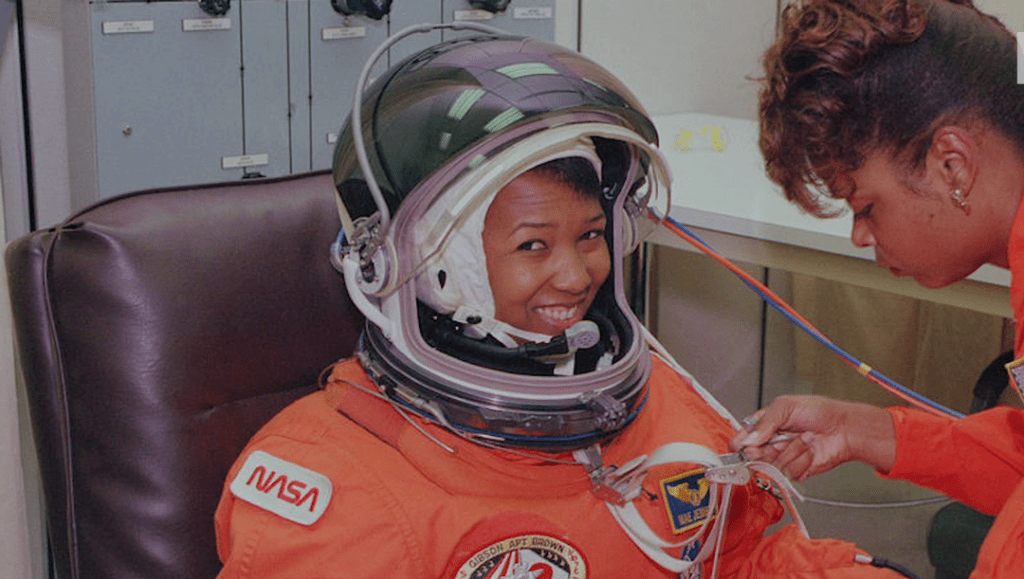
3. Hidden Figuras: Mae Jemison

Grades 6-8, 9-12

Introduce students to Mae Jemison, the first female African American astronaut to travel to space and one of the most accomplished women of her time—in addition to her work as an astronaut, she is also a doctor, engineer, author, and philanthropist!

Honor the Red Tails tile

4. Honor the Red Tails

K-12

Share the incredible true story of the Red Tail Squadron as told by Colonel Charles McGee, one of the last living members of the Tuskegee Airmen. Dive into the history of the Tuskegee Airmen and the accomplishments of African American pilots during World War II. Then learn how the Red Tails fought, not only to protect American lives, but to also end segregation in the US Armed Forces. End the video with a panel discussion featuring Colonel McGee and his fellow Tuskegee Airman, Cadet William T. Fauntroy, Jr., as well as Command Sergeant Major Michele S. Jones—the first woman in the U.S. Army Reserve to reach the esteemed position.

Ready-to-Use Activities tile

5. Ready-to-Use Activities

All Grade Levels

Explore these ready-to-use activities to celebrate Black History Month and bring exciting historical figures and stories into your daily lessons! Spanning all grade levels, browse Sentence Fix-Its for younger students or full February Activity Calendars for grades K-8 that offer an activity for every day of the month.

Remember Rosa Parks tile

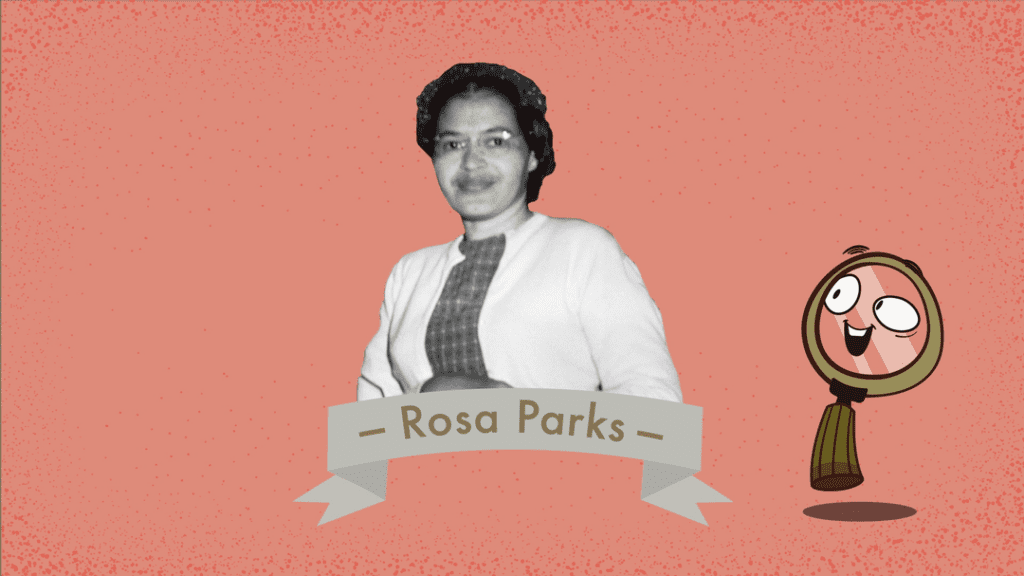
6. Remember Rosa Parks

Grades PreK–8

Remember Rosa Parks on her birthday (February 4) with Discovery Education’s Rosa Parks resources! Introduce PreK-5 students to her impacts on the Civil Rights Movement with the Curiosity: Rosa Parks video, which shows how Rosa Parks made a stand against segregation from her famous bus ride through the rest of her life. Next, get K-2 students thinking critically about Rosa Parks with the Rosa Parks activity or have 6-8 students summarize what they’ve learned with the Tweet Tweet activity. 

Voices of the Civil Rights Movement tile

7. Voices of the Civil Rights Movement

Grades 6-12

Find First-Hand accounts and learn more about the people behind the Civil Rights Movement! Created in partnership with Comcast NBCUniversal, Voices of the Civil Rights Movement‘s videos and related activities will help students discover new, authentic perspectives of this historic era. 

The post 7 Black History Month Teaching Ideas Featuring Authentic Voices and Resources appeared first on Discovery Education.

]]>


African American Experiences tile Celebrating Black History tile Hidden Figuras: Mae Jemison tile Honor the Red Tails tile Ready-to-Use Activities tile Remember Rosa Parks tile Voices of the Civil Rights Movement tile