Administrators | Discovery Education Nurture Curiosity Tue, 14 Oct 2025 20:59:31 +0000 en-US hourly 1 https://wordpress.org/?v=6.8.3 Beyond the Buzzword: What Engagement Really Looks Like Across K-12 https://www.discoveryeducation.com/blog/educational-leadership/engagement-across-k-12-webinar/ Tue, 14 Oct 2025 20:46:43 +0000 https://www.discoveryeducation.com/?post_type=blog&p=201312 In our webinar Beyond the Buzzword: What Engagement Really Looks Like Across K–12, education leaders joined us to take a closer look at one of the most important, and maybe somewhat misunderstood, concepts in education: engagement in the classroom. Hosted by Justin Karkow, VP of Teaching and Learning at Discovery Education, the conversation featured insights […]

The post Beyond the Buzzword: What Engagement Really Looks Like Across K-12 appeared first on Discovery Education.

]]>

In our webinar Beyond the Buzzword: What Engagement Really Looks Like Across K–12, education leaders joined us to take a closer look at one of the most important, and maybe somewhat misunderstood, concepts in education: engagement in the classroom. Hosted by Justin Karkow, VP of Teaching and Learning at Discovery Education, the conversation featured insights from Dr. Jackie Kapushion, Dr. Jorge Perez-Gallego, Emily Thomas, and Selina Latimore—each bringing a unique point of view on what engagement looks like, how it’s measured, and how it can be cultivated across schools and districts.

Middle School Girl with Engineering Project

Why Engagement Matters More Than Ever

Mr. Karkow opened with compelling data from our 2025–2026 Education Insights report: while 90% of teachers, principals, and superintendents agree that engagement is critical to student success, all of them see a need to improve it. In fact, 80% of students report struggling with boredom each week. This disconnect highlights that educators may not have clarity and alignment on what engagement truly means and how to foster it. 

Engagement Is More Than Just Participation

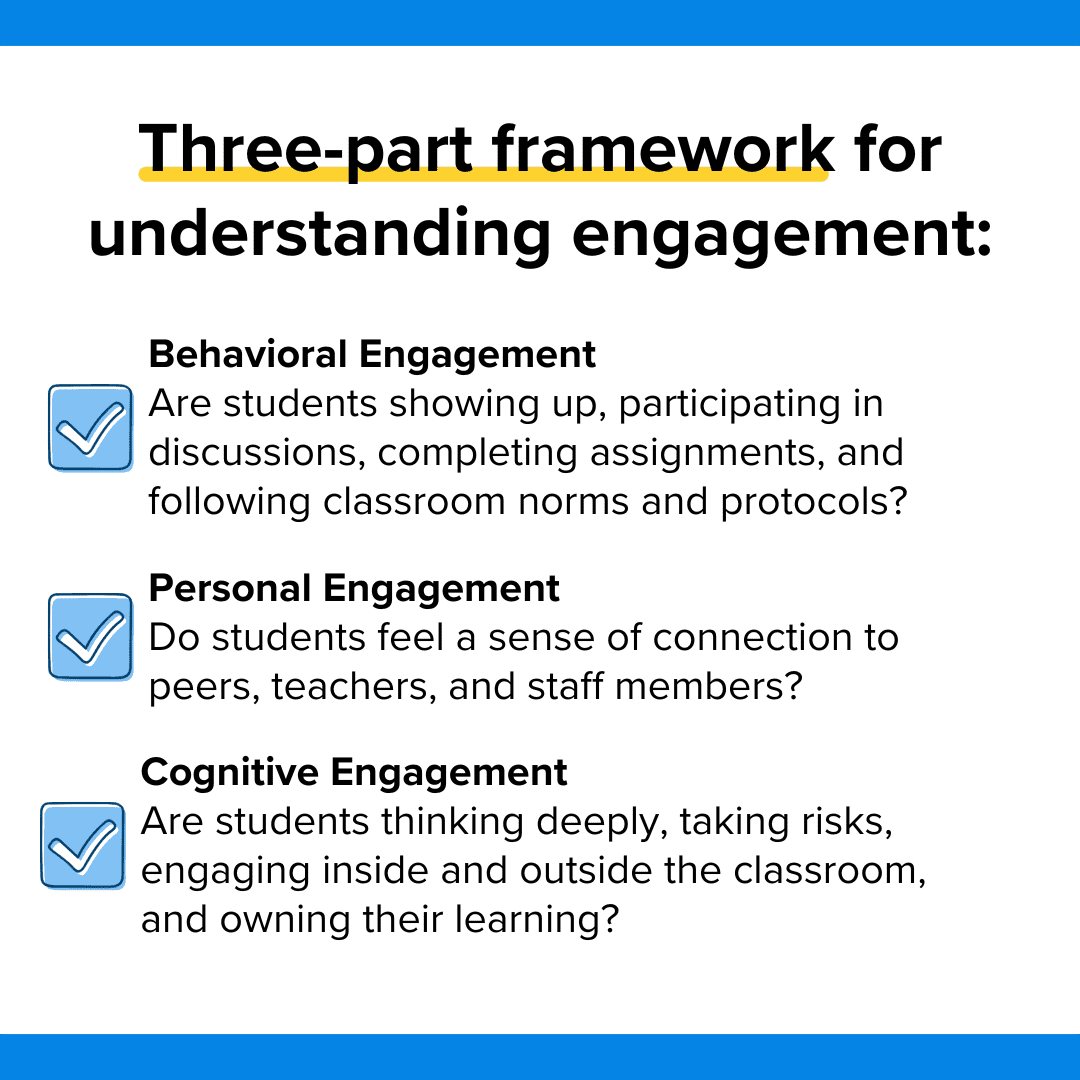
3 Part Framework for Understanding Engagement

Dr. Kapushion introduced a three-part framework for understanding engagement: 

  • Behavioral Engagement: Are students showing up, participating in discussions, completing assignments, and following classroom norms and protocols? 
  • Personal Engagement: Do students feel a sense of connection to peers, teachers, and staff members? 
  • Cognitive Engagement: Are students thinking deeply, taking risks, engaging inside and outside the classroom, and owning their learning? 

Ms. Latimore reflected, “Sometimes you see that natural spark start to dim…, but it’s because learning becomes routine. So, we have to spark their interest.” She emphasized that when students become invested in their learning, they become curious, confident, and willing to take risks. She also stressed the importance of connecting learning to real life.

Measuring Engagement: Beyond the Obvious

Recognizing and supporting engagement, which can be hard to measure and may be expressed in subtle ways by quieter students, requires thoughtful strategies. Panelists shared several approaches that they’ve found to be effective:

  • Social contracts: Co-created agreements between students and teachers that set expectations for respectful and active participation.
  • Wait time: Giving students a chance to think before responding, showing them that all voices matter.
  • Vertical learning spaces: Encouraging movement and collaboration to engage students in different modalities.
  • Learning walks: Used by district leaders to normalize definitions of engagement and observe it in action.

As Ms. Thomas put it, “We have really been working hard with our teachers to be intentional in building [these strategies] into their lesson planning, so that they are giving equal opportunities for all students to engage. No opting out. We’re all doing it. We’re all working together to get there.”

Tackling Barriers to Engagement

The 2025–2026 Education Insights report notes that students often feel both overwhelmed and under-challenged, which can lead to disengagement. Ms. Thomas’s team in Green Bay uses structured discussion techniques and collaborative learning to ensure every student has a role in the classroom conversation. She also pointed out that when teachers have a strong understanding of learning targets and goals, they can move the conversation toward them with questions that bring those ideas to light.

Technology as a Tool for Engagement

Dr. Perez-Gallego highlighted how technology, when used intentionally, can fuel engagement. His team leveraged an online world-building platform to create immersive science experiences, allowing students to explore exoplanets and ask real-world questions in a familiar digital environment. He explained how they came up with the idea: “Students choose to spend their free time in these virtual worlds, and they create their own adventures, their own environments. So, can we leverage that presence to go there and invite them to learn STEM fields?”

Dr. Kapushion emphasized the potential of AI tools to support engagement through personalized learning and timely feedback. This also helps them identify at-risk students and what specific interventions would help them. Her district uses “AI pop-ups” and “AI Bingo” to introduce educators to new strategies in a fun, low-pressure way.

Real-World Relevance: Engagement That Matters

Dr. Kapushion’s Innovation Center invites students to solve real-life problems faced by outside organizations, like designing underwater robots to investigate sewer system efficiency that was below standard. She explained, “They’re paid to do that work. Our businesses are reaching out to our students because [they] have the ability to think differently.” 

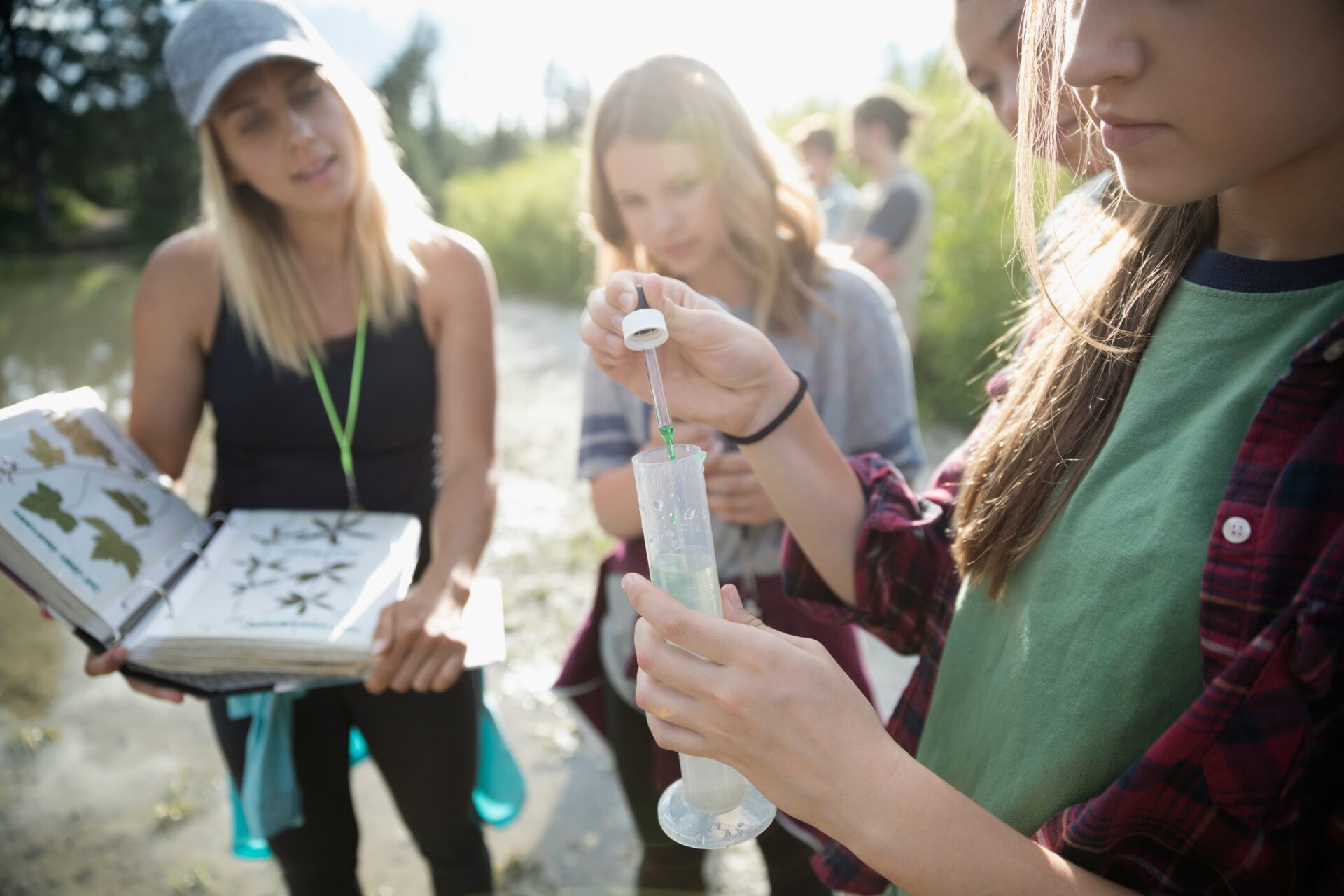
Selina Latimore shared how her school addressed food insecurity through a school-wide urban gardening initiative. Students not only learned how to grow and cook food but also connected their learning to real-world applications—an approach that sparked curiosity and built community. 

Teens Conducting Scientific Experiment Outdoors

Building Shared Understanding Across Communities

Creating alignment on engagement requires a shared language and vision. Panelists stressed the importance of:

  • Instructional frameworks that define engagement and guide professional development.
  • Communication between district leaders, principals, teachers, students, and families.
  • Professional learning that reaches every level of the organization and is rolled out district wide with consistency.

Key Takeaways for Education Leaders

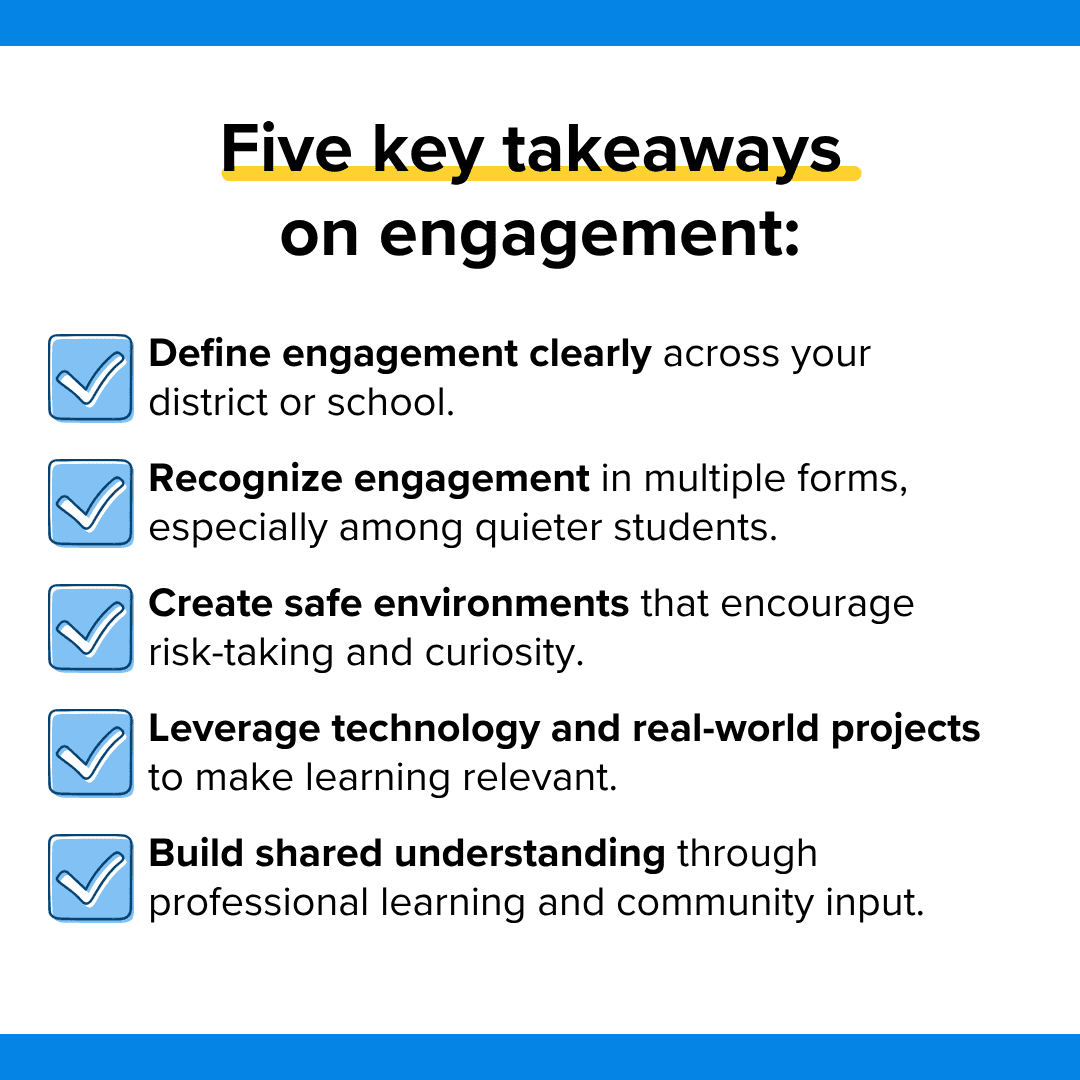
5 Key Takeaways on Engagement for Educational Leaders
  • Define engagement clearly across your district or school.
  • Recognize engagement in multiple forms, especially among quieter students.
  • Create safe environments that encourage risk-taking and curiosity.
  • Leverage technology and real-world projects to make learning relevant.
  • Build shared understanding through professional learning and community engagement.

There’s so much more to learn from the full discussion, so we invite you to watch the recording!

Discover More About Engagement in the Classroom

To dive deeper into the data and strategies discussed in the webinar, download Discovery Education’s 2025–2026 Education Insights Report. It’s packed with actionable insights for district leaders, principals, and educators looking to boost engagement in their schools. 

Meet the Experts

Dr. Jackie Kapushion, Superintendent, St. Vrain Valley School District (CO)

With 37 years of experience in public education, Dr. Kapushion currently serves as Superintendent of St. Vrain Valley School District. She holds a doctorate in Leadership and Equity from the University of Colorado at Denver, where she also earned her MA in Administration, Supervision, and Curriculum Development.


Selina Latimore, Principal, Richland County School District One (SC)

Selina Latimore is a veteran educator with over 30 years of experience in K–12 education, including 15 years as principal of J.P. Thomas Elementary School. She holds degrees from Presbyterian College and the University of South Carolina and is currently pursuing a doctoral degree in Educational Administration at Liberty University.


Emily Thomas, Associate Director of Curriculum, Green Bay Area Public Schools (WI)

Emily Thomas brings 14 years of experience in education. As Associate Director of Curriculum, she oversees PreK–12 math curriculum implementation, supports district math coaches, and leads math intervention programming.


Dr. Jorge Perez-Gallego, Education & Outreach Lead, National Solar Observatory (NSF)

Dr. Perez-Gallego is an astronomer, designer, museum professional, and educator with a PhD in Astronomy and an MFA in Design. He leads education, public outreach, and communications at the National Science Foundation’s National Solar Observatory.

The post Beyond the Buzzword: What Engagement Really Looks Like Across K-12 appeared first on Discovery Education.

]]>
MS Girl with Engineering Project 3-Part Framework for Understanding Engagement Teens Conducting Scientific Experiment Outdoors 5 Takeaways on Engagement Picture of DE Staff
Literacy and Math Strategies in the U.S.: What’s Working and What Isn’t https://www.discoveryeducation.com/blog/educational-leadership/literacy-and-math-strategies-whats-working-and-what-isnt/ Tue, 30 Sep 2025 22:39:38 +0000 https://www.discoveryeducation.com/?post_type=blog&p=199958 Taking Time to Assess Instructional Impact Educators must always balance urgent needs in classrooms with the longer-term goal of improving student outcomes. As part of a regular series on the state of education in the U.S., we asked four passionate leaders in K–12 education to join us for a conversation about literacy and math instruction […]

The post Literacy and Math Strategies in the U.S.: What’s Working and What Isn’t appeared first on Discovery Education.

]]>
Taking Time to Assess Instructional Impact

Educators Collaborating

Educators must always balance urgent needs in classrooms with the longer-term goal of improving student outcomes. As part of a regular series on the state of education in the U.S., we asked four passionate leaders in K–12 education to join us for a conversation about literacy and math instruction and student achievement: 

  • Dr. Emily Hare, Director of PreK–12 Mathematics for Guilford County Schools 
  • Dr. Amanda Malone, K–12 Literacy Director for the Mississippi Department of Education 
  • Dr. Melissa Sadorf, Executive Director of the National Rural Education Association and professor at Northern Arizona University 
  • Dr. Rufus Hill, State Director of K–12 Mathematics Coaching for the Mississippi Department of Education 

Host Dr. Karen Beerer, Senior Vice President of State and Strategic Partnerships at Discovery Education, opened the discussion by outlining what educators are observing and the pressures they’re experiencing in schools and districts of all kinds: 

  • The declines evident in the 2024 NAEP reading and math scores 
  • Legislation in many states that requires evidence-based instruction in curricula and sets aside funding for curriculum, tutoring, and acceleration efforts.  
  • Technology fatigue for educators driving demand for simpler, integrated solutions 
  • Teacher shortages and the effects on educators, schools, and districts 

But these challenges also create opportunities for using personalization and data-driven strategies to close gaps, making conversations like this one essential for driving progress in literacy and math.

What’s Currently Working?

Dr. Beerer said, “I thought we’d start with Mississippi, because when you read about the amazing growth that Mississippi students have achieved over the past decade, they often call it the ‘Mississippi Miracle.’ [But] it really wasn’t a miracle. It was planned, strategic systems of change.” Dr. Amanda Malone explained that everything began with legislation focused on K–3. Now schools throughout the state have literacy coaches who focus on “the whole child and the whole teacher.” In addition, they’ve found having access to high-quality instructional materials (HQIM) is key. 

For rural communities, relationships remain the foundation. Dr. Melissa Sadorf shared, “Teachers know their students and their families on a very personal level, and that allows those instructors to be highly responsive to student needs, even when formal resources are scarce.” By necessity, teachers wear multiple hats and can use technology to be a bridge that levels the playing field for students.

At the district level, Dr. Emily Hare explained that they are “intentional about aligning their work to a shared vision and value about what math instruction is and the experience each student should have” in her district. This shared vision guides curriculum development, HQIM choices, and professional learning, resulting in consistency across classrooms. 

What Needs More Attention?

“Too many students are leaving high school without the skills they need to succeed, especially in rural and high-poverty schools,” remarked Dr. Sadorf. Teacher shortages are making sustained improvement difficult, and a reliance on short-term grants and pilot programs means gains are hard to hold onto. 

Dr. Hare agreed, adding: “We’ve articulated clear commitments at the state and district level, but how do we ensure that our supports and resources are consistent across all of those schools? It’s really not a question of effort—I think we all know that—but of sustaining and scaling that vision so that it lives in daily practice.”

In Mississippi, coaches are actively building teacher capacity around HQIM, but sometimes teachers are trained and then leave. Dr. Malone emphasized that using resources most effectively will help, especially when technology is involved.

Dr. Rufus Hill pointed out that using resources with fidelity is important for success, especially since the teacher shortage means not everyone has the specific background in what they’re teaching. He mentioned one math teacher with an ELA background who has “been able to kind of teach herself to teach the students” using HQIM. 

Strategies and Real-World Examples of Change

The panelists shared programs, approaches, and partnerships that are driving real gains in literacy and numeracy. 

Dr. Malone identified: 

  • Using and training educators on structured literacy, which is based on the Science of Reading 
  • Helping students learn to read in the most efficient way 
  • Continually evolving and learning as educators 

Dr. Hill noted: 

  • Implementing the Mathematics Instruction Observational Protocol (MIOP)  
  • Creating a coaching academy with instructional leaders and coaches 
  • Starting a partnership with the Dana Center at the University of Texas 

Dr. Hare emphasized: 

  • Implementing HQIM with integrity for children that are traditionally underserved 
  • Supporting collaborative math leadership teams at school and district levels 
  • Seeking input from cross-collaborative district teams multiple times per year 

Dr. Sadorf then concluded that collaboration is a multiplier: partnering increases impact, closes gaps, and “ensures educator voices shape solutions that benefit everyone.” 

Supplemental Resources

Regarding HQIM and supplemental resources, Dr. Beerer asked how educators assess them and then implement them in the classroom. Dr. Malone noted that while each district chooses its own resources, state department level administrators can “see commonalities and provide coaching around those.” She recommended using supplemental resources to elevate math and literacy instruction.

Innovation in Math and Literacy

The panelists each offered a single word or phrase to capture what innovation in math and literacy means to them.

  • Dr. Sadorf chose the word connected, saying, “Innovation in literacy math has to connect students to engaging, relevant learning.” 
  • Dr. Hare chose alignment, explaining, “It’s about aligning to our vision, our values.” 
  • Dr. Hill came up with purposeful, noting, “I just think that with every decision that we make, we need to make sure that we have a purpose for that.” 
  • Dr. Malone’s phrase was “Effectively partnering what we know with what we have, with a learner in mind.” 

Engagement’s Role in Learning

In closing, Dr. Beerer brought up the “big topic” of engagement, something that always seems to come up in discussions about ways to improve learning. She noted that the 2025–2026 Education Insights Report, with a focus on engagement, offers key insights about education, motivation, and challenges in today’s classrooms. The report is free to download.

There’s so much more to learn from the full discussion!

Host and Experts’ Backgrounds

Dr. Karen Beerer, Senior Vice President of State and Strategic Partnerships at Discovery Education. 

Dr. Emily Hare, Director of PreK–12 Mathematics for Guilford County Schools. With a Ph.D. in Teacher Education, she is dedicated to building strong systems that empower teachers and students to succeed in math. 

Dr. Amanda Malone, K–12 Literacy Director for the Mississippi Department of Education. With over 20 years of experience as a teacher, coach, and coordinator, she brings deep expertise in literacy leadership. She earned her Ph.D. in Higher Education Administration. 

Dr. Melissa Sadorf, Executive Director of the National Rural Education Association and professor at Northern Arizona University. She has over 30 years of experience in education as a teacher, principal, and superintendent.

Dr. Rufus Hill, State Director of K–12 Mathematics Coaching for the Mississippi Department of Education. He earned degrees from Alabama A&M, Delta State University, and completed his doctorate at National University. 

The post Literacy and Math Strategies in the U.S.: What’s Working and What Isn’t appeared first on Discovery Education.

]]>
Educator Collaboration
Celebrating Educator Excellence with the Discovery Education Award Recipients of 2025 https://www.discoveryeducation.com/blog/de-news/discovery-education-awards-2025/ Mon, 05 May 2025 10:00:00 +0000 https://www.discoveryeducation.com/?post_type=blog&p=189935 The Discovery Education Awards honor districts, schools, and educators who make a notable impact on student achievement by inspiring engagement and curiosity. Selected through a competitive nomination and application process, the 2025 winners exemplify a commitment to fostering student growth for a dynamic future. 2025 Educators of the Year The DE Educator of the Year […]

The post Celebrating Educator Excellence with the Discovery Education Award Recipients of 2025 appeared first on Discovery Education.

]]>


The Discovery Education Awards honor districts, schools, and educators who make a notable impact on student achievement by inspiring engagement and curiosity. Selected through a competitive nomination and application process, the 2025 winners exemplify a commitment to fostering student growth for a dynamic future.

2025 Educators of the Year

The DE Educator of the Year Award winners share a remarkable passion for inspiring their students and creating engaging learning environments. Though their teaching methods vary, they all demonstrate a strong commitment to innovation and adaptability as they mentor peers, develop impactful programs, and champion lifelong learning. 

Dr. Sequoyah Wharton, Brentwood High School, Brentwood Union Free School District, New York

Dr. Sequoyah Wharton is an art and media educator who believes in creating student-centered learning that connects to real-world issues, inspiring collaboration, critical thinking, and cultural awareness. Through projects like documentary filmmaking, digital storytelling, and hands-on artwork, he empowers students to tell their own stories. 

Over the years, Dr. Wharton has refined his teaching philosophy to prioritize student agency, ensuring every learner feels seen and valued. A standout achievement is the development of a digital filmmaking program in partnership with PBS Student Reporting Labs, which has amplified student voices and strengthened media literacy.  

Dr. Wharton cultivates a collaborative learning environment by building strong connections with students and families. For him, teaching is not just delivering content — it’s empowering students to express their identities and leave a lasting impact on the world around them. 

Emma DeVine, St. Andrew’s Episcopal School, Austin, Texas

Emma DeVine is a middle school science teacher dedicated to showing students the everyday relevance of science. Emma uses hands-on experiments, inquiry-based learning, and the Harkness discussion method to foster curiosity and real-world connections. By weaving storytelling into lessons, Emma celebrates unsung scientists, fostering diverse perspectives and inspiring students to see themselves as part of the scientific community. 

She has crafted unique learning experiences, such as guiding students through neuroscience research by experimenting with fruit flies to study feeding behaviors. Emma has also led impactful initiatives like citizen science events and developing curricula as a CDC Science Ambassador Fellow, providing students with meaningful opportunities to address real-world challenges. 

Emma cultivates positive relationships with students and their families through open communication and encouragement. Viewing challenges as opportunities for growth, she continually refines her teaching strategies to meet the diverse needs of her students. Emma’s teaching inspires the next generation of changemakers to approach science with critical thinking, enthusiasm, and curiosity. 

Annissa Grimes, Friendly High, Prince George's County Public Schools, Maryland

Annissa Grimes, an Academy of Health and Bio Instructor, is committed to creating impactful, hands-on learning experiences. Whether guiding students through simulated phlebotomy using prosthetic arms or hosting financial literacy games, Annissa fosters an engaging environment that encourages critical thinking and real-world application. 

One standout project, “The Paternity Show,” blends the societal implications of paternity court with a hands-on DNA lab simulation. By involving students, staff, and faculty, the activity enhances understanding of science and psychology, while building a collaborative community.  

Annissa continuously refines her teaching methods through self-assessments, adapting to diverse learning styles, and championing lesson planning that meets the needs of all learners. Above all, Annissa values strong relationships. By hosting senior breakfasts, holiday gatherings, and celebrating personal milestones, she creates a supportive “village” for students and families.

Josephine Mesina, International High School at Largo, Prince George's County Public School, Maryland

With nearly two decades of experience in education, science teacher Josephine Mesina has earned a reputation as an exceptional STEM educator. Whether leading physics experiments, mentoring international STEM projects, or facilitating meaningful discussions, Josephine inspires students to tackle real-world challenges. 

Josephine’s teaching philosophy focuses on empowering multilingual learners and ensuring equal access to STEM education. She employs strategies like phenomenon-based learning and claim-evidence-reasoning (CER) to help students think critically and communicate effectively. Josephine has served as a STEM Fair Coordinator, Science Department Chair, and DoD STEM Ambassador, drawing on her experience as an immigrant to connect deeply with students and fellow educators. 

Josephine’s ability to nurture belonging and inspire growth has earned her accolades such as the Excellence in Mentorship Award and widespread admiration from peers and students. All in all, she ensures her classroom remains a vibrant hub of innovation, curiosity, and opportunity.

Seyyed Sharifi, Hartvigsen School, Granite School District, Utah

Special Education teacher Seyyed Sharifi creates dynamic, student-centered learning environments where every learner can thrive. Understanding that traditional teaching methods may not meet the needs of all learners, he integrates creativity and technology into his classroom to captivate and engage students. 

Seyyed has implemented programs such as structured job skills training and at-home learning initiatives, as well using virtual reality to explore space, historical landmarks, and virtual job sites with students. His differentiated approach ensures all students, regardless of ability, can actively participate and succeed.  

He also emphasizes strong home-school partnerships to create a support network that benefits both students and their loved ones. Honored with awards like Teacher of the Year and the Excel Award, Seyyed is celebrated for his innovative methods that empower every student in his classroom to shine.

2025 Schools of the Year

The DE Schools of the Year work tirelessly to empower every student to realize their full potential and prepare confidently for the future. Below, we celebrate the inspiring journeys and accomplishments of three outstanding schools named “School of the Year,” showcasing the pinnacle of education through creativity and dedication.

Autism Inspired Academy, Florida

Guided by a holistic philosophy, Autism Inspired Academy (AIA) empowers children with autism to thrive academically, socially, emotionally, and independently. The school’s mission is rooted in fostering a life of meaning, purpose, and joy for every student, ensuring education transcends the classroom and prepares them for real-world success.  

At AIA, education is personalized and innovative, with small class sizes, individualized learning plans, and a dedicated team of highly trained educators. The school integrates research-based autism education strategies with hands-on experiences to address every aspect of student development. Whether through academic instruction, life skills coaching, or community initiatives, AIA meets each student where they are and helps them unlock their full potential.  

Success at AIA is defined by growth in all areas of life. Students build friendships, gain independence, and equip themselves with the skills they need to thrive. By combining comprehensive assessments, targeted support, and family involvement, AIA delivers results that transform not just students’ lives but also the lives of their families. With a waitlist of over 100 students, AIA’s impact and demand highlight its essential role in the broader autism education landscape. 

Montana Digital Academy, Montana

Montana Digital Academy (MTDA) is Montana’s statewide online learning program, ensuring every student across the Big Sky State has equal access to high-quality education. MTDA was established by the State of Montana to bridge the gaps in educational opportunities created by geographic, economic, or staffing challenges. It offers an innovative suite of digital programs for students in both rural and urban communities.  

The MTDA mission is simple but far-reaching: to provide every Montana student, regardless of location or circumstance, with the tools, support, and pathways needed to thrive in an increasingly complex world. Through flexibility, technology, and collaboration, MTDA doesn’t just teach students; it empowers them to chart their own course toward success. 

Fairfield Career and Technology Center, South Carolina

Fairfield Career and Technology Center (FCTC) is a vibrant hub grounded in the belief that every student can achieve excellence with the right resources and support they need to succeed. Through its mission of delivering the skills, knowledge, and hands-on experience for college and career readiness, FCTC sets a high benchmark for preparing students to thrive in a competitive global society. The school’s vision—“Where Dreams are Born and Careers Begin!”—reflects its dedication to inspiring ambition and cultivating talent through innovative, immersive education. 

FCTC supports students with a wide range of career training programs aligned to their unique interests and aspirations. Students can earn industry certifications and gain real-world experience, growing in confidence and skills tailored to their career interests. FCTC provides a strong foundation to many high-demand fields such as Health Science, Culinary Arts, Mechatronics, and Welding. Additional resources like mentorship opportunities, student organizations, and business partnerships ensure that every learner has a bright future.

2025 Districts of the Year

The Districts of the Year for 2025 are redefining public education. Their innovative efforts are driven by collaboration and a commitment to ensuring all students are empowered to succeed. Today we celebrate these districts as a beacon of strong leadership and resolve. 

Los Angeles Unified School District, California

The second largest in the nation, the Los Angeles Unified School District enrolls more than 520,000 students in transitional kindergarten through 12th grade. Los Angeles Unified stands as a national model of equity, excellence, and innovation, committed to uplifting every student and expanding access to transformative learning opportunities. With a steadfast focus on eliminating educational inequities, the district empowers all students to graduate prepared for college, career, and life. Rooted in a whole-child approach, the district embraces the rich diversity of its communities by addressing the academic, social-emotional, and cultural needs of every learner.

Los Angeles Unified leads with innovation and vision. Strategic initiatives such as on-demand tutoring, expanded enrichment programs, and targeted supports reflect the district’s proactive and student-centered mindset. By leveraging data and fostering collaborative partnerships, the district equips educators to close opportunity gaps and cultivate inclusive, high-performing classrooms. Los Angeles Unified celebrates gains in graduation rates and academic achievement, while remaining firmly committed to reimagining public education and ensuring that every student thrives.

Baldwin County Public Schools, Alabama

The Baldwin County Public School System is an innovative and forward-thinking district serving over 31,000 students from kindergarten through twelfth grade. Baldwin County combines cutting-edge technology with a supportive learning environment to prepare all students for college and career readiness. By promoting high expectations and providing tailored resources, Baldwin County empowers students to reach their full potential. 

The district goes beyond traditional education, offering real-world experiences and industry credentials through initiatives like the nationally recognized digital learning program and Baldwin Preparatory Academy, to close achievement gaps and enhance student outcomes. Proudly living by their motto, #BaldwinProud #CommunityStrong, the district also collaborates with communities to inspire and prepare students for bright futures, cementing its legacy as a 21st-century education leader.  

Nash County Public Schools, North Carolina

Nash County Public Schools (NCPS) is deeply committed to nurturing both the academic and personal growth of its students. The district’s vision—”to empower all students, parents, staff, and community partners to work together for global connections, innovative opportunities, and a transformational culture”—reflects its dedication to preparing students for a dynamic and interconnected world. 

NCPS ensures the success of every student through a robust support system built under its Multi-Tiered System of Support (MTSS). This framework delivers academic, emotional, and career-oriented programs to address the diverse needs of the district’s students. The district’s achievements include a significant leap in statewide rankings, a steady increase in literacy benchmarks, and recognition of schools for growth and achievement. By bridging academic rigor, social responsibility, and data-driven improvement, Nash County Public Schools defines success as more than just numbers—it’s about fostering an environment where every student can discover and reach their full potential.

As Teacher Appreciation week starts, we are excited to celebrate the impact all educators have on students and recognize the many ways they nurture and inspire students. Thank you to all educators working hard to help students grow and a special congratulations to the educators, schools, and districts honored with Discovery Education Awards! 

Learn and Grow from a Community of Expert Educators

The post Celebrating Educator Excellence with the Discovery Education Award Recipients of 2025 appeared first on Discovery Education.

]]>
trophy_azure.png trophy_jade-1.png trophy_bumblebee.png
Unlocking Potential in 2025: A New Era of Discovery Education https://www.discoveryeducation.com/blog/de-news/unlocking-potential-in-2025-a-new-era-of-discovery-education/ Tue, 08 Apr 2025 19:34:33 +0000 https://www.discoveryeducation.com/?post_type=blog&p=186447 For over 20 years, Discovery Education has empowered educators to inspire curiosity, build confidence, and accelerate learning. As education evolves—shaping how students learn, increasing demands on teachers, and adding complexity to classrooms—we have evolved too, continuously innovating to meet these changing needs. This year, we’re introducing updates designed to make teaching more effective, engaging, and […]

The post Unlocking Potential in 2025: A New Era of Discovery Education appeared first on Discovery Education.

]]>

For over 20 years, Discovery Education has empowered educators to inspire curiosity, build confidence, and accelerate learning. As education evolves—shaping how students learn, increasing demands on teachers, and adding complexity to classrooms—we have evolved too, continuously innovating to meet these changing needs. This year, we’re introducing updates designed to make teaching more effective, engaging, and personalized—ensuring educators have the support they need to create lasting, meaningful learning experiences. And while many of these updates support educators, others are designed for students, nurturing their natural curiosity and joy in learning.

With every advancement, improvement, and new offering we bring, one thing will remain constant: our commitment to being the most trusted learning partner, equipping educators and engaging students to succeed in a dynamic world. We’ve listened closely to students, teachers, school leaders, district administrators, and the broader educational community as they have shared their challenges, celebrations, and concerns, and these meaningful conversations have informed our work for the back-to-school season.

Innovative Tools to Enhance Teaching and Learning

Teachers tell us they spend countless hours on assessments, lesson planning, and differentiation. In fact, 94% of educators seek tools that give them time back to focus on students. We’re helping streamline these tasks with new enhancements in Experience, including:

Personalized Content Recommendations High Res scaled jpg

Personalized Content Recommendations

There are thousands of amazing, standards-aligned resources in Experience. Now, finding the perfect resource for any lesson is even easier. Our new Curriculum Aligned Resources feature allows educators to quickly access handpicked content to enhance their core curriculum. Teachers can also get recommendations based on their unique profile and preferences to suggest relevant resources specifically curated for their classroom.

AI TeacherTool | Assess

Our new AI-powered assessment generator allows educators to create standards-aligned assessments in minutes. Teachers can easily customize by reading level, question type, and Bloom’s Taxonomy—all while leveraging Discovery Education’s trusted, cross-curricular resources.

AI TeacherTools Assess High Res png
GoogleAdOn2 png

Improved Integrations

With the new Google Add-on, Discovery Education Experience now integrates seamlessly with Google Classroom, making access to quality content easier and more efficient for educators and students. The new integration offers simplified assignments, more focused access for students, and time-saving workflows for lesson planning.

Enhancing Math Engagement and Support for Educators

Over 90% of teachers believe that personalized instruction can improve learning outcomes, such as test scores, learning retention, and academic performance. As educators work furiously to address declining math scores, we’re making sure they have the right support to differentiate math instruction and drive student outcomes. 

a11ytenframe smaller gif

Improved Accessibility

DreamBox Math lessons now integrate assistive technology, keyboard navigation, and multiple modalities to ensure all students can engage independently. Learn more about these updates HERE.

Enhanced Engagement

We are rolling out updates to some of the most popular lessons in DreamBox Math to make it easier for students to start, play, and complete lessons successfully. Students will find clearer, always-available instructions, updated scaffolding, enhanced visuals, easier interactivity, and added real-world context for mathematical concepts.

too soon 1 gif
lesson chooser screenshot png

Refreshed Middle School Math Environment

We know that students will feel more engaged and excited about algebra readiness when they can work in an age-appropriate environment. The new middle school environment has a sleek new look and introduces an upgraded lesson chooser, making it easier for students to navigate assignments and personalized lessons. Check out the new middle school experience HERE.

Helpful Curriculum Guide

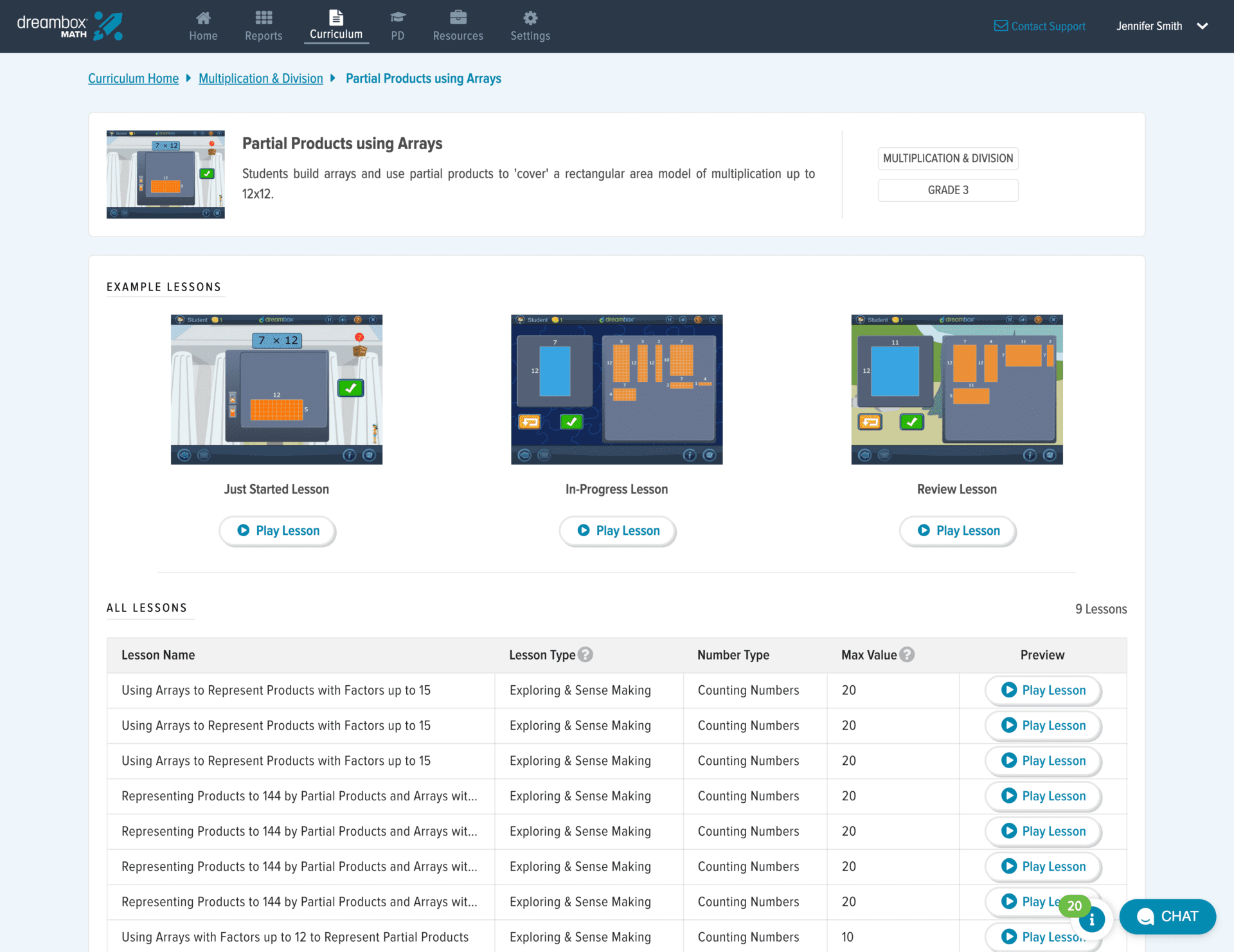
The new in-product interactive curriculum guide enables educators to explore and align lessons with state standards for targeted instruction. Learn more about the curriculum guide.

Curriculum Guide Home Domains MD Partial Products wArrays png

Building Future-Ready Classrooms

Students crave access to content that excites and inspires them. And, when educators spark connections showing how daily lessons apply inside of class and beyond, they can make learning meaningful. In fact, 80% of students believe that content that connects to real-world experiences is essential for their day-to-day learning.

03 CC Educator Connector Profile 011025 jpg

Career Connect Available to All Experience Partners

Career Connect brings industry professionals right into classrooms, allowing teachers to request virtual visits from employee volunteers. The feature provides experiential knowledge that reinforces educational concepts as it relates to real-world problem solving and innovation.

New Career resources in Experience will help educators show students the real-world relevance of their daily learning while building career awareness, exploration, and preparedness. These resources provide a strong connection to K-8 instruction, ensuring that career readiness begins early and empowers students to imagine endless possibilities beyond the classroom.

New, Exciting Lessons Across Our Programs

  • New Experience Lessons: Experience’s vast library of curated educational content continues to grow to meet the needs of modern K-12 classrooms. For back-to-school, educators will find even more instructional resources with an Enhanced Instructional Strategy Library and Model Lessons. Students and teachers will also have access to new K-2 civics lessons, ELA Fix-It Models for middle school, and new DE Original videos for ELA and social studies.  
  • DreamBox Reading Expands to Grade 5: DreamBox Reading’s adaptive engine, already providing personalized reading instruction for PreK-2 students, will now support literacy development for grades 3-5. New lessons include foundational phonics, fluency, vocabulary, and comprehension strategies, helping older students master essential reading skills.
  • More Mystery Science Fun: Mystery Science will feature new resources, including open-and-go lessons and vocabulary supports on topics like matter and water. Plus, we’re updating Anchor Layers on all units.

Get an in-depth look into the exciting updates coming for the 2025-2026 school year!

The post Unlocking Potential in 2025: A New Era of Discovery Education appeared first on Discovery Education.

]]>
Personalized-Content-Recommendations-High-Res-scaled.jpg AI-TeacherTools-Assess-High-Res.png GoogleAdOn2.png a11ytenframe-smaller.gif too-soon-1.gif lesson-chooser-screenshot.png Curriculum-Guide-Home-Domains-MD-Partial-Products-wArrays.png 03-CC-Educator-Connector-Profile-011025.jpg
Future-Ready Classrooms for Future-Ready Students https://www.discoveryeducation.com/blog/educational-leadership/future-ready-classrooms-for-future-ready-students/ Mon, 07 Apr 2025 19:34:34 +0000 https://www.discoveryeducation.com/?post_type=blog&p=186785 The disconnect between today’s classrooms and the demands of the modern workforce has become impossible to ignore—and students agree. According to the latest Education Insights Report from Discovery Education, 80% of students believe that learning content tied to real-world experiences is essential. Yet over 60% doubt the skills they’re learning in school prepare them for […]

The post Future-Ready Classrooms for Future-Ready Students appeared first on Discovery Education.

]]>

The disconnect between today’s classrooms and the demands of the modern workforce has become impossible to ignore—and students agree. According to the latest Education Insights Report from Discovery Education, 80% of students believe that learning content tied to real-world experiences is essential. Yet over 60% doubt the skills they’re learning in school prepare them for the workforce, and 71% aren’t excited about entering it.

But what if classrooms operated differently and weren’t confined by brick walls or a single campus? That’s the mission driving Dr. Romules Durant, CEO and Superintendent of Toledo Public Schools (TPS). Through his innovative vision for future-ready classrooms, Dr. Durant is courageously transforming education to raise graduation rates, ensure students are career ready, and build a strong community.

Ohio DOE Progress Ratings of
Toledo Public Schools

TPS leads Ohio urban districts in assessment progress with 4 stars.

45% of TPS schools scored at least 3 stars for the progress rating on closing the gap.

TPS Magnets and Academies are On Par or Exceeding the local high school on state testing.

Dr. Durant knows it can feel risky taking on a new approach, especially if stakeholders don’t fully see the vision yet, but he isn’t afraid to explore new avenues for bridging the gap between classrooms and industries. He actively collaborates with industry leaders who share his vision and are eager to partner with him. “It’s about taking calculated risks to change how schools operate,” he explains. 

Since Dr. Durant started in his role as Superintendent, Toledo Public Schools has turned into a top-rated school district in the state, and a model for others in how to implement successful work-ready programs, magnet schools, and specialized academies. In the latest Progress Rating from the Ohio Department of Education, nearly half of Toledo Public Schools received an Overall Rating of 3 or more stars, meaning they meet, exceed, or significantly exceed state standards.

Bridging Industry and Classroom​

The concept of future-ready classrooms starts with an “outside the box” perspective on bringing industries into the learning environment, and the determination to build strategic relationships with those who can make the concept a reality.  Dr. Durant and his team at TPS saw an opportunity to integrate the resources and expertise of their community to create hands-on, real-world learning experiences and work-based learning programs that focus on career exploration. This type of innovation requires thoughtful planning, relationship building, and of course, bravery. For Dr. Durant, that meant building trust and collaboration with all stakeholders, like the school board and local business leaders. Together, they decided to invest in initiatives that may not yet be the norm in K-12 education but show tremendous promise.

Redefining the Classroom

Classrooms don’t have to be just spaces for textbooks and whiteboards—envision multi-functional learning campuses that serve students, families, and communities alike.  

The Community Hubs at Toledo Public Schools are the perfect example of redefining the classroom. Today, six hubs offer academic and work-based learning opportunities for students as well as services and programs for the community, like financial management, childcare, homecare for senior citizens, mental health services, and even entertainment. It’s a dual-benefit model that exemplifies how blending education with community resources can make a tangible difference.

"Community members, like our senior citizens, can utilize the trades and services that are available. For example, we're finding out through local studies that what keeps a senior from owning their own home is the inability to do maintenance. We have a construction academy and landscaping program here on this campus. Put a ticket in, and a student, alongside a professional, will handle the issue."
Romules Durant headshot e1741024422319 jpeg
Dr. Romules Durant
CEO & Superintendent, Toledo Public Schools

The Power of Work-Based Learning

Career exploration should be central to every student’s academic journey, starting as early as elementary school. In fact, according to the Education Insights Report, 90% of middle schoolers today want more exposure to different career paths, while 88% wish they had more resources to better prepare them.  

Many countries around the world provide young students the opportunity to explore careers through work-based learning such as apprenticeships, intern- and externships, and immersive, future-ready classrooms. After an externship in Germany to study their workforce development programs, Dr. Durant implemented a strong emphasis on immersion. “That trip really helped set the stage for how to go about workforce development,” explains Durant. “We started erasing boundaries of communities and putting education at the place of industry . . . Imagine if you were able to go to school from 7-12th grade AND earn a degree at that place of industry. How better prepared you would be for the workforce!”

For example, the Toledo Technology Academy of Engineering for grades 7-12 allows students to explore engineering in a fully immersive learning environment with the Electric Vehicle lab, the first of its kind for an Ohio public school. With 11,000 sq. ft. of space, including six vehicle lifts for hands-on learning and a classroom, this lab gives students the opportunity to learn firsthand about cutting-edge technology, as well a current mechanics and displaced autoworkers a chance to enhance their own skillsets and careers. 

Another inspiring example is the Aerospace & Natural Science Academythe aerospace campus is located at the airport where students can work on airplanes and even earn their pilot’s license, while the natural science campus is just next door to the Toledo Botanical Gardens.

“It’s about aligning kids to things they have an interest in, exposing them to career pathways, and that excitement is what brings them to school,” explains Dr. Durant. “I tell other superintendents that if you connect a student to a career pathway, that’s an increase in your graduation rate . . . the student is aligned to something where they can see and understand why this science experiment or this math skill they are learning matters.”

Through these programs, learning feels relevant. Students aren’t memorizing equations in isolation; they’re applying them on the job floor, in hospitals, and in labs. They’re building confidence as they earn credits toward 2- and 4-year degrees, as well as trade certifications, all while seeing firsthand how their future-ready classrooms tie directly to real-world careers.

Funding Innovation Through Relationships

None of these innovations are possible without financial stability and support. And Dr. Durant has proven that calculated risks yield remarkable rewards by establishing strong relationships with those who hold the purse strings“It’s through a strong relationship with the school board,” Dr. Durant says, “that we’ve been able to mitigate risks and ensure we have the resources we need to launch programs that truly change how students learn.”

Securing local funding for future-ready classrooms also needs strong relationships with the community. Partnerships with local businesses, nonprofits, civic organizations, school boards, and city councils provide a wealth of opportunity for funding because all those involved have the same goal: ensuring students become successful members of the community.

Empowering Students. Strengthening Communities.

The goal of future-ready classrooms is clear—prepare students to thrive in a dynamic world. Students get a head start on building skills and earning credits, so upon graduation, they’re equipped with knowledge and experience to jumpstart their careers. Communities benefit, too. When young people feel supported, they want to work and live in the same neighborhoods that nurtured their potential, creating a strong, thriving local workforce. 

At TPS, this isn’t just a vision—it’s happening. Leaders like Dr. Durant are setting the standard, offering a clear model for schools and communities to follow. Discovery Education is proud to stand alongside courageous leaders like Dr. Durant to prepare future-ready students. We are continually innovating career exploration resources like Career Connect and the STEM Careers Coalition, as well as building partnerships with industry leaders that share our vision, to support career and workforce programs designed for 21st century students.   

With unique partnerships between Discovery Education and industry leaders, those same schools and communities can deliver students their holistic vision of what it means to be ready for the future.  Together, we’re rethinking education, one calculated risk at a time.

Jean Johnson

Jean Johnson

Access the Discovery Education career readiness guide, Expanding Opportunities: How District Leaders Can Champion Career Readiness, to learn key strategies for developingand maintaining career readiness programs in your district.

The post Future-Ready Classrooms for Future-Ready Students appeared first on Discovery Education.

]]>
Romules-Durant_headshot-e1741024422319.jpeg Jean Johnson
Leveling Up Middle School Math Engagement with DreamBox https://www.discoveryeducation.com/blog/de-news/leveling-up-middle-school-math-engagement-with-dreambox/ Mon, 07 Apr 2025 19:34:33 +0000 https://www.discoveryeducation.com/?post_type=blog&p=186438 Middle school is a time of growth and discovery—a time when students connect to their personal and academic identities. For educators, it’s a pivotal period for nurturing independence and agency in learning to promote engagement. This has always been a core value for DreamBox and critical for algebra readiness, an indicator of future success in […]

The post Leveling Up Middle School Math Engagement with DreamBox appeared first on Discovery Education.

]]>
Middle school is a time of growth and discovery—a time when students connect to their personal and academic identities. For educators, it’s a pivotal period for nurturing independence and agency in learning to promote engagement. This has always been a core value for DreamBox and critical for algebra readiness, an indicator of future success in college and careers.

DreamBox Math equips students with scaffolded personalized learning that fosters conceptual understanding. Students learn to think logically, identify patterns, construct arguments and solve new and unfamiliar problems.  

Empowering Engaged and Motivated Learners

We believe that learning math should inspire confidence, curiosity, and creativity in every student. That’s why we are excited to introduce a new look for the DreamBox Math middle school experience. Designed to reflect the energy, interests, and routines of today’s middle schoolers, this update isn’t just about the technologyit’s about empowering engaged, motivated learners to see the adventure in mathematics, rather than a simple problem set. In DreamBox we want to make every moment matter more, to make teaching and learning mathematics more engaging, motivating, and impactful. 

Meeting a New Milestone

As 11-14-year-olds navigate this key developmental phase, they are eager to take more control over their learning choices. DreamBox, a trusted name in personalized, adaptive math instruction, has been part of many students’ journeys through elementary school. But middle school is different, and students are ready to level up.  

We are committed to our partnership with educators and rely on their feedback to guide innovations that ensure the most for their students. To meet the evolving needs of learners, DreamBox tested early designs with students to learn what resonates in grades 6–8 and used their feedback to modernize the engagement. 

The result? An exciting environment that combines an elevated age-appropriate environment and a more vibrant design that conveys a youthful sense of adventure and independence and thoughtfully crafted to support self-directed learning while maintaining a sense of fun and curiosity about math.   

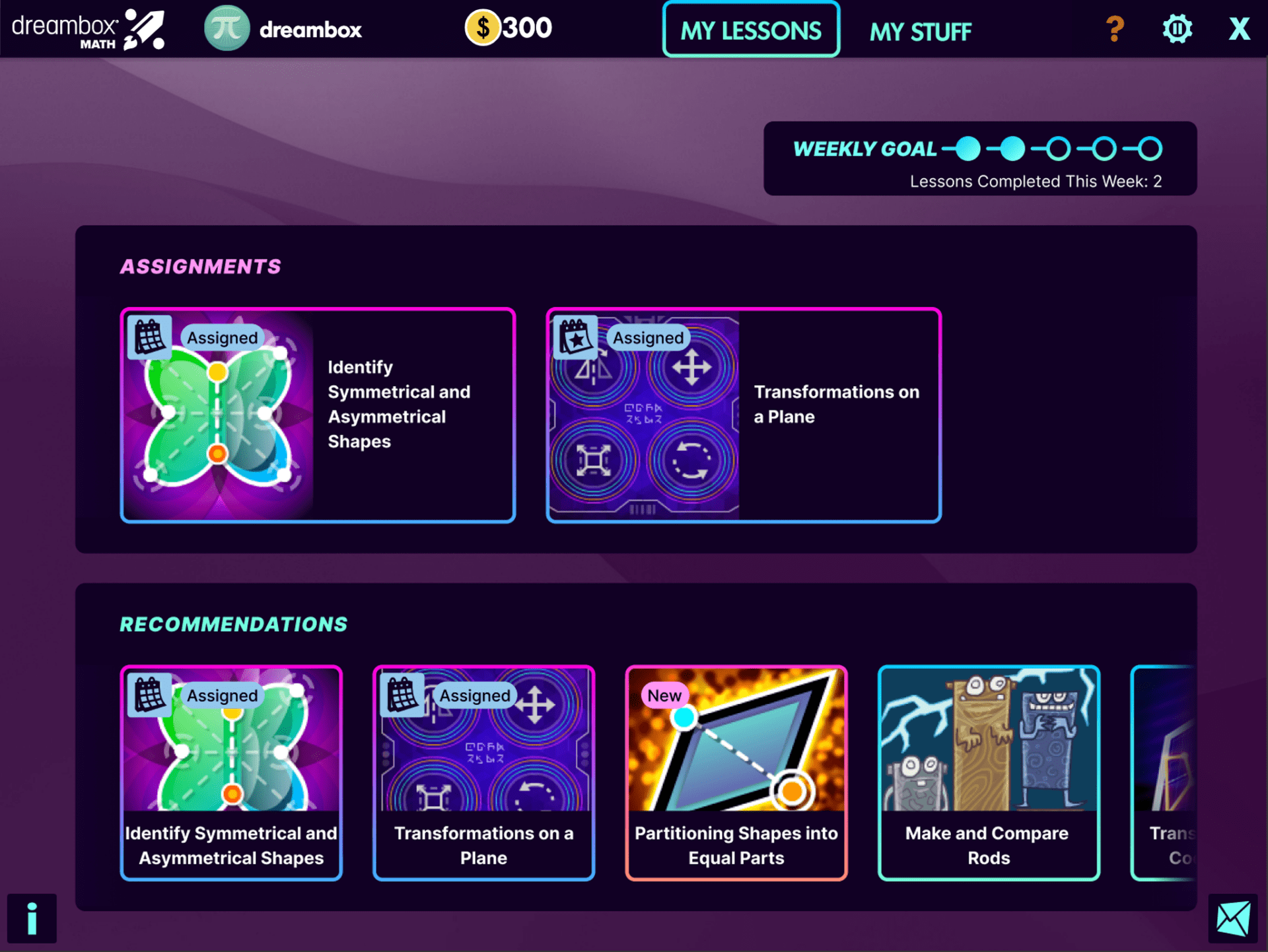
lesson chooser screenshot png
  • Students will now have an easier time navigating lessons. The fresh lesson chooser design offers them greater clarity and ownership in their learning, with an Assignment panel that appears when teachers create assignments, enabling students to distinguish teacher-assigned tasks from lessons recommended by DreamBox.  
  • There’s something powerful about seeing your progress in real-time. With a prominently featured weekly goal tracker, students can’t miss an opportunity to self-monitor their achievements, stay motivated, and remain accountable to their learning goals.  
  • It’s augmenting math with an all-new vibe. Say hello to a fresh experience —this vibrant and engaging engagement is reflective of middle schoolers’ tastes and personal interests.  

“I like this design better than the actual one . . . if you change your design like this and then people take a look at it, they're probably going to start wanting to work on DreamBox more often.”

Why Educators Will Love It

Middle school teachers and administrators will reap the benefits of these updates too. Students who feel more in control of their learning often engage at higher levels, making teaching not just easier, but more impactful.  

Here’s how the new DreamBox middle school experience supports educators: 

  • Fostering Independence: With clear visibility into assignments and goals, students are equipped to take more ownership of their learning. Educators can simply assign lessons, confident that students will take the reins from there.  
  • More engagement: Students and educators both benefit from the learning impact of DreamBox with better data that informs teaching decisions with little to no additional effort. 
  • Meaningful Goal Tracking: Improved engagement means teachers get deeper insights into student learning.   

Gazing into the Future

This is just the beginning. Updates to the middle school experience will continue into 2026 with: 

  • Student-Facing Reporting Tools designed to empower students to set and monitor their own progress—boosting both confidence and accountability.  
  • Exciting New Engagement Elements that continue to delight and motivate students, taking math learning to the next level of fun and interactivity.  
  • Ongoing lesson updates and new lessons for Grades 6–8 over the longer term to better directly align with middle school curriculum as well as educator experience improvements to support teaching routines.  

With these updates, we’re excited to support teachers and administrators with tools that elevate their dedicated work, improve classroom outcomes, and cultivate a love for learning.  

Together, we can make middle school math a place where students not only succeed— but thrive. 

To learn more about how DreamBox can take your math instruction to the next level, visit our back-to-school landing page or reach out to a member of our team 

Get an in-depth look into the exciting updates coming for the 2025-2026 school year!

The post Leveling Up Middle School Math Engagement with DreamBox appeared first on Discovery Education.

]]>
lesson-chooser-screenshot.png
Explore the New DreamBox Math Curriculum Guide https://www.discoveryeducation.com/blog/de-news/explore-the-new-dreambox-math-curriculum-guide/ Mon, 07 Apr 2025 19:30:32 +0000 https://www.discoveryeducation.com/?post_type=blog&p=186419 By giving educators the tools they need to connect instruction, address gaps, and foster enrichment, DreamBox is helping schools and districts create a lasting impact on student outcomes.   We’re excited to announce the release of our all-new interactive Curriculum Guide! Designed with educators in mind, this interactive guide empowers teachers, instructional coaches, and administrators to […]

The post Explore the New DreamBox Math Curriculum Guide appeared first on Discovery Education.

]]>

By giving educators the tools they need to connect instruction, address gaps, and foster enrichment, DreamBox is helping schools and districts create a lasting impact on student outcomes.  

We’re excited to announce the release of our all-new interactive Curriculum Guide! Designed with educators in mind, this interactive guide empowers teachers, instructional coaches, and administrators to connect DreamBox lessons to classroom instruction like never before. Whether you’re looking to solidify classroom connections, gain familiarity with lessons and lesson progressions, or align with state standards, the new curriculum guide has you covered.  

Reinforcing Classroom Connections

At DreamBox, we know that the best math instruction happens when it’s deeply tied to what’s being taught in real classrooms. That’s why our Curriculum Guide is built to make those connections seamless. Teachers can now filter and sort lessons by DreamBox Learning Units or by their state standards, enabling educators to see the full breadth and depth of lesson coverage in DreamBox Math 

Curriculum Guide Home Domains png

Increased Flexibility for Teachers

Teachers want to spend less time navigating tools and more time inspiring students. With unprecedented visibility into lesson groups and individual lessons, you can confidently align DreamBox to your instructional goals. Whether students are just starting on a concept, in progress, or reviewing, you can easily find a lesson to support getting them to the next level. This flexibility makes it easier than ever to pre-teach concepts, provide intervention or enrichment, and support small-group instruction. 

What’s New in the DreamBox Curriculum Guide?

The Curriculum Guide is an essential tool for any educator looking to enhance their teaching with DreamBox Math. Whether you’re complementing your curriculum, supporting a struggling student, or challenging advanced learners, DreamBox has the perfect lesson for every scenario.  

Curriculum Guide Home Domains Gr 3 MD View all png

1. Scope & Sequence of Lessons Made Transparent

Navigate the full breadth and depth of DreamBox’s curriculum with ease. You’ll have clear insight into the progression of lessons and how they evolve to support complex math concepts.  

2. Smart, Intuitive Filters

Quickly find the exact lesson you need by filtering by: 

  • Grade Level 
  • State Standards 
  • DreamBox Learning Unit Domains  

3. Standards Alignment at a Glance

Every lesson tile includes clear alignment to state standards, so you can connect DreamBox lessons directly to your instructional core without skipping a beat.  

4. Lesson Previews

Preview individual lessons for planning, whether you’re preparing for small-group instruction or one-on-one intervention. You’ll gain insights into how lessons engage students and how the adaptive platform personalizes tasks for their needs.  

Take a Deeper Look Inside DreamBox

With DreamBox’s adaptive progression, our lessons meet students where they are and move them toward mastery. Our math curriculum is built to reflect the dynamic process of learning while encouraging students to transfer prior learning. This curriculum guide enables educators to explore our lessons by domain, across three unique lesson types 

Curriculum Guide Home Domains MD Partial Products wArrays FS png

Lesson Types & Progression:

  1. Exploring & Sensemaking: Students explore math concepts and reflect on their understanding, making connections to foundational skills.  
  2. Looking for Structure & Relationships: Lessons identify key mathematical structures and relationships to deepen conceptual understanding.  
  3. Fluency, Application & Procedural Skills: Students practice and apply procedural skills with confidence, progressing toward fluency.  

This intentional progression ensures that every student builds a strong mathematical foundation, regardless of where their learning begins.  

Classroom Applications of DreamBox Lessons:

With the Curriculum Guide, you can: 

  • Enhance instruction with lessons that align directly to your classroom goals.  
  • Pre-teach or reinforce concepts by targeting specific standards or skills.  
  • Support small-group or 1-on-1 instruction, demonstrating lessons based on students’ progress toward proficiency.  

Assignments and feedback tools are also on the way—stay tuned!  

Why This Matters for Educators

DreamBox’s Adaptive Personalization ensures every lesson is tailored to each student’s unique needs. The new DreamBox Curriculum Guide doesn’t just support teaching; it empowers educators to confidently integrate technology into their classrooms. Here’s what it offers at a glance: 

  • Discover thousands of lessons for grades K-8 aligned with your state’s standards and instructional goals.  
  • Gain unprecedented visibility into the scope, sequence, and alignment of DreamBox lessons.  
  • Identify and preview lessons to plan for targeted support to meet your students where they are, and ensure every learner has the opportunity to succeed.  
  • Get a clearer understanding of the lessons recommended in students’ personalized learning paths and identify lessons to assign and support deeper curricular connections. 

Building Connections for Educators  

We’ve added this capability to DreamBox Math based on the feedback we’ve heard from our partners and we’re super excited of what’s coming soon, like the ability to assign personalized lessons from the Curriculum Guide. 

Plus, this new foundation will allow us to continue gathering invaluable feedback from you, our amazing educators. Together, we’ll keep building what every teacher and every student needs to achieve math excellence. 

Experience the Curriculum Guide Today

We’re thrilled to bring you this new tool, and we can’t wait to hear how it transforms the way you teach math. Log into your DreamBox account today to explore the Curriculum Guide—and get ready to experience a whole new level of teaching excellence.  

Don’t have an account yet? Start your free trial and see what’s possible with DreamBox. Together, we can inspire a lifelong love of learning in math.  

Happy teaching,  

The DreamBox Team  

Get an in-depth look into the exciting updates coming for the 2025-2026 school year!

The post Explore the New DreamBox Math Curriculum Guide appeared first on Discovery Education.

]]>
Curriculum-Guide-Home-Domains.png Curriculum-Guide-Home-Domains-Gr-3-MD-View-all.png Curriculum-Guide-Home-Domains-MD-Partial-Products-wArrays-FS.png
Effective Academic Intervention Strategies https://www.discoveryeducation.com/blog/educational-leadership/a-personalized-approach-to-academic-intervention-to-address-the-whole-child/ Sun, 06 Apr 2025 19:34:31 +0000 https://www.discoveryeducation.com/?post_type=blog&p=183941 At Emerson Elementary in Owosso, Michigan, Principal Jessica Aue is helping her teachers transform their approach to student intervention with the innovative Child Study Team—a unique initiative that delivers personalized academic intervention to address the whole child. Here’s how Jessica and her team have established an empathetic yet results-driven process that’s changing students’ lives, empowering […]

The post Effective Academic Intervention Strategies appeared first on Discovery Education.

]]>

At Emerson Elementary in Owosso, Michigan, Principal Jessica Aue is helping her teachers transform their approach to student intervention with the innovative Child Study Team—a unique initiative that delivers personalized academic intervention to address the whole child.

Here’s how Jessica and her team have established an empathetic yet results-driven process that’s changing students’ lives, empowering teachers, and strengthening family relationships.

Remediation leadership Hero Image 1920x534 1
de icon lightbulb filled png

Child Study Team: A Collaborative Strategy for Personalized Academic Intervention

A Child Study Team (CST) is a collaborative group of educators, psychologists, social workers, and parents who come together to identify and address challenges affecting students’ academic and social success. The purpose of the team is to implement effective, personalized academic intervention strategies that support the school’s goal of educating the whole child—not just through academic metrics, but by understanding their personal experiences, relationships, home life, and challenges.

The Child Study Team at Emerson believes that every child is more than just their academic scores. They dig deep to understand the whole child—exploring hobbies they enjoy, any trauma they’ve endured, their family dynamics, and their social environments. This holistic perspective helps determine personalized interventions that truly resonate.

The Child Study Team is about collaboration — bringing together different perspectives to create the best possible outcomes for students.

Screenshot 2024 05 22 at 11 20 26 AM png

Identifying and Implementing Targeted Academic Intervention Strategies

It’s a comprehensive process to identify students needing intervention and the type of intervention they need. But Emerson’s team has a successful process put into place to ensure all students get a fair chance at success.  

Here are the steps to the CST process:  

  1. Identification and Data Collection – Before students begin receiving extra support, teachers and staff collect comprehensive data through a prepared packet. This includes academic performance, social behaviors, and input from parents, all of which ensures the team has a complete view of the child’s challenges and needs.
  2. Collaborative Planning – The CST meets to create an action plan, assigning tasks to specific members. Educators and specialists work together to outline specific, research-based interventions.
  3. Implementation and Flexibility – The Title I team carries out interventions, which can be one-on-one, in small groups, or within the classroom. Flexibility is key—if a child isn’t progressing, the team evaluates alternative options.
  4. Follow-Up and Accountability – The team then holds ongoing meetings to evaluate progress, discuss plans, and refine strategies as needed, working closely with each student’s teacher.
     

The Title I team may lead the intervention strategies and implementations, but collaborating with the students’ teachers is also key to the CST success. Jessica recognizes the importance of the CST working closely with the rest of the staff. “The teachers are the experts,” she says. “Trust them. If there’s a lack of trust, figure out why and address it.” This trust allows flexibility and creativity within the intervention process while ensuring students receive the highest level of care and support.

de icon box filled png

Balancing Data and Relationships in Successful Academic Intervention

A huge strength of Emerson’s Child Study Team lies in its ability to balance data-driven decision-making with the context that comes from strong personal relationships with students and families. 

“We use data, of course—things like test scores and progress monitoring results,” Jessica explains. “But we also know what students like to do and what their home life is like. This context helps us create interventions that are effective.” Jessica also emphasizes, “The people on your team make a huge difference. Our teachers, social workers, and psychologists know each student so well, which allows us to make better decisions. They’re not just staff members—they’re truly advocates for our kids.”

Prioritizing relationships has had ripple effects. Jessica’s philosophy of involving families closely in the process has fostered trust and collaboration between parents and the school. Families know they can rely on the team to care for their child while also holding them accountable, creating a balance of empathy and high expectations.

The focus on the whole child has made Emerson Elementary’s approach stand out. Teachers and staff have seen firsthand how a deeper understanding of each student leads to better outcomes—whether that’s catching phonics gaps missed by traditional assessments or creating unique behavioral interventions tailored to a student’s personality.  

de icon gradcap filled png

Scaling Academic Intervention Strategies: The Emerson Child Study Team Model

While Jessica acknowledges that the close-knit nature of Emerson Elementary helps make their Child Study Team successful, she believes the model can be scaled with the right commitment.  

Some of her recommendations for scaling include: 

  • Consistency in Documentation – Ensure every team member is on the same page regarding student needs using standardized forms.  
  • Clear Action Plans – Assign specific responsibilities to team members and set deadlines to maintain accountability.  
  • Commitment to Relationships – Prioritize building strong relationships with families and students to sustain the success of the CST process.  
  • Open Communication – Maintain consistent and open lines of communication to avoid any potential mistakes that could ultimately impact the student negatively.  
  • Training and Resources – Ensure all team members, from teachers to social workers, have the tools and professional learning they need to succeed.  

The Child Study Team at Emerson Elementary goes beyond typical interventions. It represents a philosophy rooted in trust, empathy, and high expectations for every student. By prioritizing relationships, using data effectively, and empowering staff to make professional decisions, Emerson models what intervention can look like when the whole child is considered.

For principals, educators, and parents wondering how to get started, Jessica offers this advice: “Be consistent, value relationships, and always listen to the families. They know their children in ways that data never will.” 

The post Effective Academic Intervention Strategies appeared first on Discovery Education.

]]>
Remediation-leadership-Hero-Image-1920×534-1 de-icon-lightbulb-filled.png Screenshot-2024-05-22-at-11.20.26 AM.png de-icon-box-filled.png de-icon-gradcap-filled.png
The Future of Learning in Rural America https://www.discoveryeducation.com/blog/educational-leadership/the-future-of-learning-in-rural-america/ Sun, 06 Apr 2025 19:34:25 +0000 https://www.discoveryeducation.com/?post_type=blog&p=183682 When we look at rural education, we find ourselves at the crossroads of tradition and innovation. While living in rural America offers unique challenges, the landscape of rural education is evolving, driven by the dedicated efforts of educators, communities, and families who are committed to turning obstacles into exciting opportunities. Let’s explore some remarkable strategies […]

The post The Future of Learning in Rural America appeared first on Discovery Education.

]]>

When we look at rural education, we find ourselves at the crossroads of tradition and innovation. While living in rural America offers unique challenges, the landscape of rural education is evolving, driven by the dedicated efforts of educators, communities, and families who are committed to turning obstacles into exciting opportunities. Let’s explore some remarkable strategies and the resilient spirit that shape the future of learning in rural America.

summer school header
de icon box filled png

Unpacking the Present

Rural districts face significant hurdles today, including geographic isolation, higher poverty rates, and lack of technology. Challenges in recruiting and retaining teachers further complicate matters. Smaller student populations often lead to constrained course offerings and limited access to advanced programs. At the end of the day, the educational landscape in many rural areas is exacerbated by long commutes, restricted funding, and limited access to resources, training opportunities, and technology.  

BUT, through creative solutions, technology integration, and community partnerships, rural education has a hopeful path forward, proving that with determination and collaboration, even the most isolated areas can provide vibrant educational experiences.

de icon lightbulb filled png

Paving the Road Ahead

Despite these obstacles, a wealth of potential lies ahead for rural education. Here are a few strategies that rural district leaders, alongside teachers, have implemented with success:

Embrace Hybrid Learning: Have the mindset that learning can happen outside of a traditional four-wall classroom. Hybrid learning—blending face-to-face teaching with digital resources like Discovery Education—bridges gaps in access to resources and real-world learning opportunities. Schools can extend educational reach, cater to students’ varied needs, and bring fresh new content into the learning experience. 

Foster Community Partnerships: Working closely with local businesses and community organizations can bring valuable resources and opportunities to rural schools. These partnerships can offer internships, mentorship programs, and vocational training, enriching the educational landscape and preparing students for the workforce—while at the same time strengthening the economic health of the community. 

Bring Families In: Fundamental to rural education are the families that significantly contribute to the education of students. Their roles include volunteering, supporting extracurriculars, providing workplace learning opportunities, and engaging with school boards and committees. Through robust school-family communication, they contribute resources and knowledge, strengthening educational support networks.

Advocate for Policy Changes: Engaging with policymakers is crucial in creating systemic change. Advocating for policies that target equitable funding, infrastructure improvements, and technological access can significantly enhance educational outcomes for rural students. Stay up-to-speed on the latest funding sources and get to know those in positions of policy-making power.

Prioritize Teacher Recruitment and Support: Collaborate with local higher ed institutions to incentivize teaching programs, fostering future educators from within the community. Then, prioritize ongoing professional learning for educators to ensure they are equipped with the latest teaching strategies and tools. By investing in teachers, administrators can build a positive work environment. This also greatly improves educator retention if they feel supported, and prepared, to be the best teachers they can be.

de icon hand plant filled png

Inspiring a Brighter Future

The path forward for rural education is one of possibilities and growth. By understanding the current landscape’s intricacies and leaning into our communities’ strengths, we can inspire a future where every student has the opportunity to flourish, regardless of their postcode. The future of rural education is a community effort—together, we can make it happen. Let’s work toward building a strong foundation for success.

Find More Innovative Strategies for Education Leaders

The post The Future of Learning in Rural America appeared first on Discovery Education.

]]>
summer-school-header de-icon-box-filled.png de-icon-lightbulb-filled.png de-icon-hand-plant-filled.png Picture of Allen Pratt, Ed.D.
Discovery Education’s Predictions for Education Trends to Watch in 2025 https://www.discoveryeducation.com/blog/de-news/discovery-educations-predictions-for-education-trends-to-watch-in-2025/ Sun, 06 Apr 2025 19:20:58 +0000 https://www.discoveryeducation.com/?post_type=blog&p=183086 There are fewer pages to turn in the 2024 calendar, and as we head into 2025, the Discovery Education team has identified key trends that will shape how students learn, how teachers teach, and how administrators make decisions. These insights aren’t just predictions—they’re paired with actionable insights to help create impactful learning in the new […]

The post Discovery Education’s Predictions for Education Trends to Watch in 2025 appeared first on Discovery Education.

]]>

There are fewer pages to turn in the 2024 calendar, and as we head into 2025, the Discovery Education team has identified key trends that will shape how students learn, how teachers teach, and how administrators make decisions. These insights aren’t just predictions—they’re paired with actionable insights to help create impactful learning in the new year.   

computer header 2

Three Education Trends to Watch in 2025

Rocket ColorBlock Coral svg

1. Engaging Student Interest Will Emerge as Top Tool to Combat Absenteeism and Learning Loss

2024 was full of conversations on keeping students engaged in learning and, in 2025, a focus on student engagement will continue to be a top priority.  

In Discovery Education’s 2024 Education Insights Report, 15% of parents stated lack of interest or motivation for learning is a primary reason for student absences, second only to health-related issues. Chronic student absenteeism is a national issue, and as the challenge to keep learners attentive and invested continues to intensify in 2025, districts will focus on investing in engagement-focused solutions to empower teachers to build lessons that leave students curious and inspired. 

Throughout the next year, gamified learning platforms, interactive digital assets, Augmented and Virtual Reality technology, and immersive learning experiences are expected to take center stage. These tools are capable of capturing and holding students’ attention while promoting deeper learning outcomes. 

Gamified learning platforms, interactive digital assets, and immersive learning experiences are expected to take center stage in 2025. These tools will help educators build unique learning experiences that capture and hold students’ attention while promoting deeper learning outcomes.  

DE's Tip for 2025: "Staying informed about the latest engagement-focused technologies and consider how these innovations might fit into existing teaching strategies."
Plan Board ColorBlock Bumblebee svg

2. Revisiting Future Readiness

In our 2024 Education Insights survey, 80% of students reported that they believe content that connects to real-world experiences is important for long-term success and day-to-day learning. In 2025,  

This continued desire for career exploration will cause the line between core instructional materials and supplemental resources to continue to blur—and for good reason. Educators and policy leaders are now leveraging resources that focus more on career exploration and building future-ready skills. Supplemental resources are being introduced to bridge the gaps in students’ different learning journeys, offer tailored materials to better differentiate instruction, create interest-based lessons, and keep students engaged in the overall learning process. 

DE's Tip for 2025: "Evaluate how your students currently interact with real-world content and skill-building, then consider how these career-focused experiences can be introduced earlier and more frequently."
de icon Question Thought azure space

3. Prioritizing Personalized Learning to Meet All Students’ Needs

Our 2024 Education Insights Report shows that two-thirds of teachers feel that students exhibit a wider range in knowledge and skills compared to five years ago, reflecting persistent learning loss among many students. Additionally, 81% of teachers find navigating these varied skill levels challenging. These skill level differences have created a larger need for personalization tools to address each student’s needs in real time. Educators will continue to seek out solutions that focus on reading and math intervention and acceleration by meeting learners where they are, differentiate instruction, allow self-paced learning, and integrate scalable best practices. Educators can prepare by exploring platforms and tools that emphasize personalization and by developing strategies to incorporate them effectively in their classrooms.

DE's Tip for 2025: "When exploring new technology and curriculum resources, prioritize those that offer transparent data on student improvement for maximum impact."

2025 is set to be another game-changing year for education with exciting opportunities for educators and leaders to adapt, innovate, and positively impact all students.  

For district and state administrators, the upcoming challenge lies in prioritizing investments that maximize outcomes while aligning with your school system’s unique needs. Focusing on engagement, personalization, and mindful technology integration can ensure students and teachers thrive together throughout 2025. 

Take a Deep Dive into the latest Education Insights Report from Discovery Education

The post Discovery Education’s Predictions for Education Trends to Watch in 2025 appeared first on Discovery Education.

]]>
computer-header-2 Rocket-ColorBlock-Coral.svg Plan-Board-ColorBlock-Bumblebee.svg de-icon-Question Thought-azure-space