Thought Leadership | Discovery Education Nurture Curiosity Wed, 08 Oct 2025 19:29:36 +0000 en-US hourly 1 https://wordpress.org/?v=6.8.3 Literacy and Math Strategies in the U.S.: What’s Working and What Isn’t https://www.discoveryeducation.com/blog/educational-leadership/literacy-and-math-strategies-whats-working-and-what-isnt/ Tue, 30 Sep 2025 22:39:38 +0000 https://www.discoveryeducation.com/?post_type=blog&p=199958 Taking Time to Assess Instructional Impact Educators must always balance urgent needs in classrooms with the longer-term goal of improving student outcomes. As part of a regular series on the state of education in the U.S., we asked four passionate leaders in K–12 education to join us for a conversation about literacy and math instruction […]

The post Literacy and Math Strategies in the U.S.: What’s Working and What Isn’t appeared first on Discovery Education.

]]>

Taking Time to Assess Instructional Impact

Educators Collaborating

Educators must always balance urgent needs in classrooms with the longer-term goal of improving student outcomes. As part of a regular series on the state of education in the U.S., we asked four passionate leaders in K–12 education to join us for a conversation about literacy and math instruction and student achievement: 

  • Dr. Emily Hare, Director of PreK–12 Mathematics for Guilford County Schools 
  • Dr. Amanda Malone, K–12 Literacy Director for the Mississippi Department of Education 
  • Dr. Melissa Sadorf, Executive Director of the National Rural Education Association and professor at Northern Arizona University 
  • Dr. Rufus Hill, State Director of K–12 Mathematics Coaching for the Mississippi Department of Education 

Host Dr. Karen Beerer, Senior Vice President of State and Strategic Partnerships at Discovery Education, opened the discussion by outlining what educators are observing and the pressures they’re experiencing in schools and districts of all kinds: 

  • The declines evident in the 2024 NAEP reading and math scores 
  • Legislation in many states that requires evidence-based instruction in curricula and sets aside funding for curriculum, tutoring, and acceleration efforts.  
  • Technology fatigue for educators driving demand for simpler, integrated solutions 
  • Teacher shortages and the effects on educators, schools, and districts 

But these challenges also create opportunities for using personalization and data-driven strategies to close gaps, making conversations like this one essential for driving progress in literacy and math.

What’s Currently Working?

Dr. Beerer said, “I thought we’d start with Mississippi, because when you read about the amazing growth that Mississippi students have achieved over the past decade, they often call it the ‘Mississippi Miracle.’ [But] it really wasn’t a miracle. It was planned, strategic systems of change.” Dr. Amanda Malone explained that everything began with legislation focused on K–3. Now schools throughout the state have literacy coaches who focus on “the whole child and the whole teacher.” In addition, they’ve found having access to high-quality instructional materials (HQIM) is key. 

For rural communities, relationships remain the foundation. Dr. Melissa Sadorf shared, “Teachers know their students and their families on a very personal level, and that allows those instructors to be highly responsive to student needs, even when formal resources are scarce.” By necessity, teachers wear multiple hats and can use technology to be a bridge that levels the playing field for students.

At the district level, Dr. Emily Hare explained that they are “intentional about aligning their work to a shared vision and value about what math instruction is and the experience each student should have” in her district. This shared vision guides curriculum development, HQIM choices, and professional learning, resulting in consistency across classrooms. 

What Needs More Attention?

“Too many students are leaving high school without the skills they need to succeed, especially in rural and high-poverty schools,” remarked Dr. Sadorf. Teacher shortages are making sustained improvement difficult, and a reliance on short-term grants and pilot programs means gains are hard to hold onto. 

Dr. Hare agreed, adding: “We’ve articulated clear commitments at the state and district level, but how do we ensure that our supports and resources are consistent across all of those schools? It’s really not a question of effort—I think we all know that—but of sustaining and scaling that vision so that it lives in daily practice.”

In Mississippi, coaches are actively building teacher capacity around HQIM, but sometimes teachers are trained and then leave. Dr. Malone emphasized that using resources most effectively will help, especially when technology is involved.

Dr. Rufus Hill pointed out that using resources with fidelity is important for success, especially since the teacher shortage means not everyone has the specific background in what they’re teaching. He mentioned one math teacher with an ELA background who has “been able to kind of teach herself to teach the students” using HQIM. 

Strategies and Real-World Examples of Change

The panelists shared programs, approaches, and partnerships that are driving real gains in literacy and numeracy. 

Dr. Malone identified: 

  • Using and training educators on structured literacy, which is based on the Science of Reading 
  • Helping students learn to read in the most efficient way 
  • Continually evolving and learning as educators 

Dr. Hill noted: 

  • Implementing the Mathematics Instruction Observational Protocol (MIOP)  
  • Creating a coaching academy with instructional leaders and coaches 
  • Starting a partnership with the Dana Center at the University of Texas 

Dr. Hare emphasized: 

  • Implementing HQIM with integrity for children that are traditionally underserved 
  • Supporting collaborative math leadership teams at school and district levels 
  • Seeking input from cross-collaborative district teams multiple times per year 

Dr. Sadorf then concluded that collaboration is a multiplier: partnering increases impact, closes gaps, and “ensures educator voices shape solutions that benefit everyone.” 

Supplemental Resources

Regarding HQIM and supplemental resources, Dr. Beerer asked how educators assess them and then implement them in the classroom. Dr. Malone noted that while each district chooses its own resources, state department level administrators can “see commonalities and provide coaching around those.” She recommended using supplemental resources to elevate math and literacy instruction.

Innovation in Math and Literacy

The panelists each offered a single word or phrase to capture what innovation in math and literacy means to them.

  • Dr. Sadorf chose the word connected, saying, “Innovation in literacy math has to connect students to engaging, relevant learning.” 
  • Dr. Hare chose alignment, explaining, “It’s about aligning to our vision, our values.” 
  • Dr. Hill came up with purposeful, noting, “I just think that with every decision that we make, we need to make sure that we have a purpose for that.” 
  • Dr. Malone’s phrase was “Effectively partnering what we know with what we have, with a learner in mind.” 

Engagement’s Role in Learning

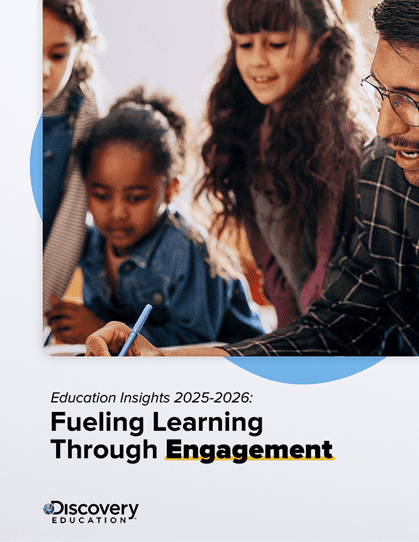
In closing, Dr. Beerer brought up the “big topic” of engagement, something that always seems to come up in discussions about ways to improve learning. She noted that the 2025–2026 Education Insights Report, with a focus on engagement, offers key insights about education, motivation, and challenges in today’s classrooms. The report is free to download.

There’s so much more to learn from the full discussion!

Host and Experts’ Backgrounds

Dr. Karen Beerer, Senior Vice President of State and Strategic Partnerships at Discovery Education. 

Dr. Emily Hare, Director of PreK–12 Mathematics for Guilford County Schools. With a Ph.D. in Teacher Education, she is dedicated to building strong systems that empower teachers and students to succeed in math. 

Dr. Amanda Malone, K–12 Literacy Director for the Mississippi Department of Education. With over 20 years of experience as a teacher, coach, and coordinator, she brings deep expertise in literacy leadership. She earned her Ph.D. in Higher Education Administration. 

Dr. Melissa Sadorf, Executive Director of the National Rural Education Association and professor at Northern Arizona University. She has over 30 years of experience in education as a teacher, principal, and superintendent.

Dr. Rufus Hill, State Director of K–12 Mathematics Coaching for the Mississippi Department of Education. He earned degrees from Alabama A&M, Delta State University, and completed his doctorate at National University. 

The post Literacy and Math Strategies in the U.S.: What’s Working and What Isn’t appeared first on Discovery Education.

]]>
Educator Collaboration
20 Lessons from 20 Years of Professional Learning with the DEN https://www.discoveryeducation.com/blog/de-news/20-lessons-from-20-years-of-professional-learning-with-the-den/ Tue, 16 Sep 2025 14:51:02 +0000 https://www.discoveryeducation.com/?post_type=blog&p=198979 In 2005, eight educators made their way through the busy halls of the NECC Conference in Philadelphia to meet one another for the first time. What brought them together wasn’t just that they all used Discovery Education and saw its power to engage students while aligning to academic standards, but a shared spark: what could […]

The post 20 Lessons from 20 Years of Professional Learning with the DEN appeared first on Discovery Education.

]]>
DSC04790 Edit 1

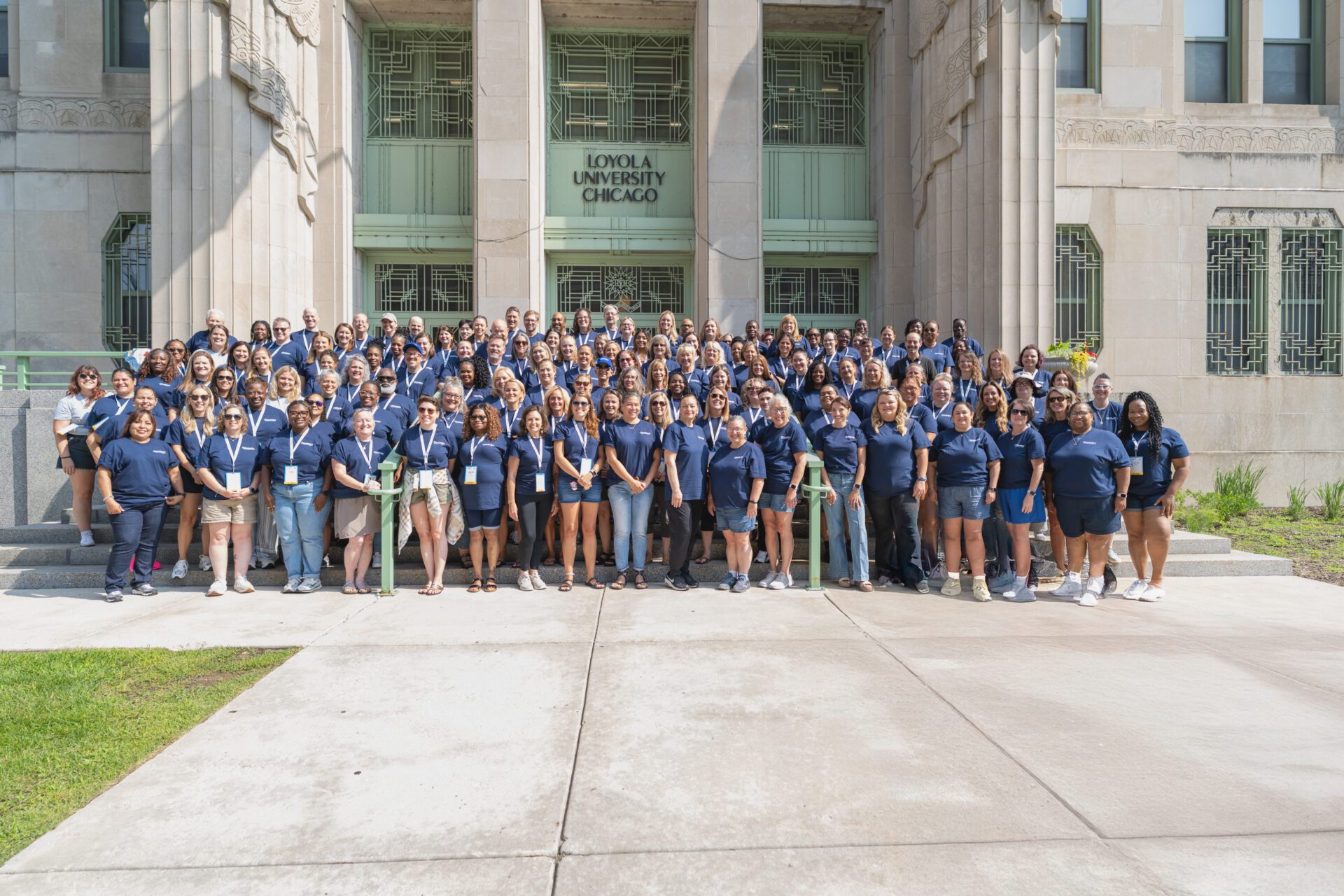
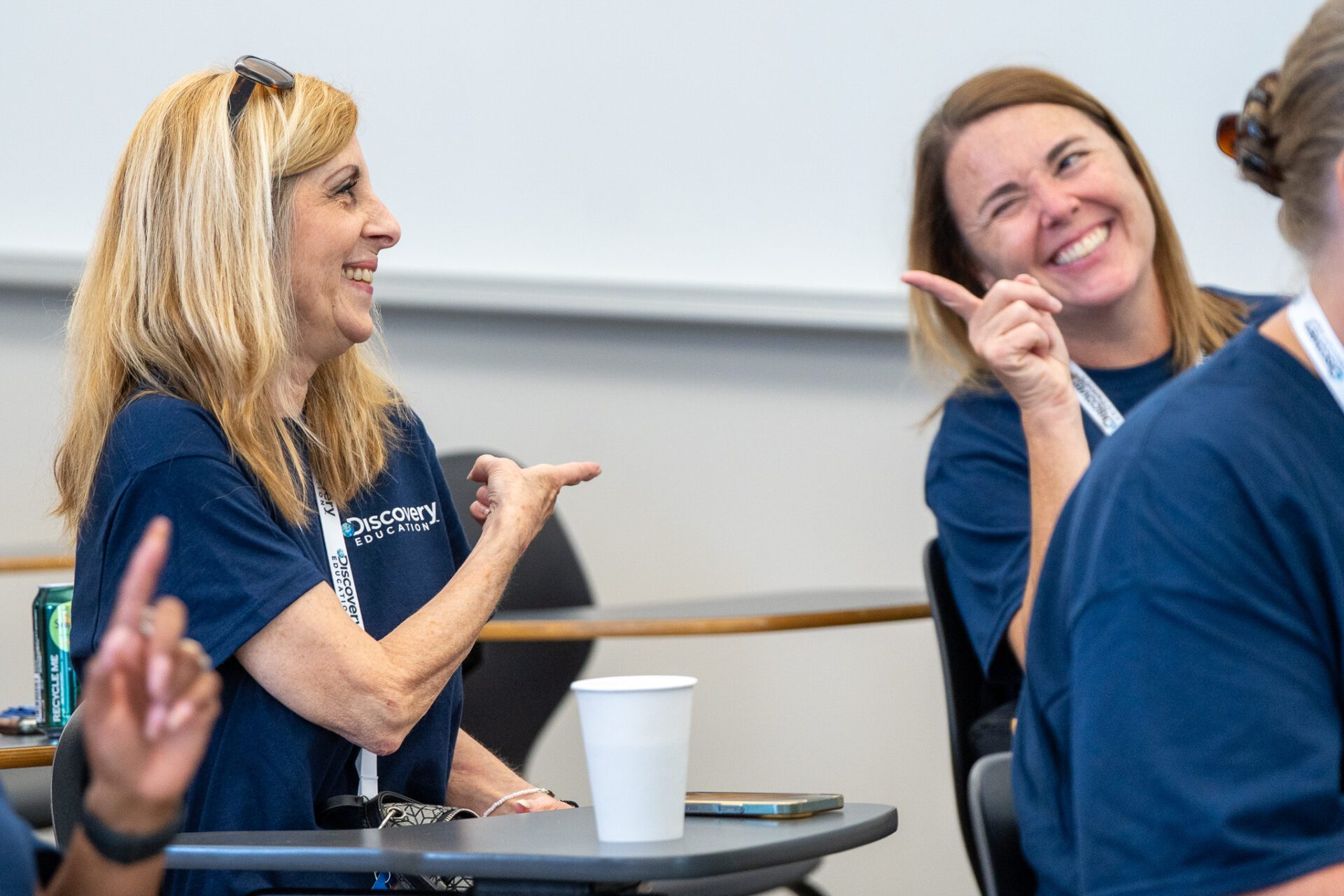
In 2005, eight educators made their way through the busy halls of the NECC Conference in Philadelphia to meet one another for the first time. What brought them together wasn’t just that they all used Discovery Education and saw its power to engage students while aligning to academic standards, but a shared spark: what could happen if we learned how to get the most out of this, together? They arrived eager and hopeful, bringing stories from their classrooms and a desire to dream bigger. At that moment the DEN (Discovery Educator Network) was born. 

Now, twenty years later, the DEN is a thriving professional learning community filled with stories, connections, and shared wisdom. To celebrate our 20th birthday, we asked DEN members to reflect on what they’ve learned through their involvement. Here are 20 lessons from 20 years in the DEN. 

DSC04842

Collaboration & Community: How DEN Members Inspire One Another 

1. “One of the most valuable insights I’ve gained from my time in the DEN is that teaching and learning are at their best when they are collaborative. Surrounding myself with passionate, like-minded educators has shown me that sharing ideas, resources, and encouragement not only elevates my own practice, but also creates a ripple effect that impacts students far beyond my own classroom.” – Carrie Willis, STEAM & Technology Director, CA 

2. “When I was first introduced to the DEN, I didn’t have a large professional cohort to rely on for new and innovative ideas. I think the network in the DEN is probably one of the things that is most impressive. You’re able to get together with these amazing, innovative, imaginative, creative, kinetic people to share the things they are most excited about.” -Rob Lamb, Teacher, MO 

3. “Fellow DEN members have inspired me to be more innovative and reflective in my teaching and leadership. Their diverse perspectives and shared passion for education encourage me to take risks, embrace new strategies, and prioritize collaboration. Through their support and ideas, I’ve grown more confident in leading change and fostering a student-centered learning environment.” -Emily Strickland, Middle School Teacher, SC 

4. “There’s nothing like having a group of educators who you can text, email, call, ask questions, get ideas, and ask for HELP if you need it.” -Wandalyn Jones, Academic Interventionist, SC

5. “Connecting educators to each other is so important, and as a librarian—there’s only one of me (in the building). So, to have other educators who I can connect with is really important. To ask, ‘How are you handling this? What can you share?’” – Lisa Wolski, Library Media Specialist, NY 

6. “I love being part of the DEN because it’s so positive and innovative. People are excited to share what they know, they’re excited to learn from one another, and they’re excited to grow and help the people around them.” Sarah Yonts, Librarian, WI 

7. “Some valuable insight I’ve learned in the DEN is that you’re never alone. There are plenty of other educators who have similar jobs to you, and Discovery gives you so many ways to connect.” -Anne Truger, Digital Learning Specialist, IL 

Empowering Educators: Building Confidence and Cultivating Leaders in the DEN 

8. “Being a member of the DEN has helped me step outside my comfort zone. I love teaching, but I’m shy when it comes to speaking in front of others. From presenting at virtual conferences to leading DEN workshops, I’m now comfortable presenting in front of others, whether it’s online or in person.” Wandalyn Jones, Academic Interventionist, SC

9. One professional challenge the DEN helped me overcome was regarding funding. I heard over and over that people were getting thousands of dollars in grants and funding, but I was getting nowhere. At a regional workshop, I attended a helpful seminar. I wrote and published my first request at that session, and it was funded by the weekend.-Mark Case, Teacher, NC

DSC03521 2

10. “I had no idea what I was capable of until the DEN showed me. I never considered myself a leader, but slowly, through the DEN, I realized that I had potential and the right personality to both lead and guide others.” Anne Truger, Digital Learning Specialist, IL

11. “One of my favorite memories from my time in the DEN was when I worked with teachers from another district in South Carolina to present a webinar to teachers across the state. It was wonderful to collaborate and to have a platform where we were able to share with others!” Laney Rogers, Instructional Technology Coach, SC 

12. “After attending my first DENSI, I truly became a different educator. I realized that my calling extends beyond teaching students and supporting teachers in my own school. The DEN has shown me that I can make a difference that reaches far beyond the walls of my school and into the wider educational community—locally, nationally, and even globally.” Carrie Willis, STEAM & Technology Director, CA 

Transforming Classrooms: How the DEN Fuels Innovation and Engagement 

13. “There are so many digital resources on Discovery Experience. Through DEN and attending DENSI, I have learned how to put them to good use. It saves so much time and aligns them with the standards.” – Shelby Kilmister, 6th Grade Science Teacher, NH 

14. “A favorite memory is when I started using the DEN’s content videos, specifically the science topics, and added them to my lessons on a regular basis. I can remember the students being more engaged and having a better ability to make connections with the content and skills.” – Lisa Gray, STEAM Specialist, PA 

15. “Collaborating with innovative educators has inspired me to design learning experiences that are more student-centered, inclusive, and engaging, especially for multilingual learners. It’s pushed me to embrace curiosity, experiment with new strategies, and model lifelong learning for my students.” – Natalia Rasavong, ESL Teacher, WI 

16. “Through the DEN, I had the opportunity to do a virtual field trip – the polar bear scientist trip via Zoom. My students got to hear from real scientists doing real work. Our class was able to ‘visit’ a place we could never take an actual field trip to. My students were able to come up with some really interesting questions for the scientists as well.” – Shawn Pashby, 4th and 5th Grade Teacher, MI 

The DEN Effect: Friendship, Innovation, and a Shared Mission to Empower Students 

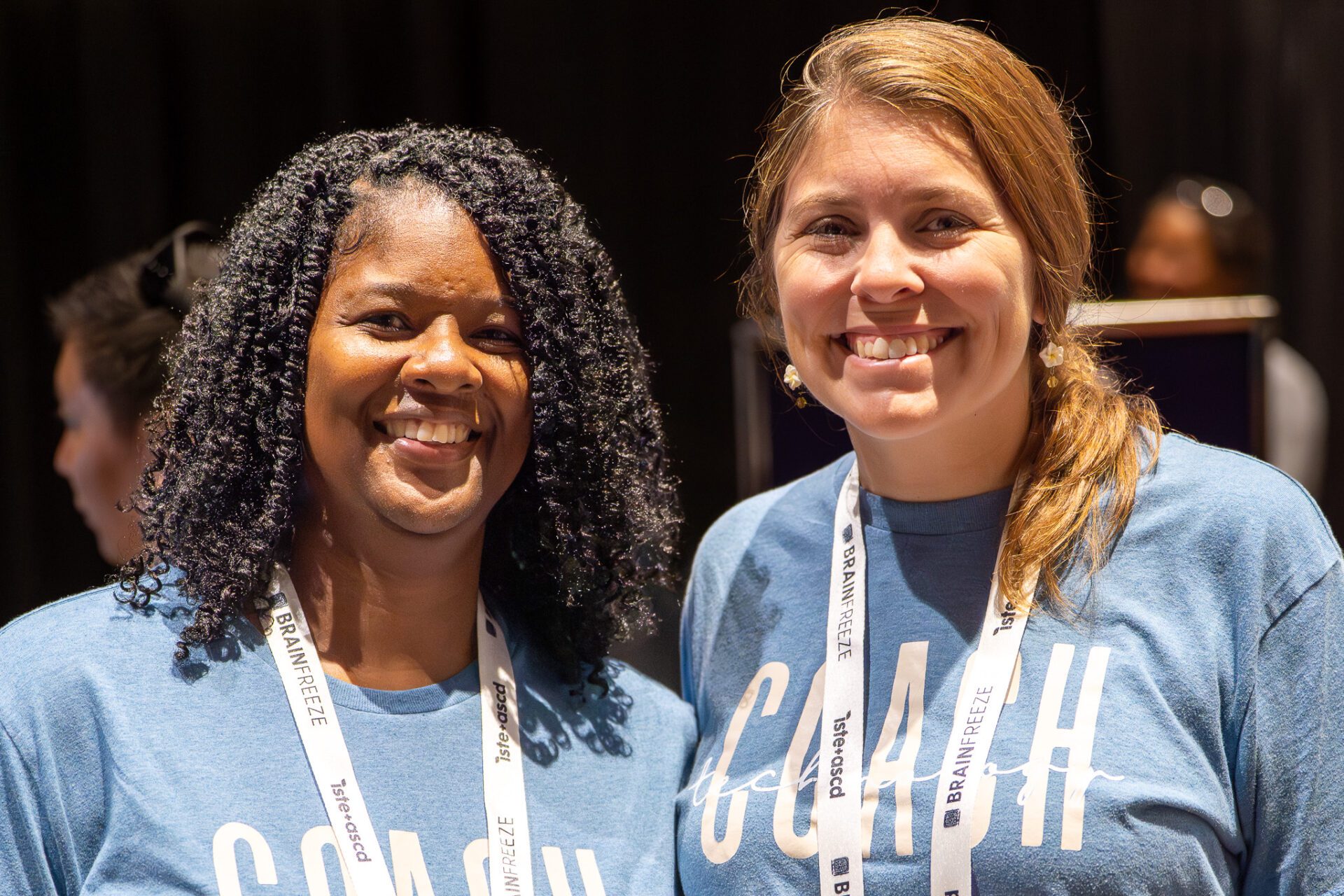
17. “My favorite memory from my time in the DEN is the connections I made during collaborative sessions at DENSI 2025. [DENSI, the DEN Summer Institute, is an immersive, residential-style professional development experience for educators.] I remember sitting around a table with educators from all over the country, sharing ideas, laughing, and realizing we were all driven by the same passion—to inspire and empower our students. That mix of learning something new, testing out creative tools, and building friendships that continue beyond the event really captures the DEN spirit for me.” -Natalia Rasavong, ESL Teacher, WI 

18. “DENSI (The DEN Summer Institute) is such a fun experience for teachers. You’re going to meet friends that you’ll keep for life, and you’re going to have so many ‘aha’ moments yourself.” -Heather Willsey, Teacher & Tech Coach, MI 

DSC04360 2

19. “When I first started interacting with Discovery Education, I was about 10 years into my career and starting to feel stuck. I wasn’t burnt out, and I wasn’t doing a bad job, but I was getting to the point that I wasn’t sure if this is what I wanted to do for the next 20 years. I knew that if it felt that way to me, it would certainly start to feel that way to my students. This is when I first learned about the DEN and Discovery Education. I was lucky enough to go to their STEM Institute in 2012, where I first really started talking to people who are in the DEN. I realized very quickly that these were people I needed to be around because they injected energy into me. Whenever I interact with people from the DEN, I leave feeling invigorated and more excited about going back to the classroom to try new ideas with my students.” -Rob Lamb, Teacher, MO 

20. “Becoming a DEN member has been the best decision of my career. It’s helped me grow professionally and opened new opportunities. I’ve presented at conferences, webinars, and been encouraged to become more of a leader. It’s empowered me as a teacher. It’s been truly wonderful.” Susan Barnes, 6th Grade Science Teacher, SC 

The post 20 Lessons from 20 Years of Professional Learning with the DEN appeared first on Discovery Education.

]]>
DSC04790-Edit -1 DSC04842 DSC03521-2 DSC04360-2
Engagement Fuels Learning, But Is It Misunderstood? https://www.discoveryeducation.com/blog/educational-leadership/2025-26-education-insights-report/ Tue, 02 Sep 2025 22:13:53 +0000 https://www.discoveryeducation.com/?post_type=blog&p=197838 When I taught middle school, I went to creative lengths to light that initial spark of curiosity. I once showed up dressed as William Penn—because what middle schooler is going to heckle their teacher in a colonial wig? On another day, I wired a secret doorbell into our classroom, giving students a special ring to […]

The post Engagement Fuels Learning, But Is It Misunderstood? appeared first on Discovery Education.

]]>

When I taught middle school, I went to creative lengths to light that initial spark of curiosity. I once showed up dressed as William Penn—because what middle schooler is going to heckle their teacher in a colonial wig? On another day, I wired a secret doorbell into our classroom, giving students a special ring to get inside. Those tricks could get students laughing and leaning in, but the real reward came later, when curiosity turned into an “aha moment” of understanding. 

We all know that moment when we see it: the smile, the nod, the sudden clarity on a student’s face. Yet it’s surprisingly hard to put into words. A quick activity might spark attention, but true engagement is about sustaining motivation and helping students reach those deeper moments of discovery. 

That’s why, as our latest Education Insights Report reveals, engagement is not a simple concept. It’s multidimensional and often viewed differently depending on perspective, which is what makes clarity so essential. 

Drawing on the perspectives of nearly 1,400 K–12 superintendents, principals, teachers, parents, and students across the United States, the report shines a light on the promise and the challenge of keeping students connected to learning. The report underscores an important reality — fueling student engagement requires a holistic approach that brings coherence to how it is defined, observed, and supported.  

de 2025 Ed Insights Cover homepage takeover v2

Perception Gaps Between Students and Educators

of Students Report

Being Highly Engaged in Class

Perspectives on assessing engagement vary between the groups we surveyed. This presents a challenge in increasing engagement across ages, grades, subjects, and students. 

  • Students say they are more engaged than teachers realize. There is an almost 20-point gap between students (63%) reporting that they are highly engaged and what teachers (45%) report.   
  • Quiet engagement is underappreciated. Teachers overwhelmingly point to outward indicators of engagement, such as asking thoughtful questions or contributing to discussions. More subtle signs of engagement, like silent reflection or creative exploration, are easy to overlook. 
  • Differences between surveyed groups are revealing. Superintendents (54%) are almost twice as likely as teachers (29%) to rank performance on assessments as a top engagement indicator.  

This gap in the perceptions of engagement between students and teachers is an essential challenge to disentangle. When we lack clear, shared definitions of learning engagement, students risk being mislabeled as disengaged, even when they are fully invested in learning. 

Educators Report Barriers in Promoting Engagement

Educators know all too well the obstacles that stand in the way of fostering greater student engagement. One of the biggest is the variation across students and contexts—engagement can vary by learner, subject, and even the day of the week. Teachers also point to the lack of time and resources as a pressing barrier to creating the conditions that promote student engagement.  

In the Education Insights Report  fewer than one in four teachers feel they have adequate time to reflect on and improve their instructional approaches, which can diminish their opportunity to encourage engagement. Another concern is inconsistent measurement: 99% of superintendents report systems for measuring engagement, but only 60% of teachers agree. This disconnect between leadership’s view of support systems and what educators experience in the classroom is another hurdle to overcome in fostering more engagement for all students.  

As students progress from elementary school to high school, their self-reported engagement and teachers’ perceptions of engagement decline. In fact, 4 in 5 of all students say they struggle with boredom. However, across all grade bands, students are clear about what fuels their motivation. They want relevance: learning that connects with their lives and future plans. Across all groups surveyed, relevance consistently ranked as one of the most critical factors impacting engagement. Students also seek challenge. Nearly four out of five students say school often feels easy and want deeper, more meaningful work.  

These perspectives echo what we hear from our partner schools at Discovery Education. When students have opportunities to connect their learning to the real world and pursue personally meaningful challenges, educators can turn curiosity into achievement. While educators are dedicated to providing these connections and challenges, persistent barriers make it difficult to sustain engagement throughout learning environments and contexts. Yet when those opportunities align, educators can build upon students’ curiosity and use it as a foundation to drive meaningful learning outcomes. 

Fostering Greater Engagement

The Education Insights Report’s findings illuminate where student engagement can flourish — in learning that is personally relevant and hands-on, where students can see real-world connections and put their knowledge into practice. All the groups surveyed agreed that students put in more effort when learning is meaningful and connected to their lives.   

At Discovery Education, we agree: the more deeply students connect with their learning, the more they grow and achieve. This insight informs the work of my Curriculum Instruction team, driving us to ensure that every standards-aligned lesson and resource we provide is built to support learning through engagement. We’re committed to partnering with states, districts, schools, and educators, helping them build coherent engagement strategies that: 

  • Clarify what engagement means for all. Moving beyond assumptions to shared definitions and frameworks. 
  • Recognize varied engagement backgrounds. Quiet, reflective, and multilingual learners may demonstrate engagement differently than students who are outwardly expressive or learning in their home language. 
  • Equip teachers. Providing the time, tools, and professional learning needed to deliver relevant, personalized lessons. 

Through timely, standards-aligned, real-world content and adaptive digital tools, we help educators create classrooms where every student is supported and inspired to learn. Educators tell us that when their students use adaptive platforms like DreamBox, which meets each student where they are, engagement turns into learning. And when districts implement resources like Experience and Career Connect, students deepen background knowledge to contextualize what they are learning bridging classroom lessons to real-world applications and future careers. 

Embracing the Complexity of Student Engagement

As the report shows, engagement is essential and multidimensional. It can help enable and sustain the motivation students need to persevere through productive struggle, explore their interests, and achieve meaningful growth. 

 But, engagement doesn’t just happen. It requires clarity, alignment, intentional strategies, and purposeful resources. Educators, families, administrators, and partners like us at Discovery Education can help close the perception gaps around what engagement is, better recognize every form of engagement, and strive to ensure that every student has the opportunity to connect deeply with learning. 

Discover the Data

Get your free copy of the 2025-2026 Education Insights Report: Engagement Fuels Learning

Sydnee Chan

Sydnee Chan

The post Engagement Fuels Learning, But Is It Misunderstood? appeared first on Discovery Education.

]]>
de-2025-Ed-Insights-Cover-homepage-takeover-v2 Sydnee Chan
Future-Ready Classrooms for Future-Ready Students https://www.discoveryeducation.com/blog/educational-leadership/future-ready-classrooms-for-future-ready-students/ Mon, 07 Apr 2025 19:34:34 +0000 https://www.discoveryeducation.com/?post_type=blog&p=186785 The disconnect between today’s classrooms and the demands of the modern workforce has become impossible to ignore—and students agree. According to the latest Education Insights Report from Discovery Education, 80% of students believe that learning content tied to real-world experiences is essential. Yet over 60% doubt the skills they’re learning in school prepare them for […]

The post Future-Ready Classrooms for Future-Ready Students appeared first on Discovery Education.

]]>

The disconnect between today’s classrooms and the demands of the modern workforce has become impossible to ignore—and students agree. According to the latest Education Insights Report from Discovery Education, 80% of students believe that learning content tied to real-world experiences is essential. Yet over 60% doubt the skills they’re learning in school prepare them for the workforce, and 71% aren’t excited about entering it.

But what if classrooms operated differently and weren’t confined by brick walls or a single campus? That’s the mission driving Dr. Romules Durant, CEO and Superintendent of Toledo Public Schools (TPS). Through his innovative vision for future-ready classrooms, Dr. Durant is courageously transforming education to raise graduation rates, ensure students are career ready, and build a strong community.

Ohio DOE Progress Ratings of
Toledo Public Schools

TPS leads Ohio urban districts in assessment progress with 4 stars.

45% of TPS schools scored at least 3 stars for the progress rating on closing the gap.

TPS Magnets and Academies are On Par or Exceeding the local high school on state testing.

Dr. Durant knows it can feel risky taking on a new approach, especially if stakeholders don’t fully see the vision yet, but he isn’t afraid to explore new avenues for bridging the gap between classrooms and industries. He actively collaborates with industry leaders who share his vision and are eager to partner with him. “It’s about taking calculated risks to change how schools operate,” he explains. 

Since Dr. Durant started in his role as Superintendent, Toledo Public Schools has turned into a top-rated school district in the state, and a model for others in how to implement successful work-ready programs, magnet schools, and specialized academies. In the latest Progress Rating from the Ohio Department of Education, nearly half of Toledo Public Schools received an Overall Rating of 3 or more stars, meaning they meet, exceed, or significantly exceed state standards.

Bridging Industry and Classroom​

The concept of future-ready classrooms starts with an “outside the box” perspective on bringing industries into the learning environment, and the determination to build strategic relationships with those who can make the concept a reality.  Dr. Durant and his team at TPS saw an opportunity to integrate the resources and expertise of their community to create hands-on, real-world learning experiences and work-based learning programs that focus on career exploration. This type of innovation requires thoughtful planning, relationship building, and of course, bravery. For Dr. Durant, that meant building trust and collaboration with all stakeholders, like the school board and local business leaders. Together, they decided to invest in initiatives that may not yet be the norm in K-12 education but show tremendous promise.

Redefining the Classroom

Classrooms don’t have to be just spaces for textbooks and whiteboards—envision multi-functional learning campuses that serve students, families, and communities alike.  

The Community Hubs at Toledo Public Schools are the perfect example of redefining the classroom. Today, six hubs offer academic and work-based learning opportunities for students as well as services and programs for the community, like financial management, childcare, homecare for senior citizens, mental health services, and even entertainment. It’s a dual-benefit model that exemplifies how blending education with community resources can make a tangible difference.

"Community members, like our senior citizens, can utilize the trades and services that are available. For example, we're finding out through local studies that what keeps a senior from owning their own home is the inability to do maintenance. We have a construction academy and landscaping program here on this campus. Put a ticket in, and a student, alongside a professional, will handle the issue."
Romules Durant headshot e1741024422319 jpeg
Dr. Romules Durant
CEO & Superintendent, Toledo Public Schools

The Power of Work-Based Learning

Career exploration should be central to every student’s academic journey, starting as early as elementary school. In fact, according to the Education Insights Report, 90% of middle schoolers today want more exposure to different career paths, while 88% wish they had more resources to better prepare them.  

Many countries around the world provide young students the opportunity to explore careers through work-based learning such as apprenticeships, intern- and externships, and immersive, future-ready classrooms. After an externship in Germany to study their workforce development programs, Dr. Durant implemented a strong emphasis on immersion. “That trip really helped set the stage for how to go about workforce development,” explains Durant. “We started erasing boundaries of communities and putting education at the place of industry . . . Imagine if you were able to go to school from 7-12th grade AND earn a degree at that place of industry. How better prepared you would be for the workforce!”

For example, the Toledo Technology Academy of Engineering for grades 7-12 allows students to explore engineering in a fully immersive learning environment with the Electric Vehicle lab, the first of its kind for an Ohio public school. With 11,000 sq. ft. of space, including six vehicle lifts for hands-on learning and a classroom, this lab gives students the opportunity to learn firsthand about cutting-edge technology, as well a current mechanics and displaced autoworkers a chance to enhance their own skillsets and careers. 

Another inspiring example is the Aerospace & Natural Science Academythe aerospace campus is located at the airport where students can work on airplanes and even earn their pilot’s license, while the natural science campus is just next door to the Toledo Botanical Gardens.

“It’s about aligning kids to things they have an interest in, exposing them to career pathways, and that excitement is what brings them to school,” explains Dr. Durant. “I tell other superintendents that if you connect a student to a career pathway, that’s an increase in your graduation rate . . . the student is aligned to something where they can see and understand why this science experiment or this math skill they are learning matters.”

Through these programs, learning feels relevant. Students aren’t memorizing equations in isolation; they’re applying them on the job floor, in hospitals, and in labs. They’re building confidence as they earn credits toward 2- and 4-year degrees, as well as trade certifications, all while seeing firsthand how their future-ready classrooms tie directly to real-world careers.

Funding Innovation Through Relationships

None of these innovations are possible without financial stability and support. And Dr. Durant has proven that calculated risks yield remarkable rewards by establishing strong relationships with those who hold the purse strings“It’s through a strong relationship with the school board,” Dr. Durant says, “that we’ve been able to mitigate risks and ensure we have the resources we need to launch programs that truly change how students learn.”

Securing local funding for future-ready classrooms also needs strong relationships with the community. Partnerships with local businesses, nonprofits, civic organizations, school boards, and city councils provide a wealth of opportunity for funding because all those involved have the same goal: ensuring students become successful members of the community.

Empowering Students. Strengthening Communities.

The goal of future-ready classrooms is clear—prepare students to thrive in a dynamic world. Students get a head start on building skills and earning credits, so upon graduation, they’re equipped with knowledge and experience to jumpstart their careers. Communities benefit, too. When young people feel supported, they want to work and live in the same neighborhoods that nurtured their potential, creating a strong, thriving local workforce. 

At TPS, this isn’t just a vision—it’s happening. Leaders like Dr. Durant are setting the standard, offering a clear model for schools and communities to follow. Discovery Education is proud to stand alongside courageous leaders like Dr. Durant to prepare future-ready students. We are continually innovating career exploration resources like Career Connect and the STEM Careers Coalition, as well as building partnerships with industry leaders that share our vision, to support career and workforce programs designed for 21st century students.   

With unique partnerships between Discovery Education and industry leaders, those same schools and communities can deliver students their holistic vision of what it means to be ready for the future.  Together, we’re rethinking education, one calculated risk at a time.

Jean Johnson

Jean Johnson

Access the Discovery Education career readiness guide, Expanding Opportunities: How District Leaders Can Champion Career Readiness, to learn key strategies for developingand maintaining career readiness programs in your district.

The post Future-Ready Classrooms for Future-Ready Students appeared first on Discovery Education.

]]>
Romules-Durant_headshot-e1741024422319.jpeg Jean Johnson
The Future of Learning in Rural America https://www.discoveryeducation.com/blog/educational-leadership/the-future-of-learning-in-rural-america/ Sun, 06 Apr 2025 19:34:25 +0000 https://www.discoveryeducation.com/?post_type=blog&p=183682 When we look at rural education, we find ourselves at the crossroads of tradition and innovation. While living in rural America offers unique challenges, the landscape of rural education is evolving, driven by the dedicated efforts of educators, communities, and families who are committed to turning obstacles into exciting opportunities. Let’s explore some remarkable strategies […]

The post The Future of Learning in Rural America appeared first on Discovery Education.

]]>

When we look at rural education, we find ourselves at the crossroads of tradition and innovation. While living in rural America offers unique challenges, the landscape of rural education is evolving, driven by the dedicated efforts of educators, communities, and families who are committed to turning obstacles into exciting opportunities. Let’s explore some remarkable strategies and the resilient spirit that shape the future of learning in rural America.

summer school header
de icon box filled png

Unpacking the Present

Rural districts face significant hurdles today, including geographic isolation, higher poverty rates, and lack of technology. Challenges in recruiting and retaining teachers further complicate matters. Smaller student populations often lead to constrained course offerings and limited access to advanced programs. At the end of the day, the educational landscape in many rural areas is exacerbated by long commutes, restricted funding, and limited access to resources, training opportunities, and technology.  

BUT, through creative solutions, technology integration, and community partnerships, rural education has a hopeful path forward, proving that with determination and collaboration, even the most isolated areas can provide vibrant educational experiences.

de icon lightbulb filled png

Paving the Road Ahead

Despite these obstacles, a wealth of potential lies ahead for rural education. Here are a few strategies that rural district leaders, alongside teachers, have implemented with success:

Embrace Hybrid Learning: Have the mindset that learning can happen outside of a traditional four-wall classroom. Hybrid learning—blending face-to-face teaching with digital resources like Discovery Education—bridges gaps in access to resources and real-world learning opportunities. Schools can extend educational reach, cater to students’ varied needs, and bring fresh new content into the learning experience. 

Foster Community Partnerships: Working closely with local businesses and community organizations can bring valuable resources and opportunities to rural schools. These partnerships can offer internships, mentorship programs, and vocational training, enriching the educational landscape and preparing students for the workforce—while at the same time strengthening the economic health of the community. 

Bring Families In: Fundamental to rural education are the families that significantly contribute to the education of students. Their roles include volunteering, supporting extracurriculars, providing workplace learning opportunities, and engaging with school boards and committees. Through robust school-family communication, they contribute resources and knowledge, strengthening educational support networks.

Advocate for Policy Changes: Engaging with policymakers is crucial in creating systemic change. Advocating for policies that target equitable funding, infrastructure improvements, and technological access can significantly enhance educational outcomes for rural students. Stay up-to-speed on the latest funding sources and get to know those in positions of policy-making power.

Prioritize Teacher Recruitment and Support: Collaborate with local higher ed institutions to incentivize teaching programs, fostering future educators from within the community. Then, prioritize ongoing professional learning for educators to ensure they are equipped with the latest teaching strategies and tools. By investing in teachers, administrators can build a positive work environment. This also greatly improves educator retention if they feel supported, and prepared, to be the best teachers they can be.

de icon hand plant filled png

Inspiring a Brighter Future

The path forward for rural education is one of possibilities and growth. By understanding the current landscape’s intricacies and leaning into our communities’ strengths, we can inspire a future where every student has the opportunity to flourish, regardless of their postcode. The future of rural education is a community effort—together, we can make it happen. Let’s work toward building a strong foundation for success.

Find More Innovative Strategies for Education Leaders

The post The Future of Learning in Rural America appeared first on Discovery Education.

]]>
summer-school-header de-icon-box-filled.png de-icon-lightbulb-filled.png de-icon-hand-plant-filled.png Picture of Allen Pratt, Ed.D.
Discovery Education’s Predictions for Education Trends to Watch in 2025 https://www.discoveryeducation.com/blog/de-news/discovery-educations-predictions-for-education-trends-to-watch-in-2025/ Sun, 06 Apr 2025 19:20:58 +0000 https://www.discoveryeducation.com/?post_type=blog&p=183086 There are fewer pages to turn in the 2024 calendar, and as we head into 2025, the Discovery Education team has identified key trends that will shape how students learn, how teachers teach, and how administrators make decisions. These insights aren’t just predictions—they’re paired with actionable insights to help create impactful learning in the new […]

The post Discovery Education’s Predictions for Education Trends to Watch in 2025 appeared first on Discovery Education.

]]>

There are fewer pages to turn in the 2024 calendar, and as we head into 2025, the Discovery Education team has identified key trends that will shape how students learn, how teachers teach, and how administrators make decisions. These insights aren’t just predictions—they’re paired with actionable insights to help create impactful learning in the new year.   

computer header 2

Three Education Trends to Watch in 2025

Rocket ColorBlock Coral svg

1. Engaging Student Interest Will Emerge as Top Tool to Combat Absenteeism and Learning Loss

2024 was full of conversations on keeping students engaged in learning and, in 2025, a focus on student engagement will continue to be a top priority.  

In Discovery Education’s 2024 Education Insights Report, 15% of parents stated lack of interest or motivation for learning is a primary reason for student absences, second only to health-related issues. Chronic student absenteeism is a national issue, and as the challenge to keep learners attentive and invested continues to intensify in 2025, districts will focus on investing in engagement-focused solutions to empower teachers to build lessons that leave students curious and inspired. 

Throughout the next year, gamified learning platforms, interactive digital assets, Augmented and Virtual Reality technology, and immersive learning experiences are expected to take center stage. These tools are capable of capturing and holding students’ attention while promoting deeper learning outcomes. 

Gamified learning platforms, interactive digital assets, and immersive learning experiences are expected to take center stage in 2025. These tools will help educators build unique learning experiences that capture and hold students’ attention while promoting deeper learning outcomes.  

DE's Tip for 2025: "Staying informed about the latest engagement-focused technologies and consider how these innovations might fit into existing teaching strategies."
Plan Board ColorBlock Bumblebee svg

2. Revisiting Future Readiness

In our 2024 Education Insights survey, 80% of students reported that they believe content that connects to real-world experiences is important for long-term success and day-to-day learning. In 2025,  

This continued desire for career exploration will cause the line between core instructional materials and supplemental resources to continue to blur—and for good reason. Educators and policy leaders are now leveraging resources that focus more on career exploration and building future-ready skills. Supplemental resources are being introduced to bridge the gaps in students’ different learning journeys, offer tailored materials to better differentiate instruction, create interest-based lessons, and keep students engaged in the overall learning process. 

DE's Tip for 2025: "Evaluate how your students currently interact with real-world content and skill-building, then consider how these career-focused experiences can be introduced earlier and more frequently."
de icon Question Thought azure space

3. Prioritizing Personalized Learning to Meet All Students’ Needs

Our 2024 Education Insights Report shows that two-thirds of teachers feel that students exhibit a wider range in knowledge and skills compared to five years ago, reflecting persistent learning loss among many students. Additionally, 81% of teachers find navigating these varied skill levels challenging. These skill level differences have created a larger need for personalization tools to address each student’s needs in real time. Educators will continue to seek out solutions that focus on reading and math intervention and acceleration by meeting learners where they are, differentiate instruction, allow self-paced learning, and integrate scalable best practices. Educators can prepare by exploring platforms and tools that emphasize personalization and by developing strategies to incorporate them effectively in their classrooms.

DE's Tip for 2025: "When exploring new technology and curriculum resources, prioritize those that offer transparent data on student improvement for maximum impact."

2025 is set to be another game-changing year for education with exciting opportunities for educators and leaders to adapt, innovate, and positively impact all students.  

For district and state administrators, the upcoming challenge lies in prioritizing investments that maximize outcomes while aligning with your school system’s unique needs. Focusing on engagement, personalization, and mindful technology integration can ensure students and teachers thrive together throughout 2025. 

Take a Deep Dive into the latest Education Insights Report from Discovery Education

The post Discovery Education’s Predictions for Education Trends to Watch in 2025 appeared first on Discovery Education.

]]>
computer-header-2 Rocket-ColorBlock-Coral.svg Plan-Board-ColorBlock-Bumblebee.svg de-icon-Question Thought-azure-space
Strategies for Encouraging Girls to Explore STEAM https://www.discoveryeducation.com/blog/future-ready-students/strategies-for-encouraging-girls-to-explore-steam/ Sun, 06 Apr 2025 19:20:22 +0000 https://www.discoveryeducation.com/?post_type=blog&p=183623 Educators, administrators, and corporate leaders all agree: we need to encourage girls to explore STEAM skills and consider STEM careers for their futures. But how? We asked members of the Discovery Educator Network to share content, programs, and ideas they have found to be successful in bringing more girls to the world of STEAM! Infusing STEAM […]

The post Strategies for Encouraging Girls to Explore STEAM appeared first on Discovery Education.

]]>

Educators, administrators, and corporate leaders all agree: we need to encourage girls to explore STEAM skills and consider STEM careers for their futures. But how? We asked members of the Discovery Educator Network to share content, programs, and ideas they have found to be successful in bringing more girls to the world of STEAM!

Infusing STEAM Content in All Classrooms

girls in STEAM tile jpg

A major goal of the K-12 experience is to prepare students for their next step in life. So, when thinking about how to encourage girls to explore STEAM topics or pursue STEM careers, bringing these concepts into the classroom is top of mind for educators. Exposing students to STEAM experiences frequently will help them see how their personal interests align with process used in STEM careers, like researching concepts, testing ideas, and sharing results.

Check out these top four recommendations from the DEN for infusing STEAM into all classrooms:

  1. Offer a variety of opportunities for creative expression in the planning phase of projects. Consider how students can draw, sketch, or creatively outline plans for projects to help bring the “A” of “STEAM” into the learning process early. Some students may choose to create sketch notes from their research on a topic while others may choose to draw a prototype for a model they will create later in the process—offering a variety of arts-forward options for planning helps students connect all letters of STEAM throughout a project.
  2. Find creative outlets for students to share their learning. On the tail end of a project or unit, allow students to use an artistic method—like designing posters, writing songs, performing skits, or creating digital visual aids—as an opportunity for them to reflect on and share their learning. STEAM learning can inspire innovation—sharing the successes should be an exciting part of the process and easily lends itself to artistic expression.
  3. Designate a Maker Space for students to work on independent and collaborative projects. Creating a Maker Space in your school or classroom can sound overwhelming, but it should just be a place where students can gather to collaborate on projects and access a variety of art supplies. It can be a space in a common area such as the media center or just a corner in a classroom!
  4. Find opportunities for all teachers to utilize content or concepts. Collaborative planning can help all teachers find inspiration for future lessons. For instance, if your students are studying laws of motion in science class, the Physical Education teacher may have some motion-focused games where students can test the hypotheses and theories introduced in science class!

STEAM lessons will pave the way for new innovations and collaborative experiences, and it can also help girls picture themselves as scientists, tech-wizards, artists, mathematicians, and engineers. Use content that puts successful STEM women in the spotlight so students can envision how their interests can align with a career they may not have considered or even heard of before.

Project STEM's course through the Amazon Future Engineers' program isa great way to showcase women in STEAM. I also incorporate this content for 6th grade, which includes a lot of videos and resources that discuss girls in STEAM and provide examples of accomplished women in STEAM fields.
de quote left square filled
Alexis Teitelbaum
PreK-6 Technology Explorations Teacher, PA

Explore STEM Career Resources

mastercard jpg

Girls4Tech

Girls4Tech provides resources to educate, inspire, and equip young girls with the skills and confidence they need to envision themselves as future professionals in STEM fields.
amazon career tours tile jpg

Career Tours by Amazon

Career Tours are free, interactive virtual field trips that showcase the real-life people and cutting-edge technology behind Amazon’s innovations.
ifthen jpg

If/Then STEM Professionals

Have you ever wondered who creates your favorite video game, or protects the animals in the jungle, or works to cure cancer? The IF/THEN® Initiative is committed to showing young girls exactly what a scientist looks like.

Five Ideas for Dynamic STEAM Programming

Finding space for girls to comfortably explore STEAM topics and collaborate with other girls can mean extending your programming in new ways through clubs, contests, and special events. Read on for five ideas from the DEN to make your STEAM programming fun and flexible for girls!

We cannot hope that girls turn their graduation tassel and suddenly take an interest in STEAM topics. Instead, we need to find ways for them to explore STEAM early, frequently, and in encouraging settings. STEAM learning can be exciting for all students when there are clear connections between the different letters and students’ interests!

Learn More about What Educato Leaders are Saying

The post Strategies for Encouraging Girls to Explore STEAM appeared first on Discovery Education.

]]>
girls-in-STEAM-tile.jpg de-quote-left-square-filled mastercard.jpg amazon-career-tours-tile.jpg ifthen.jpg
Make Your Student Achievement Data More Than a Road Atlas https://www.discoveryeducation.com/blog/educational-leadership/make-your-student-achievement-data-more-than-a-road-atlas/ Sat, 05 Apr 2025 21:39:13 +0000 https://www.discoveryeducation.com/?post_type=blog&p=183420 Everyone loves a good road trip, especially when you get to be the navigator. For some, it that means flipping through a spiral-bound road atlas to plan routes and stops the old-fashioned way. For others, it’s using the latest technology to guide in the most efficienct, and least stressful way. Either way, it’s all about the journey just […]

The post Make Your Student Achievement Data More Than a Road Atlas appeared first on Discovery Education.

]]>

Everyone loves a good road trip, especially when you get to be the navigator. For some, it that means flipping through a spiral-bound road atlas to plan routes and stops the old-fashioned way. For others, it’s using the latest technology to guide in the most efficienct, and least stressful way. Either way, it’s all about the journey just as much as the destination.

Screenshot 2024 05 07 173429

As helpful as a road atlas or online maps can be for planning, they’re tools that don’t have the power to transport people. They’re a reference that can only inform travelers as they act and move. In the same way, districts looking at student data are like road trippers looking at an online map.  Educators have plenty of information, but the data doesn’t have the power to improve achievement—it’s up to educators to interpret it and take action for their students.  What complicates matters more for districts is that student learning doesn’t follow predictable, well-defined paths like road-trippers find on an atlas. So educators must be ready for detours or traffic delays at any moment. And sometimes they even need to build new roads and rest stops.Therefore, to make sure every student is on a path to success, districts not only need actionable data, but also high-quality resources that can be used with students.  

That’s why data-informed learning resources that lead to meaningful student growth are essential.  For example, it’s not enough to have test scores that reveal which students need help dividing fractions, nor is it enough to simply have students memorize; “yours is not to reason why, just invert and multiply.”  Educators know that rote memorization doesn’t work in the long run. It’s like junk food on a road trip. When students need intervention, there’s no quick fix; they need better pedagogy and curricular materials that help them understand fraction division beyond simply a memorized procedure.

Because districts need both actionable insights and effective resources, Discovery Education (DE) is proud to provide educators with tools for making data-informed instructional decisions along with award-winning resources for taking action. And now, to make this process even easier for DE partner schools and districts, we’ve joined forces with Otus, a K-12 assessment, data, and insights solution, to help schools harness the power of data to improve learning outcomes for all students. Our partnership empowers school leaders and educators to make strategic, data-informed decisions while providing the resources they need to support student success continually throughout the year. 

We know where we want our students to be by the end of the school year. And they’ll always need us to meet them where they are. The data we have about them is a first step toward that goal. The next steps require us to meet them in pedagogically sound ways, inspiring them to be curious and confident learners who think critically and compassionately. When it comes to learning, the journey of persisting and progressing is how students reach proficiency. With Discovery Education and Otus, it’s easier than ever for districts to have not only an atlas, but also the vehicles to ensure inspiring road trips for student learning. 

Learn How Otus and Discovery Education are Teaming Up

The post Make Your Student Achievement Data More Than a Road Atlas appeared first on Discovery Education.

]]>
Screenshot-2024-05-07-173429
Three Challenges When Nurturing Curiosity https://www.discoveryeducation.com/blog/educational-leadership/three-challenges-when-nurturing-curiosity/ Sat, 05 Apr 2025 19:38:28 +0000 https://www.discoveryeducation.com/?post_type=blog&p=183724 K-12 educators generally value students’ curiosity at every age and grade level, so it may seem surprising that curiosity has been widely overlooked as a learning outcome. However, we can always make a concerted effort to focus on what we believe is important to students and essential for being a healthy young person growing into […]

The post Three Challenges When Nurturing Curiosity appeared first on Discovery Education.

]]>

K-12 educators generally value students’ curiosity at every age and grade level, so it may seem surprising that curiosity has been widely overlooked as a learning outcome. However, we can always make a concerted effort to focus on what we believe is important to students and essential for being a healthy young person growing into adulthood. It starts with making sure we agree on the outcomes we want. 

Because state standards haven’t defined outcomes explicitly related to curiosity, it’s incumbent on us to create tools, like the rubrics I shared in my previous blog, to align on what curiosity looks like so that we can begin to observe and develop it in students. These rubrics are helpful for student self-assessment and surfacing what challenges we should expect as we work to nurture curiosity more intentionally. This post will focus on three inherent challenges to cultivating curiosity.

de icon lightbulb filled png

Challenge #1: Interest​

Interest is the first challenge. As is likely obvious to all educators, curiosity is highly dependent on context. It’s rare to find students who are genuinely curious about everything. Some students are fascinated by art, others are inspired by math and eager to uncover its secrets and logical intricacies. And, many students aren’t. That’s why we can’t hold students to a standard of intrinsic curiosity in every context. 

Expert
Proficient
Developing
Novice

Interest

de icon lightbulb filled png

I’m always excited to listen, learn, and engage regardless of the topic. I’m genuinely curious about most things.

Though I'm more enthusiastic about learning in areas that interest me, I can work to listen, learn, engage, and ask questions about any subject in school.

It's difficult for me to engage and ask questions if I don't care about the topic. My body language often reveals my engagement.

If I don't like what I'm learning or don't care about it, I usually don't engage and don't appear interested in the conversation.

Instead, we aim for Proficiency as described in the Interest rubric. We want each student to be a curious learner and thinker in different contexts, even if it’s for a topic that’s not a current or lifelong passion. Indeed, many adults find their careers by showing a small amount of initial curiosity in an area with a willingness to try something new. Curiosity can be the first domino that sets off a chain reaction for a learner to find their motivation and goals. However, the opposite can also be true—I was considering becoming an optometrist because I’m fascinated by how vision and eyes work. But when I took a human anatomy class and we dissected eyeballs, I quickly realized that a career in medicine wasn’t for me. I’m still fascinated by light and vision, but we don’t need to make a career out of everything that piques our curiosity.

de icon brain filled png

Challenge #2: Deprivation Curiosity​

The second challenge to nurturing curiosity is far less known and has only recently surfaced through research: curiosity has a dark side. As you’ve been reading and thinking about curiosity, you’ve likely had in mind what researchers consider healthy curiosity, which is called Interest Curiosity. The driving force behind Interest Curiosity is knowledge rooted in intellectual humility. We have to admit to ourselves what we don’t know before we can seek deeper knowledge. People with Interest Curiosity approach learning with the joy of exploration, much like infants and toddlers. And students whose curiosity is motivated in this way are skilled at distinguishing between real and made-up concepts. 

The dark side of curiosity is called Deprivation Curiosity, and the primary motivating factor is to reduce uncertainty. People exhibiting Deprivation Curiosity have an indiscriminate openness to information. Though they are inquisitive, they lack discernment, which makes them susceptible to disinformation. The Skepticism Rubric I developed over fifteen years ago is relevant to these new findings because discernment and critical thinking are essential to being a curious learner. 

Expert
Proficient
Developing
Novice

Skepticism

de icon brain filled png
When presented with information, problems, or questions, I question the underlying assumptions and perspective of the presenter to find deeper meaning.

When I am presented with a problem or new information, I ask questions to determine its meaning and begin reasoning to assess validity and credibility.

I often trust what I hear or read, but if something sounds really weird, I ask questions to learn more.

I immediately accept what is presented. I want an easy answer or method, so I can mindlessly use it forever.

If something “sounds really weird” to a student with Deprivation Curiosity, they typically will not seek out reliable and vetted sources of information to determine if what they’ve heard is true. They’ll often even ignore reliable information entirely because they’ve decided they’re already certain of what they know. And any new, contradictory information will create the uncertainty they’re trying to avoid.

Deprivation Curiosity has been exploited in recent years through social media campaigns that have intentionally spread disinformation and misinformation. Now that deepfakes and AI-generated text, pictures, and videos have come into existence, we have a far more dangerous reality we need to help all students navigate, especially those with Deprivation Curiosity.

de icon question thought filled png

Challenge #3: Fixed Mindset​

A third challenge to cultivating students’ curiosity is connected to a students’ mindset about their capabilities and persistence. It’s one thing to see an unexpected phenomenon, such as a magnifying glass starting a fire, and wonder how it works. It’s another thing entirely to devote time to figuring out how it works and persisting when learning is difficult. Much has been written and said over the past decade about the differences between a growth mindset and a fixed mindset, and I won’t spend time here sharing it. Instead, it’s best to simply describe the mindset behaviors we’re looking for as they relate to curiosity. 

Expert
Proficient
Developing
Novice
Mindset de icon question thought filled png
I’m always excited to listen, learn, and engage regardless of the topic. I’m genuinely curious about most things. 
Though I’m more enthusiastic about learning in areas that interest me, I can work to listen, learn, engage, and ask questions about any subject in school. 
It's difficult for me to engage and ask questions if I don’t care about the topic. My body language often reveals my engagement. 
If I don’t like what I’m learning or don’t care about it, I usually don’t engage and don’t appear interested in the conversation. 

Students with a fixed mindset often avoid challenges and new experiences because they fear that failure will reflect poorly on their abilities, and they don’t believe their abilities can improve. This mindset can prevent students from expressing and pursuing their curiosity. By sharing this rubric with them, we can have a different conversation about how they can learn and grow as a curious learner who exhibits persistence and isn’t worried about making mistakes in the process.

Educators, parents, and students can work together to overcome the curiosity challenges described in this blog.

de icon lightbulb filled png

Interest

By understanding that students may not be interested equally in all subjects, and inspiring them to listen, learn, engage, and ask questions about any subject, we empower them to explore new things without penalizing them for expressing a deeper interest in specific areas.

de icon brain filled png

Deprivation Curiosity

Embolden students to poke holes, ask questions, and dig deeper into areas. By allowing students with Deprivation Curiosity to push back and express skepticism, they will better understand concepts and grow into responsible, reflective consumers of media.

de icon question thought filled png

Fixed Mindset

Motivate students to adopt a growth mindset by praising their effort, resilience, and strategies over innate abilities, emphasizing that challenges and failures are opportunities for learning and growth.

I encourage you to download the curiosity rubric here. You can share this resource with your team to help foster curiosity, measure curiosity, and inform ways in which stakeholders at every level can address curiosity challenges.

Stay tuned for more on how to take these rubrics and use them as blueprints for assessments so that we can accurately capture and report on students’ curiosity. Following the “backwards design” approach, I’ll then provide strategies for cultivating curiosity in our classrooms with practical lesson designs.

Learn More about Nurturing Curiosity fo Your Students

The post Three Challenges When Nurturing Curiosity appeared first on Discovery Education.

]]>
de-icon-lightbulb-filled.png de icon lightbulb filled png de-icon-brain-filled.png de icon brain filled png de-icon-question-thought-filled.png de icon question thought filled png de-icon-lightbulb-filled.png de-icon-brain-filled.png de-icon-question-thought-filled.png
The Importance of Curiosity in Education https://www.discoveryeducation.com/blog/educational-leadership/the-most-important-student-trait-your-district-is-overlooking/ Sat, 05 Apr 2025 19:37:27 +0000 https://www.discoveryeducation.com/?post_type=blog&p=183684 I’ll give you a hint – it starts with the letter C. And it’s not collaboration, communication, critical thinking, creativity, competence, cooperation, citizenship, confidence, capability, or college and career readiness. Those are probably top of mind in most districts. The essential student trait you’re overlooking is hopefully what you’re experiencing right now: curiosity. We’re all […]

The post The Importance of Curiosity in Education appeared first on Discovery Education.

]]>
I’ll give you a hint – it starts with the letter C. And it’s not collaboration, communication, critical thinking, creativity, competence, cooperation, citizenship, confidence, capability, or college and career readiness. Those are probably top of mind in most districts. The essential student trait you’re overlooking is hopefully what you’re experiencing right now: curiosity.
what does curiosity look like png

We’re all born with this natural attribute, and it’s one of the most delightful traits students bring with them to school. Curiosity helps our brains focus, motivates investigation, and inspires new discoveries. And you’d be hard-pressed to find any parent, guardian, or educator who would argue that students should not be curious in both school and life. Yet curiosity remains functionally overlooked as an outcome that’s intentionally cultivated in PreK-12 education; it can’t be found when we examine standards, curricular documents, assessments, and report cards. And curiosity is rarely found explicitly in print materials and online resources.

I first became interested in curiosity over 15 years ago when I was the K-12 Mathematics Coordinator and Strategic Planning Facilitator in my district as we were creating a new mission, vision, and strategic plan. One key part of our new mission was that “all students are capable, curious, and confident learners.” We had added “curious” as an adjective in the second draft, and we kept it through five more revisions as we engaged in community review and gathered input.

During those community conversations, one frequently asked question was, “Can you ever really know if someone’s curious?” To which I would always reply, “It sounds to me like you’re curious.” The English word “curious” was created we needed a way to describe unique, observable characteristics that we didn’t yet have a word for.

Curiosity is an Important Characteristic that Educators Want

29%

"Curiosity and Motivation"

Strong evidence that students were engaged with a program

In a 2022 EdWeek Research Center study, 29% of teachers and administrators said that “curiosity and motivation” were strong evidence that students were engaged with a program. This was the second highest-rated feature after “learning gains” (35%). 

Having spent the last 13 years leading the development of the most effective student self-directed online adaptive math program, creating the conditions that nurture and evoke students’ innate curiosity has been at the forefront of the work I’ve done. Even though we know we want students to be curious, we need to define the specifics of what it looks like in practice so that we can cultivate it and nurture it in students.

What Does Curiosity Look Like?

If we want to nurture curiosity and help students, educators, and parents understand what it looks like, we need to develop and align on some explicit indicators and standards for curiosity. Often, people think of “asking questions” or saying “I wonder if” are a primary indicator that someone is curious, but curiosity goes much broader and deeper than that. 

In addition to those behaviors, generating hypotheses, making observations, and a student’s willingness to engage as a learner with topics they’re not passionate about can also indicate they are curious as they engage in lessons and learning.

My preferred method for developing and communicating goals and learning outcomes is to use rubrics because they show a continuum and range that’s helpful for student self-reflection and growth. Below are three examples of how curiosity exhibits itself along the dimensions of questioning, skepticism, and interest. The verbiage in these examples is targeted toward the middle and high school levels, but the vocabulary in these rubrics could easily be adjusted for the elementary levels.

In addition to those behaviors, generating hypotheses, making observations, and a student’s willingness to engage as a learner with topics they’re not passionate about can also indicate they are curious as they engage in lessons and learning.

Rubrics for Observing and Assessing Three Curiosity Traits

Expert
Proficient
Developing
Novice

Questioning

de icon question thought filled png

I continually ask insightful questions both inside and outside of class that extend the conversation and learning into new areas.

I ask questions before, during, and after class that are relevant to the current conversation and lesson. I'm not complacent with just simple answers.
I ask unrelated questions or just ask for facts. I ask questions only when prompted, and only think about problems someone else tells me about.
Regardless of the topic, I ask few, if any, questions either before or after being presented with problems, questions, or information.

Skepticism

de icon brain filled png
When presented with information, problems, or questions, I question the underlying assumptions and perspective of the presenter to find deeper meaning.
When I am presented with a problem or new information, I ask questions to determine its meaning and begin reasoning to assess validity and credibility.Â
I often trust what I hear or read, but if something sounds really weird, I ask questions to learn more.
I immediately accept what is presented. I want an easy answer or method, so I can mindlessly use it forever.

Interest

de icon lightbulb filled png
I’m always excited to listen, learn, and engage regardless of the topic. I’m genuinely curious about most things.
Though I'm more enthusiastic about learning in areas that interest me, I can work to listen, learn, engage, and ask questions about any subject in school.
It's difficult for me to engage and ask questions if I don't care about the topic. My body language often reveals my engagement.
If I don't like what I'm learning or don't care about it, I usually don't engage and don't appear interested in the conversation.

What's Next in this Blog Series

Be sure to watch for future blog posts in this series, where I’ll share practical ideas for how to assess and report on students’ curiosity along with strategies for cultivating curiosity in our classrooms with intentional lesson design.

Read What's Next in the Curiosity Series

The post The Importance of Curiosity in Education appeared first on Discovery Education.

]]>
what-does-curiosity-look-like.png de icon question thought filled png de icon brain filled png de icon lightbulb filled png Picture of Dr. Tim Hudson