Educators | Discovery Education Nurture Curiosity Thu, 16 Oct 2025 22:03:15 +0000 en-US hourly 1 https://wordpress.org/?v=6.8.3 The State of AI in Education: Dealing with Disruption https://www.discoveryeducation.com/blog/teaching-and-learning/state-of-ai-in-education-dealing-with-disruption/ Thu, 16 Oct 2025 21:47:19 +0000 https://www.discoveryeducation.com/?post_type=blog&p=201647 “Welcome, how can I help?” This may look familiar if you’ve used generative artificial intelligence (AI). Whether you’re currently using AI or not, you likely recognize that AI is affecting every industry, including education. For example, the 2025–2026 Education Insights report revealed that 40% of students admit using AI on assignments without permission. Based on […]

The post The State of AI in Education: Dealing with Disruption appeared first on Discovery Education.

]]>


“Welcome, how can I help? This may look familiar if you’ve used generative artificial intelligence (AI). Whether you’re currently using AI or not, you likely recognize that AI is affecting every industry, including education. For example, the 2025–2026 Education Insights report revealed that 40% of students admit using AI on assignments without permission. Based on this report and other news, it’s clear that AI in education is reshaping what it means to teach, learn, and engage. Let’s explore how schools can adapt now to prepare students for the future. 

Teacher and Students Using Laptop During Class

AI in Education Today

If a significant number of students are using AI to help them complete assignments without permission, are teachers aware of this? Yes, according to the 2025–2026 Education Insights report: 65% say they have caught their students doing so. Even if they haven’t caught students cheating using AI, teachers are aware that the potential exists. 

Not all students have embraced AI in education, whether for cheating or for approved uses. Some are concerned that using AI will dull their critical-thinking skills, and others don’t find using AI to be fulfilling or a part of meaningful learning. Many students question the usefulness of the skills they’re currently learning based on what AI is already able to do. In fact, 70% of high school students surveyed for the Education Insights report agreed with the statement, “I believe the skills I’m learning will be something AI can do.” This belief may play a role in disengagement for some learners in the classroom. 

Student Working on Laptop in Library

Ultimately, the ease of student access to AI means that educators find themselves needing to find a balance between limiting misuse and exploring potential. Based on Education Insights report findings, educator familiarity with AI and AI tools may affect classroom usage:  

  • Only 49% of teachers report using AI to complete tasks at school 
  • Just 53% of teachers feel optimistic about AI’s possibilities  

In contrast, 70% of the high school students who reported that they have used AI with approval believe it was helpful, saying they’ve been able to learn and complete schoolwork faster. 

The Engagement Connection: Why AI Matters Beyond Technology

Research shows that engaged students learn and achieve more than peers who aren’t actively involved in their learning. Because engagement is so important, educators may wonder whether including AI in their classroom is a good idea. One challenge that AI presents is that it can complicate how teachers see and measure student engagement. For example, AI can make student thinking harder to observe where teachers only see the final output of completed assignments. And getting to that final output doesn’t mean that the student put in the necessary effort for deep learning to occur, like with traditional approaches to teaching and learning.

Challenges and Opportunities with AI in Education

Like many technological innovations, AI presents both risks and opportunities when students have access to it in the classroom. Primary risks come from misuse and include:

  • Deliberately using AI in ways that are not approved or intended
  • Convenient ways to plagiarize
  • Overreliance on AI that stunts critical thinking
  • Shortcuts that undermine authentic learning experiences

Notable opportunities include:

  • Personalized learning
  • Scaffolding when students need it
  • Increased efficiency in completing assignments and research
  • New forms of creativity and inquiry

Despite the risks, AI is here to stay, and educators are learning to define its role in teaching and learning. In doing so, they can guide students to use it thoughtfully so that it enhances, rather than replaces, meaningful engagement.

Classroom of Students Using Technology

AI Strategies for Schools

Here are six recommended strategies to increase your chances of success:

  • Establish clear policies and shared language for AI use
  • Focus on process and thinking during assessment, not just output
  • Teach AI literacy explicitly
  • Design assignments that AI can’t easily solve
  • Use AI to support differentiation and feedback
  • Continuously evaluate and adapt practices

Note that you don’t have to figure all of this out on your own. Prominent companies can provide guidance and even work side by side with you to evaluate challenges, needs, and resources. For example, Norton, a leader in online safety, has joined the Digital Citizenship Initiative by Discovery Education and will offer free standards-aligned classroom resources supporting safe student engagement with AI.

Here’s what one teacher told us about AI in her classroom:

I always look for ways to engage students in using AI effectively—for example, to generate ideas, organize thoughts, and clarify questions—rather than relying on it to write papers or complete assignments.

Shaping the Future, Not Simply Reacting

Most likely, AI is already being used in your school or district’s classrooms, and its presence will only continue to grow as the technology develops. So the question about AI is “How do we best use it to enhance teaching and learning?” rather than “How do we deal with it?” As we’ve seen in our exploration of the state of AI in education, when educators approach it with clarity, creativity, and intentionality, they can turn disruption into opportunity.

There’s more about AI in education and a wealth of fascinating insights into student engagement in our full Education Insights 2025–2026 report!

The post The State of AI in Education: Dealing with Disruption appeared first on Discovery Education.

]]>
Teacher and Students Using Laptop During Class Student Working on Laptop in Library Classroom of Students Using Technology Picture of DE Staff
Register Today: Educator-Led Webinars to Power Your Classroom  https://www.discoveryeducation.com/blog/teaching-and-learning/educator-led-webinars/ Wed, 15 Oct 2025 19:13:07 +0000 https://www.discoveryeducation.com/?post_type=blog&p=201426 Faced with teaching a unit on bacteria, two seventh-grade teachers paused to consider how their students would best learn the information. Watching a video? Exploring interactive simulations? Reading engaging content?  They quickly realized the answer was—all of these options. Or maybe just one of them. It simply depended on each student’s particular learning style. Enter […]

The post Register Today: Educator-Led Webinars to Power Your Classroom  appeared first on Discovery Education.

]]>

Faced with teaching a unit on bacteria, two seventh-grade teachers paused to consider how their students would best learn the information. Watching a video? Exploring interactive simulations? Reading engaging content? 

They quickly realized the answer was—all of these options. Or maybe just one of them. It simply depended on each student’s particular learning style. Enter Discovery Education’s choice boards, interactive “digital menus” which allow students to choose how they learn a topic or standard. Choice boards cater to different learning styles, foster deep engagement, and allow students ownership of their learning. They’re one of the many curriculum-aligned tools our educator panelists will be discussing in our upcoming Educator Essentials Fall Webinar Series.

Blog post image 1

Real Classrooms. Real Solutions. Real Impact.

Our Educator Essentials Webinar Series will feature short, practical sessions led by educators in our Discovery Educator Network (DEN) and aim to provide a deeper understanding of how to use DE tools in a meaningful way. They’ll focus on real classrooms, real solutions, and real impact, and you’ll walk away with fresh strategies you can put into practice immediately 

The Presenters

Rita Mortenson

Instructional Coach, Verona Area High School, Wisconsin

The Experience webinars will be hosted by Rita Mortenson, Instructional Coach at Verona Area High School in Wisconsin. Rita is a 20-year veteran user of Discovery Education and incredible advocate for Experience solutions. She brings a wealth of classroom insight and professional development expertise, making her uniquely equipped to guide educators in leveraging Experience solutions for transformative learning. Rita’s co-presenter will be Jessie Erickson.  

Sarah Yonts

Library Media Specialist, L.I. Wilder Elementary School, Wisconsin

The DreamBox Math webinars will be hosted by Sarah Yonts, Library Media Specialist at L.I. Wilder Elementary School in Wisconsin. Sarah is in her 23rd year with Green Bay Area Public Schools, and has also worked as a music educator, classroom teacher, and middle school ELA teacher. A longtime DEN member, Sarah started using DreamBox Math in 2020 and acts as her school’s tech lead, helping teachers and students navigate its powerful features. Sarah’s co-presenter will be Kelsy Rusch. 


Join us live to ask questions or watch on-demand when it fits your schedule! 

DB Math
DB Math

The Lineup

Power Up Your Practice with Discovery Education Experience

Tuesday, October 28, 7:00 PM ET

Explore how Discovery Education Experience can elevate your instructional practice and boost student engagement. This session will spotlight theInstructional Strategy Center, Careers Hub, andCurriculum-Aligned Resources—three powerful tools designed to save time, personalize learning, and connect classroom content to real-world relevance. 

Engaging Every Learner with Discovery Education Experience

Monday, November 3, 7:00 PM ET

Student engagement is at the heart of effective teaching—and Discovery Education Experience offers flexible, standards-aligned resources to help you reach every learner. This webinar will explore how to use  Experience to personalize instruction, support core curriculum, and close learning gaps in literacy and math. 
 

Unlocking the Power of DreamBox Math Features

Tuesday, November 4, 7:00 PM ET

Explore how DreamBox Math’s most powerful features—Curriculum Guide,Assignments, and Progress Monitoring—can streamline instruction and elevate student engagement. This session will walk educators through how to plan, assign, and monitor learning with DreamBox Math, all while keeping students at the center of the experience. 

Engaging Every Learner with DreamBox Math

Thursday November 46 7:00 PM ET

Student engagement is the key to meaningful learning—and DreamBox Math is designed to meet every learner where they are. This webinar will explore how DreamBox Math supports differentiation, connects to core curriculum, and helps close gaps in math understanding. Learn how to use DreamBox Math to foster confidence, personalize instruction, and make math meaningful for all students. 

Ready to energize your classroom with tools that help every learner? Join us! 

Learn more about Discovery Education Experience and DreamBox Math today!

The post Register Today: Educator-Led Webinars to Power Your Classroom  appeared first on Discovery Education.

]]>


Blog post image 1 Rita A- Mortenson S- Yonts Headshot 2025 -1 DB Math DB Math
Beyond the Buzzword: What Engagement Really Looks Like Across K-12 https://www.discoveryeducation.com/blog/educational-leadership/engagement-across-k-12-webinar/ Tue, 14 Oct 2025 20:46:43 +0000 https://www.discoveryeducation.com/?post_type=blog&p=201312 In our webinar Beyond the Buzzword: What Engagement Really Looks Like Across K–12, education leaders joined us to take a closer look at one of the most important, and maybe somewhat misunderstood, concepts in education: engagement in the classroom. Hosted by Justin Karkow, VP of Teaching and Learning at Discovery Education, the conversation featured insights […]

The post Beyond the Buzzword: What Engagement Really Looks Like Across K-12 appeared first on Discovery Education.

]]>

In our webinar Beyond the Buzzword: What Engagement Really Looks Like Across K–12, education leaders joined us to take a closer look at one of the most important, and maybe somewhat misunderstood, concepts in education: engagement in the classroom. Hosted by Justin Karkow, VP of Teaching and Learning at Discovery Education, the conversation featured insights from Dr. Jackie Kapushion, Dr. Jorge Perez-Gallego, Emily Thomas, and Selina Latimore—each bringing a unique point of view on what engagement looks like, how it’s measured, and how it can be cultivated across schools and districts.

Middle School Girl with Engineering Project

Why Engagement Matters More Than Ever

Mr. Karkow opened with compelling data from our 2025–2026 Education Insights report: while 90% of teachers, principals, and superintendents agree that engagement is critical to student success, all of them see a need to improve it. In fact, 80% of students report struggling with boredom each week. This disconnect highlights that educators may not have clarity and alignment on what engagement truly means and how to foster it. 

Engagement Is More Than Just Participation

3 Part Framework for Understanding Engagement

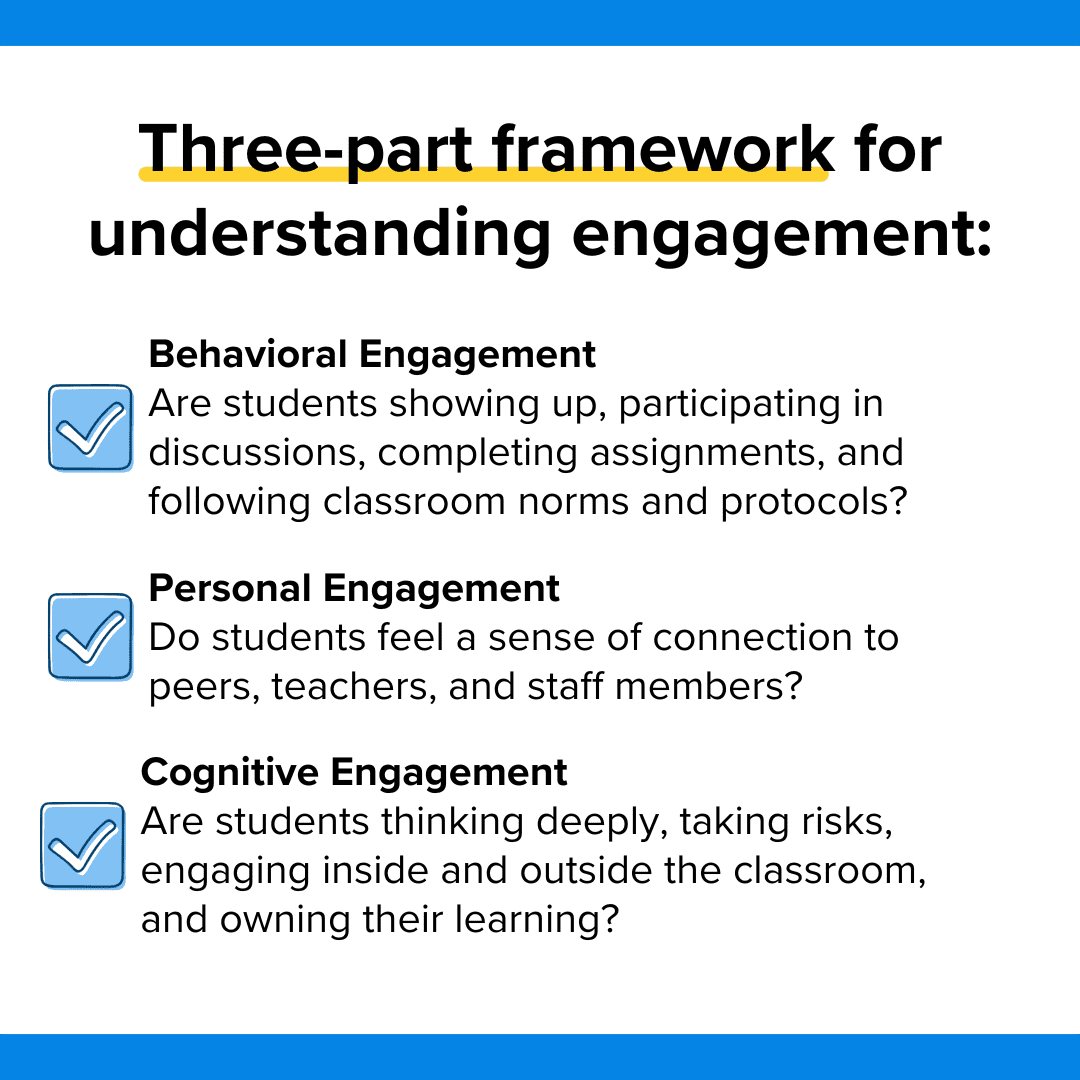
Dr. Kapushion introduced a three-part framework for understanding engagement: 

  • Behavioral Engagement: Are students showing up, participating in discussions, completing assignments, and following classroom norms and protocols? 
  • Personal Engagement: Do students feel a sense of connection to peers, teachers, and staff members? 
  • Cognitive Engagement: Are students thinking deeply, taking risks, engaging inside and outside the classroom, and owning their learning? 

Ms. Latimore reflected, “Sometimes you see that natural spark start to dim…, but it’s because learning becomes routine. So, we have to spark their interest.” She emphasized that when students become invested in their learning, they become curious, confident, and willing to take risks. She also stressed the importance of connecting learning to real life.

Measuring Engagement: Beyond the Obvious

Recognizing and supporting engagement, which can be hard to measure and may be expressed in subtle ways by quieter students, requires thoughtful strategies. Panelists shared several approaches that they’ve found to be effective:

  • Social contracts: Co-created agreements between students and teachers that set expectations for respectful and active participation.
  • Wait time: Giving students a chance to think before responding, showing them that all voices matter.
  • Vertical learning spaces: Encouraging movement and collaboration to engage students in different modalities.
  • Learning walks: Used by district leaders to normalize definitions of engagement and observe it in action.

As Ms. Thomas put it, “We have really been working hard with our teachers to be intentional in building [these strategies] into their lesson planning, so that they are giving equal opportunities for all students to engage. No opting out. We’re all doing it. We’re all working together to get there.”

Tackling Barriers to Engagement

The 2025–2026 Education Insights report notes that students often feel both overwhelmed and under-challenged, which can lead to disengagement. Ms. Thomas’s team in Green Bay uses structured discussion techniques and collaborative learning to ensure every student has a role in the classroom conversation. She also pointed out that when teachers have a strong understanding of learning targets and goals, they can move the conversation toward them with questions that bring those ideas to light.

Technology as a Tool for Engagement

Dr. Perez-Gallego highlighted how technology, when used intentionally, can fuel engagement. His team leveraged an online world-building platform to create immersive science experiences, allowing students to explore exoplanets and ask real-world questions in a familiar digital environment. He explained how they came up with the idea: “Students choose to spend their free time in these virtual worlds, and they create their own adventures, their own environments. So, can we leverage that presence to go there and invite them to learn STEM fields?”

Dr. Kapushion emphasized the potential of AI tools to support engagement through personalized learning and timely feedback. This also helps them identify at-risk students and what specific interventions would help them. Her district uses “AI pop-ups” and “AI Bingo” to introduce educators to new strategies in a fun, low-pressure way.

Real-World Relevance: Engagement That Matters

Dr. Kapushion’s Innovation Center invites students to solve real-life problems faced by outside organizations, like designing underwater robots to investigate sewer system efficiency that was below standard. She explained, “They’re paid to do that work. Our businesses are reaching out to our students because [they] have the ability to think differently.” 

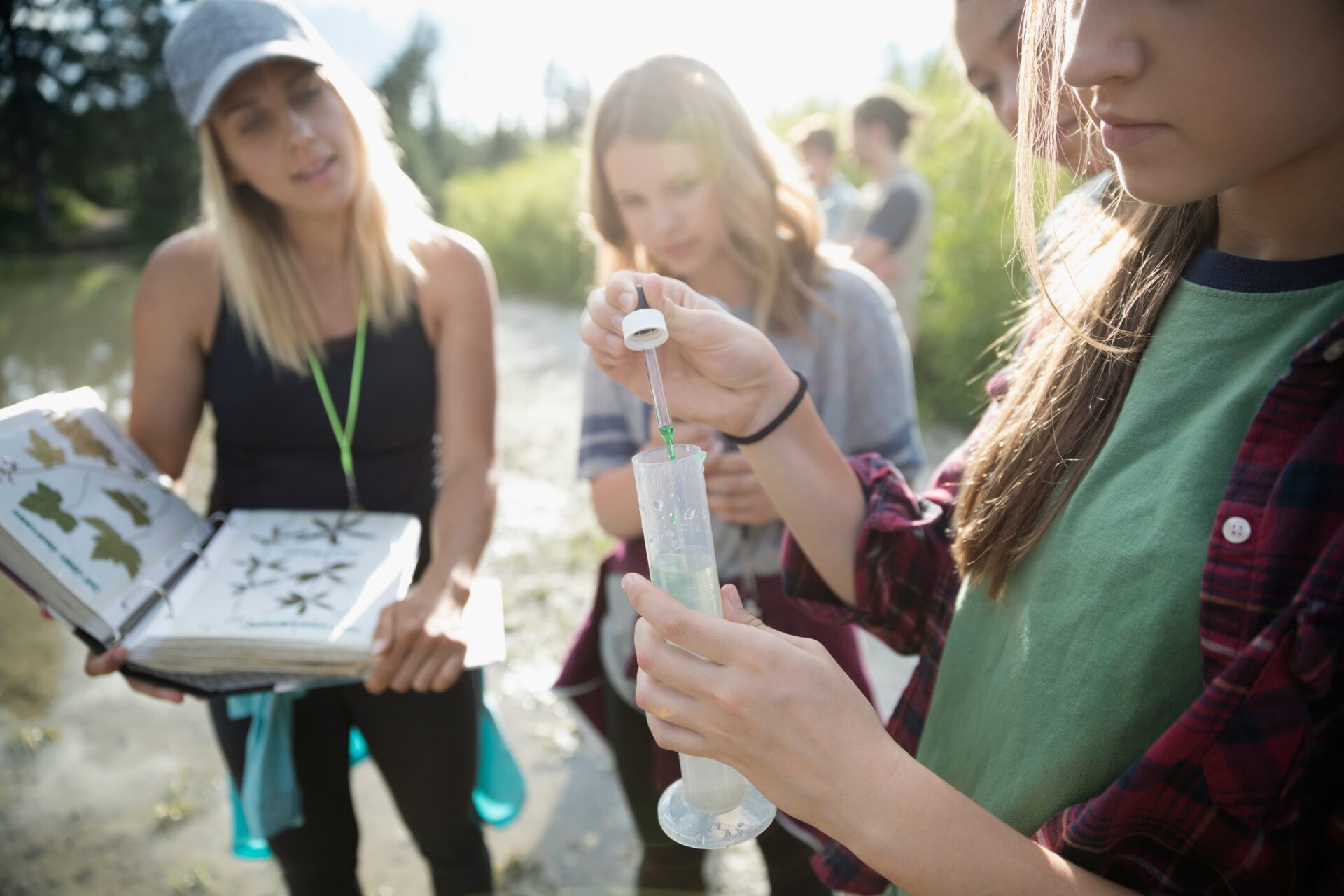
Selina Latimore shared how her school addressed food insecurity through a school-wide urban gardening initiative. Students not only learned how to grow and cook food but also connected their learning to real-world applications—an approach that sparked curiosity and built community. 

Teens Conducting Scientific Experiment Outdoors

Building Shared Understanding Across Communities

Creating alignment on engagement requires a shared language and vision. Panelists stressed the importance of:

  • Instructional frameworks that define engagement and guide professional development.
  • Communication between district leaders, principals, teachers, students, and families.
  • Professional learning that reaches every level of the organization and is rolled out district wide with consistency.

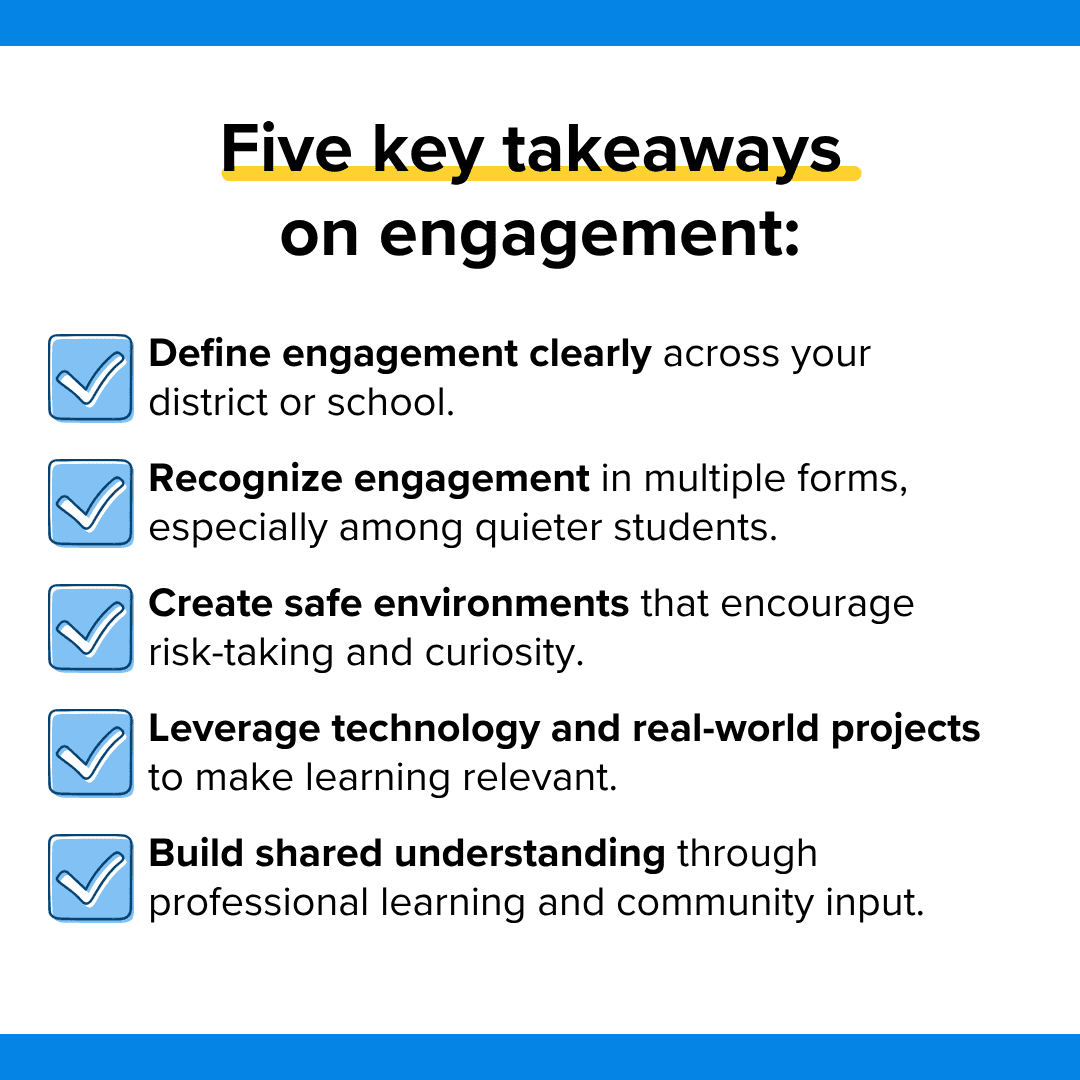
Key Takeaways for Education Leaders

5 Key Takeaways on Engagement for Educational Leaders
  • Define engagement clearly across your district or school.
  • Recognize engagement in multiple forms, especially among quieter students.
  • Create safe environments that encourage risk-taking and curiosity.
  • Leverage technology and real-world projects to make learning relevant.
  • Build shared understanding through professional learning and community engagement.

There’s so much more to learn from the full discussion, so we invite you to watch the recording!

Discover More About Engagement in the Classroom

To dive deeper into the data and strategies discussed in the webinar, download Discovery Education’s 2025–2026 Education Insights Report. It’s packed with actionable insights for district leaders, principals, and educators looking to boost engagement in their schools. 

Meet the Experts

Dr. Jackie Kapushion, Superintendent, St. Vrain Valley School District (CO)

With 37 years of experience in public education, Dr. Kapushion currently serves as Superintendent of St. Vrain Valley School District. She holds a doctorate in Leadership and Equity from the University of Colorado at Denver, where she also earned her MA in Administration, Supervision, and Curriculum Development.


Selina Latimore, Principal, Richland County School District One (SC)

Selina Latimore is a veteran educator with over 30 years of experience in K–12 education, including 15 years as principal of J.P. Thomas Elementary School. She holds degrees from Presbyterian College and the University of South Carolina and is currently pursuing a doctoral degree in Educational Administration at Liberty University.


Emily Thomas, Associate Director of Curriculum, Green Bay Area Public Schools (WI)

Emily Thomas brings 14 years of experience in education. As Associate Director of Curriculum, she oversees PreK–12 math curriculum implementation, supports district math coaches, and leads math intervention programming.


Dr. Jorge Perez-Gallego, Education & Outreach Lead, National Solar Observatory (NSF)

Dr. Perez-Gallego is an astronomer, designer, museum professional, and educator with a PhD in Astronomy and an MFA in Design. He leads education, public outreach, and communications at the National Science Foundation’s National Solar Observatory.

The post Beyond the Buzzword: What Engagement Really Looks Like Across K-12 appeared first on Discovery Education.

]]>

MS Girl with Engineering Project 3-Part Framework for Understanding Engagement Teens Conducting Scientific Experiment Outdoors 5 Takeaways on Engagement Picture of DE Staff
Life Is a Puzzle—Solve It with Healthy Choices https://www.discoveryeducation.com/blog/teaching-and-learning/empower-all-students-for-red-ribbon-week/ Fri, 10 Oct 2025 20:21:43 +0000 https://www.discoveryeducation.com/?post_type=blog&p=200985 Find the right resources to spread awareness and empower  all students for Red Ribbon Week! Observed annually from October 23–31, Red Ribbon Week honors the legacy of Drug Enforcement Agent Enrique (Kiki) Camarena and serves as a nationwide call to action for promoting wellness, safety, and prevention. It’s a time to recognize the impact of substance misuse […]

The post Life Is a Puzzle—Solve It with Healthy Choices appeared first on Discovery Education.

]]>

Find the right resources to spread awareness and empower 

all students for Red Ribbon Week!

Observed annually from October 23–31, Red Ribbon Week honors the legacy of Drug Enforcement Agent Enrique (Kiki) Camarena and serves as a nationwide call to action for promoting wellness, safety, and prevention. It’s a time to recognize the impact of substance misuse and to encourage students to make healthy, informed choices that support their well-being and future success.

In celebration of the 2025 Red Ribbon Week theme, “Life Is a Puzzle, Solve It Drug Free,” we’re sharing proactive strategies and standards-aligned resources to help educators spark meaningful conversations and support students in building lives full of purpose, resilience, and connection.

red ribbon week pr

Medication Safety

As part of the Pharmacists Teach program, Dose of Knowledge empowers educators, pharmacists, parents, and community members to guide students in making smart decisions about medication safety and mental health. These K–12 standards-aligned resources include everything educators need to teach students about responsible choices and wellness.

 Think It Through, a choose-your-own-adventure animated experience that helps students practice decision-making and explore the consequences of their choices in a safe, engaging way.

Preparing for Positive Choices

The Ask, Listen, Learn classroom activities are designed with the whole child in mind.

These middle school resources help students:

  • Understand the short- and long-term effects of underage use on the developing brain.
  • Practice refusal and exit strategies to navigate peer pressure.
  • Separate fact from fiction through scientific research and peer discussion.
  • Explore real-world policy by creating mock legislation and debating societal impacts.

Ask, Listen, Learn helps students uncover the science behind how substances affect the brain and body, empowering them to say “YES” to a healthy lifestyle and “NO” to risky behaviors.

Look into Real Life

Created in partnership with the DEA, Operation Prevention offers tools for educators, families, and communities to support prevention efforts. These resources are aligned to national health and science standards and integrate seamlessly into classroom instruction.

Through hands-on investigations, students explore the science behind substance misuse and its impact on the brain and body. English and Spanish resources, self-paced modules, and culturally responsive content help kickstart life-saving conversations.

The latest Virtual Field Trip, An Ounce of Prevention, empowers high school students to make informed decisions and become advocates for prevention in their communities. Students meet real people working to combat the fentanyl crisis and raise awareness about counterfeit drugs.

Join us Oct 29 during Red Ribbon Week for Careers at Sea and Shore: A Virtual Field Trip to Maritime Manufacturing Centers — designed for Grades 6–12. This experience takes students behind the scenes to see how submarines are built and introduces them to the engineers, welders, and technicians who make it happen.

More than just a look at cool technology, this field trip highlights how living a healthy lifestyle can open doors to meaningful careers in industries like maritime manufacturing and national security.

 
“Red Ribbon Week is a powerful reminder that every choice students make is a piece of the bigger picture. By providing educators with engaging, real-world resources, we help students build the skills they need to make healthy decisions and lead safe, fulfilling lives. Our partners are committed to supporting these conversations with content that’s age-appropriate, inclusive, and empowering.”
 Madeline O’Neil, Senior Partner Impact Manager at Discovery Education

This year, honor Red Ribbon Week by sharing ideas for making healthy choices, raising awareness of real-life challenges, and encouraging responsible decision-making in and out of school.

The post Life Is a Puzzle—Solve It with Healthy Choices appeared first on Discovery Education.

]]>
red-ribbon-week-pr
Building Career Confidence: Helping Students Explore What’s Possible https://www.discoveryeducation.com/blog/future-ready-students/career-finder-helps-students-explore-career-options/ Wed, 01 Oct 2025 03:24:34 +0000 https://www.discoveryeducation.com/?post_type=blog&p=200049 Middle and high school students often face a daunting question: What do you want to be when you grow up? For many, the pressure to have a clear answer comes far too early – long before they’ve had the chance to explore what options even exist. But what if we shifted the goal from choosing […]

The post Building Career Confidence: Helping Students Explore What’s Possible appeared first on Discovery Education.

]]>
Middle and high school students often face a daunting question: What do you want to be when you grow up? For many, the pressure to have a clear answer comes far too early – long before they’ve had the chance to explore what options even exist. But what if we shifted the goal from choosing a career to building the confidence that one will suit them someday?

As educators, we’re in a powerful position to open that door. By providing space for students to explore a wide variety of career pathways – without pressure or expectation – we help them develop a mindset of curiosity and possibility.

Student Walking on Road Toward Question Mark

Exploring Careers for the Sake of Possibility

For today’s students, the world of work is bigger – evolving faster – than ever before. There are jobs in industries that didn’t exist ten years ago, and many more that students won’t hear about in everyday conversation. That’s why it’s essential to offer them guided ways to explore widely, before they feel pressured to decide.

Career exploration isn’t just about making decisions. It’s about building belief: belief that they’ll find something meaningful. Belief that their unique interests and strengths are valuable. Belief that there’s a place for them in the world of work, even if they don’t know what it’s called yet.

Career Finder from Discovery Education

Career Finder

Designed specifically for middle and high school students, this free, web-based tool helps students explore dozens of careers – especially within the wide world of STEM – through short videos and adaptive prompts. It’s a personalized, video-driven journey that puts students in the driver’s seat.

Using a mix of real-life job stories, engaging media, and thoughtful questions, Career Finder gives students a “conversation-like” experience – meeting real professionals and learning what they do, how they got there, and why they love it.

How It Works: A Journey of Self-Discovery

The Career Finder is built around four key themes that shape how students think about future jobs:

  • Workplace Environment – Do they want to work indoors or outdoors? With people or on their own?
  • Communication Style – Are they comfortable presenting? Do they like collaborating?
  • Motivation – What drives them: building relationships, pursuing their passion, learning new skills?
  • Level of Education – Are they thinking about college, apprenticeships, or on-the-job training?

Through each of these themes, students interact with the content by selecting preferences, watching short, high-quality videos, and providing feedback. They’ll meet a Minecraft Engineer, a Fire Sprinkler Fitter, a Bat Conservationist, and many more – each bringing something unexpected and inspiring to the table.

At the end, students receive a summary of their preferences, plus links to even more careers and learning resources. This open-ended structure means students can return again and again, discovering new paths each time.

Feet with Arrows Pointing All Directions

Why It Matters: The Benefits for Students

Girl Checking Hydroponic Plants

This Career Finder isn’t about locking students into one “perfect” job. It’s about inviting them to explore, reflect, and imagine the future on their own terms. Here’s what makes it such a valuable tool:

  • Confidence in the Future – Students hear directly from real people who once had the same questions they do now. That representation matters: it builds confidence that there’s a career out there they’ll connect with.
  • Early Exposure to Career Pathways – Whether or not students are thinking about jobs yet, seeing the variety of options early on helps them connect the dots between school and the real world.
  • Student Agency – The experience is self-directed, letting students choose what they watch and how they respond. This freedom supports authentic engagement.
  • Accessibility for All Classrooms – The interactive is browser-based, requires no log-in, and works on any device, making it a great fit for classrooms with limited tech or time.
  • Open-Ended Seat Time – With many branching pathways to explore, the Career Finder works well during advisory periods, enrichment blocks, substitute plans, or career readiness lessons.
  • Personalized Reflection – The interactive adapts to each student’s input and provides a summary they can use to spark follow-up discussions or guide further research.

How Teachers Are Using It

Here are just a few ways the Career Finder can be woven into everyday classroom moments:

  • Career Readiness Lessons – Use it as a launch point for classroom discussion or journaling about interests and goals.
  • STEM Classrooms – Show the diversity of careers connected to science, tech, engineering, and math – even ones students wouldn’t expect!
  • Social-Emotional Learning – Support self-awareness and confidence by helping students explore their communication styles and motivations.
  • Advisory or Homeroom Time – Let students explore independently, then share one new job they found interesting with a peer.
  • Virtual or Hybrid Settings – Assign Career Finder as an asynchronous activity with a follow-up reflection or class discussion.
Girl Looking Through Microscope

Starting the Conversation

The new Career Finder ends with a strong message: This is just the beginning.

Helping students explore careers isn’t about pressuring them to decide early – it’s about building curiosity, confidence, and clarity. When students understand that there’s a whole world of jobs they’ve never even heard of, they begin to see possibility in their future.

Discovery Education’s Career Finder gives them a safe, engaging, and empowering way to start that journey. It’s free, flexible, and designed with student voice at its core.

The post Building Career Confidence: Helping Students Explore What’s Possible appeared first on Discovery Education.

]]>
Student Walking on Road Toward Question Mark Career Finder Feet with Arrows Pointing All Directions Girl Checking Hydroponic Plants Girl Looking Through Microscope
Fueling Growth: How Student Engagement Drives Math and Reading Success https://www.discoveryeducation.com/blog/teaching-and-learning/how-student-engagement-drives-math-and-reading-success/ Tue, 30 Sep 2025 22:40:13 +0000 https://www.discoveryeducation.com/?post_type=blog&p=200004 Oliver is a third grader who loves playing soccer and wants to be a firefighter someday. He gets excited about reading when he can choose from a selection of books, especially those about helping others. His teacher has noticed that Oliver is more likely to complete his comprehension check worksheets when he’s responding to these […]

The post Fueling Growth: How Student Engagement Drives Math and Reading Success appeared first on Discovery Education.

]]>

MS Girl and Classmates Working at Desk

Oliver is a third grader who loves playing soccer and wants to be a firefighter someday. He gets excited about reading when he can choose from a selection of books, especially those about helping others. His teacher has noticed that Oliver is more likely to complete his comprehension check worksheets when he’s responding to these types of books. In addition, Oliver really seems to enjoy working through supplemental lessons offering adaptive literacy tools that adjust to his pace.

Sofia is an eighth-grade student who enjoys movies and plans on studying mechanical engineering in college. Her favorite part of Algebra class is when her teacher incorporates interactive problem-solving games that allow teams to compete against each other. She often volunteers to be a team leader and submit their answers during the games.

Both Oliver and Sofia are actively engaged in learning, although each responds to different strategies for building interest, motivation, and confidence. We know that engagement is critical for student achievement based on years of research. As noted in our recent Education Insights report, “when students are deeply engaged, knowledge retention improves, skills transfer, and deeper understanding takes place. These are outcomes that matter not just for end of course or grade level outcomes, but for real-world readiness.”

Ideally, each classroom in a school would be set up to meet a broad range of student engagement needs, but not everyone will know what instructional options exist and how much of a difference they can make. Let’s start by identifying what engagement is, explore strategies to strengthen it, and then look at real-world evidence that it leads to student growth in both math and reading.

What Are the Three Types of Student Engagement?

Oliver and Sofia’s stories illustrate that engagement takes many forms. Research shows it falls into three categories: cognitive, behavioral, and personal. “Cognitive” refers to thinking and learning, and it applies when students are:  

  • Doing critical thinking and problem solving  
  • Using deep learning strategies  
  • Setting goals and monitoring their progress 

For example, giving elementary students problem-based addition and subtraction tasks helps them understand the reasoning behind the math, especially when asked to show their thinking and represent answers in more than one way.

Behavioral” refers to what students do at school, and it applies when students are: 

  • Attending school consistently and on time 
  • Actively participating in class 
  • Completing assignments on time 

We can see students participating in class in a variety of ways, such as asking questions when they aren’t sure what worksheet instructions mean or taking notes during a class discussion that they use to write an essay later.

Personal” refers to how students feel about school, teachers, and peers, and it applies when students: 

  • Are enthusiastic and motivated to learn 
  • Feel connected 
  • Enjoy positive relationships with other students and teachers 

Here, students may feel more comfortable providing answers to teacher questions in class when they know it’s ok to be wrong. 

How Can We Foster Student Engagement?

Educators have many ways to establish and strengthen the three types of student engagement, such as: 

  • Setting clear expectations and establishing routines (cognitive) 
  • Including student choice and voice (cognitive) 
  • Using a curriculum that is challenging and culturally relevant (behavioral) 
  • Encouraging social learning (behavioral) 
  • Creating a supportive environment in the classroom (personal) 
  • Using frequent, timely, and specific feedback (personal) 

In addition, removing barriers to learning is essential for students to make progress. This could take the form of added scaffolding, or it may involve incorporating alternative formats such as audio or video content. And rather than doing it all by themselves, teachers can lean on instructional technology solutions more than ever. For instance, adaptive tools like DreamBox Math personalize pacing and content for each student, so they stay motivated. 

How Can Technology Boost Student Engagement?

Technology by itself isn’t necessarily engaging, so it’s critical that educators evaluate educational programs based on whether they include approaches proven to boost engagement. The most effective tools go beyond digitizing content and instead adapt to each learner’s needs. For example, DreamBox Reading uses real-time data to adjust instruction, giving students the right level of challenge and support while keeping them motivated. Plus, since students learn in different ways and often have strong preferences for learning, it’s best to either have a variety of tools on hand or resources that offer built-in flexibility to teach using a variety of modalities and/or content. 

This translates into students discovering practical applications of knowledge, taking ownership of their learning, avoiding boredom and frustration, working at the right pace for them, and feeling that it’s ok to make mistakes—all of which can positively affect student progress to an eye-opening extent sometimes. 


MS Girl Using Laptop Next to Teacher

Real-World Success

What are some examples of technology improving student engagement?  

  • Real-life context aligned to curriculum, including examples, anecdotes, problem-based learning, and interviews 
  • Vetted, age-appropriate videos and audiobook options, supporting different styles of absorbing information
  • A set of choices in assigned reading materials or methodology for solving problems, such as virtual manipulatives for math 
  • Game-like experiences for individual, small-group, or whole-class learning that reading comprehension or math problem-solving 
  • Adaptive software that personalizes learning based on student interactions, such as adjusting the difficulty level or offering different types of problems 

Teachers may look to supplemental materials to strengthen student engagement, and since many are digital, they can quickly and easily implement one or more of the strategies previously mentioned. 

One example of a supplemental program is DreamBox Math. It provides an interactive set of activities and adapts to each student as they progress through lessons, adjusting the level of challenge to keep learners motivated. What’s more, it closely tracks each student’s personalized learning, giving teachers insights into their progress with strengths, struggles, and opportunities for growth highlighted. Schools and districts across the country have reported significant student growth after adding DreamBox Math to their toolkit: 

  • Denton Public Schools: The percentage of kindergarten students proficient in math grew from 63% one year to 75% the next year 
  • Salem School District: Measure of Academic Progress (MAP) testing scores in 2022–2023 were some of the highest Salem had ever seen, and state testing (Wisconsin Forward) scores also improved 
  • Harbison West Elementary School: In one grade level, 86% of students met their MAP goal with 80% median conditional growth compared to all other grade levels (70% range) 

For literacy instruction, Reading Plus provides personalized instruction and intervention for students in grades 3–12. It includes texts that reflect their own lives and experiences and texts from global sources to add to cross-curricular knowledge, giving learners choice and agency in their journey. Recent school and district successes with this solution include: 

  • Holman Middle School: Tier 2 students averaged two reading-level gains and Tier 3 students averaged 2.5 level gains in just their first year 
  • Waterford Graded School District: Students who completed 80+ lessons grew an average of 3.2 reading levels, and those who completed 100+ lessons averaged 4.0 reading-level gains 
  • Henderson Collegiate Middle School: In one year, the entire school saw 2.6 reading-level gains with 47% of students at or close to reading level, up from 15% previously 

What to Explore Next

Even though we’ve looked at the three types of student engagement, strategies for meeting different needs, what technology has to offer, and real-world gains at schools and districts, there’s still more to learn. The 2025–2026 Education Insights report presents key findings about engagement based on feedback from thousands of K–12 superintendents, principals, teachers, parents, and students across the United States. It answers questions like “What percentage of students are bored each week?” and “How well do student and teacher observations of high student engagement match up?” Dig into the data and insights in the report to gain a better understanding of how to support stronger student engagement in your school or district. 

The post Fueling Growth: How Student Engagement Drives Math and Reading Success appeared first on Discovery Education.

]]>

MS Girl and Classmates Working at Desk MS Girl Using Laptop Next to Teacher
Literacy and Math Strategies in the U.S.: What’s Working and What Isn’t https://www.discoveryeducation.com/blog/educational-leadership/literacy-and-math-strategies-whats-working-and-what-isnt/ Tue, 30 Sep 2025 22:39:38 +0000 https://www.discoveryeducation.com/?post_type=blog&p=199958 Taking Time to Assess Instructional Impact Educators must always balance urgent needs in classrooms with the longer-term goal of improving student outcomes. As part of a regular series on the state of education in the U.S., we asked four passionate leaders in K–12 education to join us for a conversation about literacy and math instruction […]

The post Literacy and Math Strategies in the U.S.: What’s Working and What Isn’t appeared first on Discovery Education.

]]>

Taking Time to Assess Instructional Impact

Educators Collaborating

Educators must always balance urgent needs in classrooms with the longer-term goal of improving student outcomes. As part of a regular series on the state of education in the U.S., we asked four passionate leaders in K–12 education to join us for a conversation about literacy and math instruction and student achievement: 

  • Dr. Emily Hare, Director of PreK–12 Mathematics for Guilford County Schools 
  • Dr. Amanda Malone, K–12 Literacy Director for the Mississippi Department of Education 
  • Dr. Melissa Sadorf, Executive Director of the National Rural Education Association and professor at Northern Arizona University 
  • Dr. Rufus Hill, State Director of K–12 Mathematics Coaching for the Mississippi Department of Education 

Host Dr. Karen Beerer, Senior Vice President of State and Strategic Partnerships at Discovery Education, opened the discussion by outlining what educators are observing and the pressures they’re experiencing in schools and districts of all kinds: 

  • The declines evident in the 2024 NAEP reading and math scores 
  • Legislation in many states that requires evidence-based instruction in curricula and sets aside funding for curriculum, tutoring, and acceleration efforts.  
  • Technology fatigue for educators driving demand for simpler, integrated solutions 
  • Teacher shortages and the effects on educators, schools, and districts 

But these challenges also create opportunities for using personalization and data-driven strategies to close gaps, making conversations like this one essential for driving progress in literacy and math.

What’s Currently Working?

Dr. Beerer said, “I thought we’d start with Mississippi, because when you read about the amazing growth that Mississippi students have achieved over the past decade, they often call it the ‘Mississippi Miracle.’ [But] it really wasn’t a miracle. It was planned, strategic systems of change.” Dr. Amanda Malone explained that everything began with legislation focused on K–3. Now schools throughout the state have literacy coaches who focus on “the whole child and the whole teacher.” In addition, they’ve found having access to high-quality instructional materials (HQIM) is key. 

For rural communities, relationships remain the foundation. Dr. Melissa Sadorf shared, “Teachers know their students and their families on a very personal level, and that allows those instructors to be highly responsive to student needs, even when formal resources are scarce.” By necessity, teachers wear multiple hats and can use technology to be a bridge that levels the playing field for students.

At the district level, Dr. Emily Hare explained that they are “intentional about aligning their work to a shared vision and value about what math instruction is and the experience each student should have” in her district. This shared vision guides curriculum development, HQIM choices, and professional learning, resulting in consistency across classrooms. 

What Needs More Attention?

“Too many students are leaving high school without the skills they need to succeed, especially in rural and high-poverty schools,” remarked Dr. Sadorf. Teacher shortages are making sustained improvement difficult, and a reliance on short-term grants and pilot programs means gains are hard to hold onto. 

Dr. Hare agreed, adding: “We’ve articulated clear commitments at the state and district level, but how do we ensure that our supports and resources are consistent across all of those schools? It’s really not a question of effort—I think we all know that—but of sustaining and scaling that vision so that it lives in daily practice.”

In Mississippi, coaches are actively building teacher capacity around HQIM, but sometimes teachers are trained and then leave. Dr. Malone emphasized that using resources most effectively will help, especially when technology is involved.

Dr. Rufus Hill pointed out that using resources with fidelity is important for success, especially since the teacher shortage means not everyone has the specific background in what they’re teaching. He mentioned one math teacher with an ELA background who has “been able to kind of teach herself to teach the students” using HQIM. 

Strategies and Real-World Examples of Change

The panelists shared programs, approaches, and partnerships that are driving real gains in literacy and numeracy. 

Dr. Malone identified: 

  • Using and training educators on structured literacy, which is based on the Science of Reading 
  • Helping students learn to read in the most efficient way 
  • Continually evolving and learning as educators 

Dr. Hill noted: 

  • Implementing the Mathematics Instruction Observational Protocol (MIOP)  
  • Creating a coaching academy with instructional leaders and coaches 
  • Starting a partnership with the Dana Center at the University of Texas 

Dr. Hare emphasized: 

  • Implementing HQIM with integrity for children that are traditionally underserved 
  • Supporting collaborative math leadership teams at school and district levels 
  • Seeking input from cross-collaborative district teams multiple times per year 

Dr. Sadorf then concluded that collaboration is a multiplier: partnering increases impact, closes gaps, and “ensures educator voices shape solutions that benefit everyone.” 

Supplemental Resources

Regarding HQIM and supplemental resources, Dr. Beerer asked how educators assess them and then implement them in the classroom. Dr. Malone noted that while each district chooses its own resources, state department level administrators can “see commonalities and provide coaching around those.” She recommended using supplemental resources to elevate math and literacy instruction.

Innovation in Math and Literacy

The panelists each offered a single word or phrase to capture what innovation in math and literacy means to them.

  • Dr. Sadorf chose the word connected, saying, “Innovation in literacy math has to connect students to engaging, relevant learning.” 
  • Dr. Hare chose alignment, explaining, “It’s about aligning to our vision, our values.” 
  • Dr. Hill came up with purposeful, noting, “I just think that with every decision that we make, we need to make sure that we have a purpose for that.” 
  • Dr. Malone’s phrase was “Effectively partnering what we know with what we have, with a learner in mind.” 

Engagement’s Role in Learning

In closing, Dr. Beerer brought up the “big topic” of engagement, something that always seems to come up in discussions about ways to improve learning. She noted that the 2025–2026 Education Insights Report, with a focus on engagement, offers key insights about education, motivation, and challenges in today’s classrooms. The report is free to download.

There’s so much more to learn from the full discussion!

Host and Experts’ Backgrounds

Dr. Karen Beerer, Senior Vice President of State and Strategic Partnerships at Discovery Education. 

Dr. Emily Hare, Director of PreK–12 Mathematics for Guilford County Schools. With a Ph.D. in Teacher Education, she is dedicated to building strong systems that empower teachers and students to succeed in math. 

Dr. Amanda Malone, K–12 Literacy Director for the Mississippi Department of Education. With over 20 years of experience as a teacher, coach, and coordinator, she brings deep expertise in literacy leadership. She earned her Ph.D. in Higher Education Administration. 

Dr. Melissa Sadorf, Executive Director of the National Rural Education Association and professor at Northern Arizona University. She has over 30 years of experience in education as a teacher, principal, and superintendent.

Dr. Rufus Hill, State Director of K–12 Mathematics Coaching for the Mississippi Department of Education. He earned degrees from Alabama A&M, Delta State University, and completed his doctorate at National University. 

The post Literacy and Math Strategies in the U.S.: What’s Working and What Isn’t appeared first on Discovery Education.

]]>

Educator Collaboration
Opening Doors to the Future: Celebrating Workforce Development Month in the Classroom  https://www.discoveryeducation.com/blog/teaching-and-learning/opening-doors-to-the-future-celebrating-workforce-development-month-in-the-classroom/ Fri, 19 Sep 2025 20:31:02 +0000 https://www.discoveryeducation.com/?post_type=blog&p=199194 September is Workforce Development Month—a time to recognize the importance of preparing today’s students for tomorrow’s careers. For educators, it’s a powerful reminder that career readiness starts early, and that exposure to real-world opportunities can be the spark that ignites a student’s future.  Imagine a classroom where students not only learn about math, science, and […]

The post Opening Doors to the Future: Celebrating Workforce Development Month in the Classroom  appeared first on Discovery Education.

]]>


September is Workforce Development Month—a time to recognize the importance of preparing today’s students for tomorrow’s careers. For educators, it’s a powerful reminder that career readiness starts early, and that exposure to real-world opportunities can be the spark that ignites a student’s future. 

Imagine a classroom where students not only learn about math, science, and history—but also meet astronauts, engineers, designers, and data scientists. For many students, especially those in underserved communities, this kind of exposure can be life-changing. 

Why Career Exposure Matters

Educators know that curiosity is the spark that ignites lifelong learning. But curiosity needs fuel—and one of the most powerful sources is real-world relevance. When students meet professionals from diverse industries, they begin to see possibilities they may never have imagined. They start asking questions like: 

  • What does it take to become an astronaut? 
  • How do you design technology for space exploration? 
  • Could I do something like that one day? 

For students who may not have role models in high-tech or emerging industries, these moments of connection can be transformative. They don’t just learn about careers—they begin to see themselves in them. 

Career Connect: Bringing the Future into the Classroom

When you’re missing individuals in classrooms due to vacancies, your principals have to be very creative on how we ensure our kids are safe and continue to receive a high-quality education.

Teacher Interview jpg

Discovery Education’s Career Connect feature in Discovery Education Experience is designed to do exactly that. By linking K–12 classrooms with innovative industry leaders, Career Connect helps educators build students’ career readiness while sparking engagement and curiosity. 

Thousands of professionals have already shared their stories with classrooms across the country. And this October, students will have the chance to hear from one of the most inspiring voices in space exploration for a special spotlight virtual experience. 


Career Connect Spotlight: Bob Behnken

On October 7 at 1:00 PM ET, students in grades 6–12 can tune in live to hear from Bob Behnken, Vice President for Exploration, Products, and Technology Strategy at Lockheed Martin Space Systems—and a retired NASA astronaut. 

Bob will share what it’s like to do a spacewalk, fly a shuttle mission to the International Space Station, and train for space exploration right here on Earth. He’ll also talk about the skills needed to work in space—and answer student questions submitted in advance. 

Register Now to submit questions and join the event. 

Additionally, check out IF/THEN® STEM video profiles and student choice boards to spark curiosity, then explore a wide network of STEM volunteers ready to virtually visit your classroom with Career Connect. With support from Lyda Hill Philanthropies, you’ll help students see themselves in STEM and build bold futures.

More Ways to Explore Careers in STEM

Teacher Interview 1 jpg

Discovery Education and the STEM Careers Coalition offer even more tools to help students explore future-ready careers: 

Career Finder Interactive 

Wondering where to begin the journey toward a STEM career? The Career Finder interactive helps students discover in-demand careers that align with their interests. By answering a few simple questions, students can explore personalized career paths and learn what skills and education they’ll need to succeed. 

 Try Career Finder and start exploring today 

Forging Innovation: A Mission Possible Virtual Field Trip

On October 9, 2025, unlock access starting at 7:00 AM ET to a brand-new virtual field trip: 

Forging Innovation: A Mission Possible Virtual Field Trip
(Grades 6–12 | 22 minutes)
 

Take your students on a virtual journey into the world of steel—how it’s made, shaped, and used to build the future. This immersive experience introduces students to the science, engineering, and innovation behind one of the world’s most essential materials. 

Can’t join on the premiere date? No worries—watch at a time that’s most convenient for your class. 

Resources for Educators

Career Connect and the STEM Careers Coalition provide curated classroom resources—videos, ready-to-use activities, lessons, and interactive tools—to support career exploration and workforce readiness. These materials help educators integrate career learning into everyday instruction, making it accessible and engaging for all students.

This Workforce Development Month let’s celebrate the educators who are opening doors for students—connecting them with careers they may never have known existed and helping them build the skills to thrive in a changing world. Programs like Career Connect and tools like Career Finder make it easier than ever to bring the future into the classroom—and to show students that their future is full of possibility. 

Sign up to access the Virtual Field Trip and classroom resources - delivered straight to your inbox.

The post Opening Doors to the Future: Celebrating Workforce Development Month in the Classroom  appeared first on Discovery Education.

]]>

Teacher-Interview.jpg Teacher-Interview-1.jpg
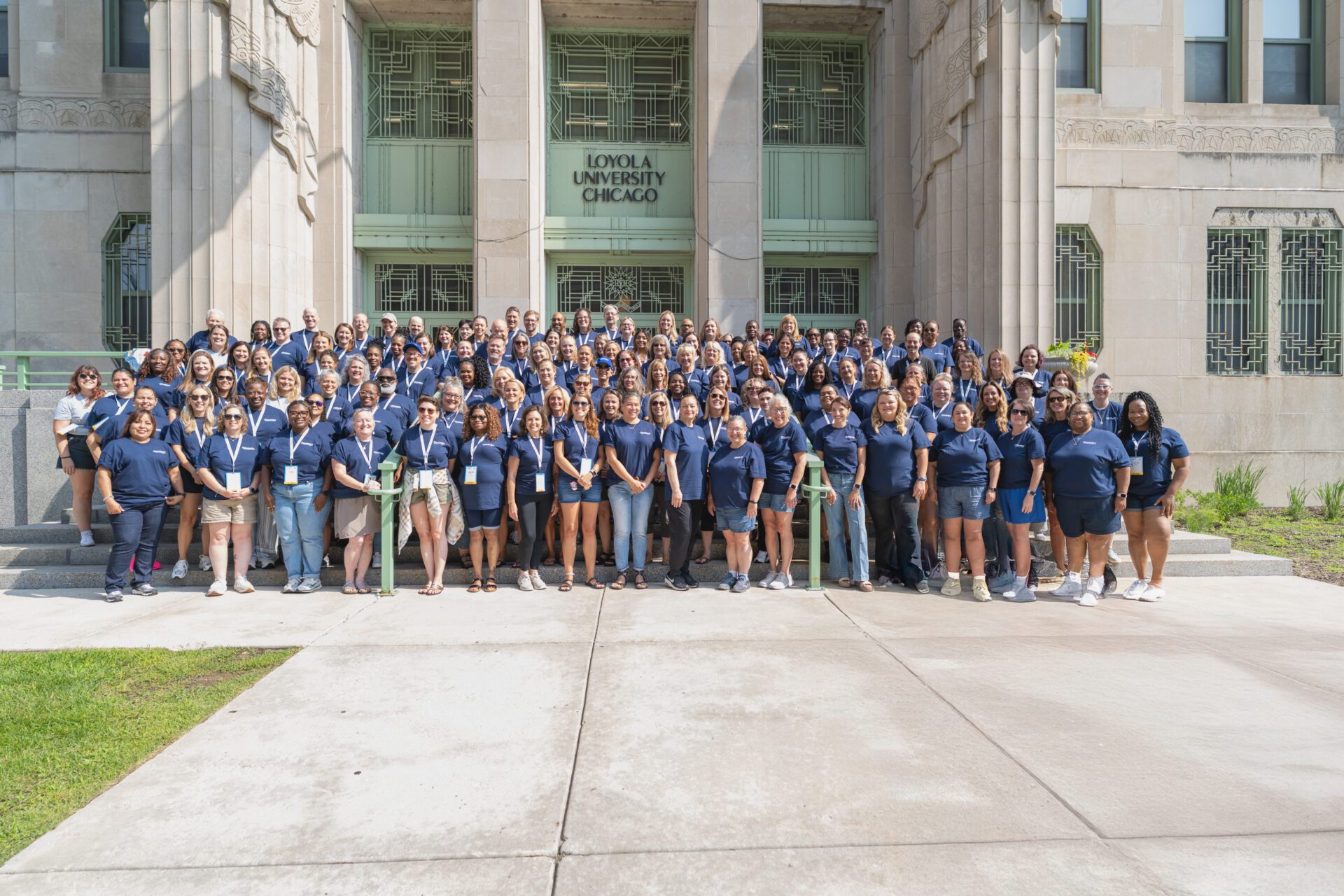
20 Lessons from 20 Years of Professional Learning with the DEN https://www.discoveryeducation.com/blog/de-news/20-lessons-from-20-years-of-professional-learning-with-the-den/ Tue, 16 Sep 2025 14:51:02 +0000 https://www.discoveryeducation.com/?post_type=blog&p=198979 In 2005, eight educators made their way through the busy halls of the NECC Conference in Philadelphia to meet one another for the first time. What brought them together wasn’t just that they all used Discovery Education and saw its power to engage students while aligning to academic standards, but a shared spark: what could […]

The post 20 Lessons from 20 Years of Professional Learning with the DEN appeared first on Discovery Education.

]]>
DSC04790 Edit 1

In 2005, eight educators made their way through the busy halls of the NECC Conference in Philadelphia to meet one another for the first time. What brought them together wasn’t just that they all used Discovery Education and saw its power to engage students while aligning to academic standards, but a shared spark: what could happen if we learned how to get the most out of this, together? They arrived eager and hopeful, bringing stories from their classrooms and a desire to dream bigger. At that moment the DEN (Discovery Educator Network) was born. 

Now, twenty years later, the DEN is a thriving professional learning community filled with stories, connections, and shared wisdom. To celebrate our 20th birthday, we asked DEN members to reflect on what they’ve learned through their involvement. Here are 20 lessons from 20 years in the DEN. 

DSC04842

Collaboration & Community: How DEN Members Inspire One Another 

1. “One of the most valuable insights I’ve gained from my time in the DEN is that teaching and learning are at their best when they are collaborative. Surrounding myself with passionate, like-minded educators has shown me that sharing ideas, resources, and encouragement not only elevates my own practice, but also creates a ripple effect that impacts students far beyond my own classroom.” – Carrie Willis, STEAM & Technology Director, CA 

2. “When I was first introduced to the DEN, I didn’t have a large professional cohort to rely on for new and innovative ideas. I think the network in the DEN is probably one of the things that is most impressive. You’re able to get together with these amazing, innovative, imaginative, creative, kinetic people to share the things they are most excited about.” -Rob Lamb, Teacher, MO 

3. “Fellow DEN members have inspired me to be more innovative and reflective in my teaching and leadership. Their diverse perspectives and shared passion for education encourage me to take risks, embrace new strategies, and prioritize collaboration. Through their support and ideas, I’ve grown more confident in leading change and fostering a student-centered learning environment.” -Emily Strickland, Middle School Teacher, SC 

4. “There’s nothing like having a group of educators who you can text, email, call, ask questions, get ideas, and ask for HELP if you need it.” -Wandalyn Jones, Academic Interventionist, SC

5. “Connecting educators to each other is so important, and as a librarian—there’s only one of me (in the building). So, to have other educators who I can connect with is really important. To ask, ‘How are you handling this? What can you share?’” – Lisa Wolski, Library Media Specialist, NY 

6. “I love being part of the DEN because it’s so positive and innovative. People are excited to share what they know, they’re excited to learn from one another, and they’re excited to grow and help the people around them.” Sarah Yonts, Librarian, WI 

7. “Some valuable insight I’ve learned in the DEN is that you’re never alone. There are plenty of other educators who have similar jobs to you, and Discovery gives you so many ways to connect.” -Anne Truger, Digital Learning Specialist, IL 

Empowering Educators: Building Confidence and Cultivating Leaders in the DEN 

8. “Being a member of the DEN has helped me step outside my comfort zone. I love teaching, but I’m shy when it comes to speaking in front of others. From presenting at virtual conferences to leading DEN workshops, I’m now comfortable presenting in front of others, whether it’s online or in person.” Wandalyn Jones, Academic Interventionist, SC

9. One professional challenge the DEN helped me overcome was regarding funding. I heard over and over that people were getting thousands of dollars in grants and funding, but I was getting nowhere. At a regional workshop, I attended a helpful seminar. I wrote and published my first request at that session, and it was funded by the weekend.-Mark Case, Teacher, NC

DSC03521 2

10. “I had no idea what I was capable of until the DEN showed me. I never considered myself a leader, but slowly, through the DEN, I realized that I had potential and the right personality to both lead and guide others.” Anne Truger, Digital Learning Specialist, IL

11. “One of my favorite memories from my time in the DEN was when I worked with teachers from another district in South Carolina to present a webinar to teachers across the state. It was wonderful to collaborate and to have a platform where we were able to share with others!” Laney Rogers, Instructional Technology Coach, SC 

12. “After attending my first DENSI, I truly became a different educator. I realized that my calling extends beyond teaching students and supporting teachers in my own school. The DEN has shown me that I can make a difference that reaches far beyond the walls of my school and into the wider educational community—locally, nationally, and even globally.” Carrie Willis, STEAM & Technology Director, CA 

Transforming Classrooms: How the DEN Fuels Innovation and Engagement 

13. “There are so many digital resources on Discovery Experience. Through DEN and attending DENSI, I have learned how to put them to good use. It saves so much time and aligns them with the standards.” – Shelby Kilmister, 6th Grade Science Teacher, NH 

14. “A favorite memory is when I started using the DEN’s content videos, specifically the science topics, and added them to my lessons on a regular basis. I can remember the students being more engaged and having a better ability to make connections with the content and skills.” – Lisa Gray, STEAM Specialist, PA 

15. “Collaborating with innovative educators has inspired me to design learning experiences that are more student-centered, inclusive, and engaging, especially for multilingual learners. It’s pushed me to embrace curiosity, experiment with new strategies, and model lifelong learning for my students.” – Natalia Rasavong, ESL Teacher, WI 

16. “Through the DEN, I had the opportunity to do a virtual field trip – the polar bear scientist trip via Zoom. My students got to hear from real scientists doing real work. Our class was able to ‘visit’ a place we could never take an actual field trip to. My students were able to come up with some really interesting questions for the scientists as well.” – Shawn Pashby, 4th and 5th Grade Teacher, MI 

The DEN Effect: Friendship, Innovation, and a Shared Mission to Empower Students 

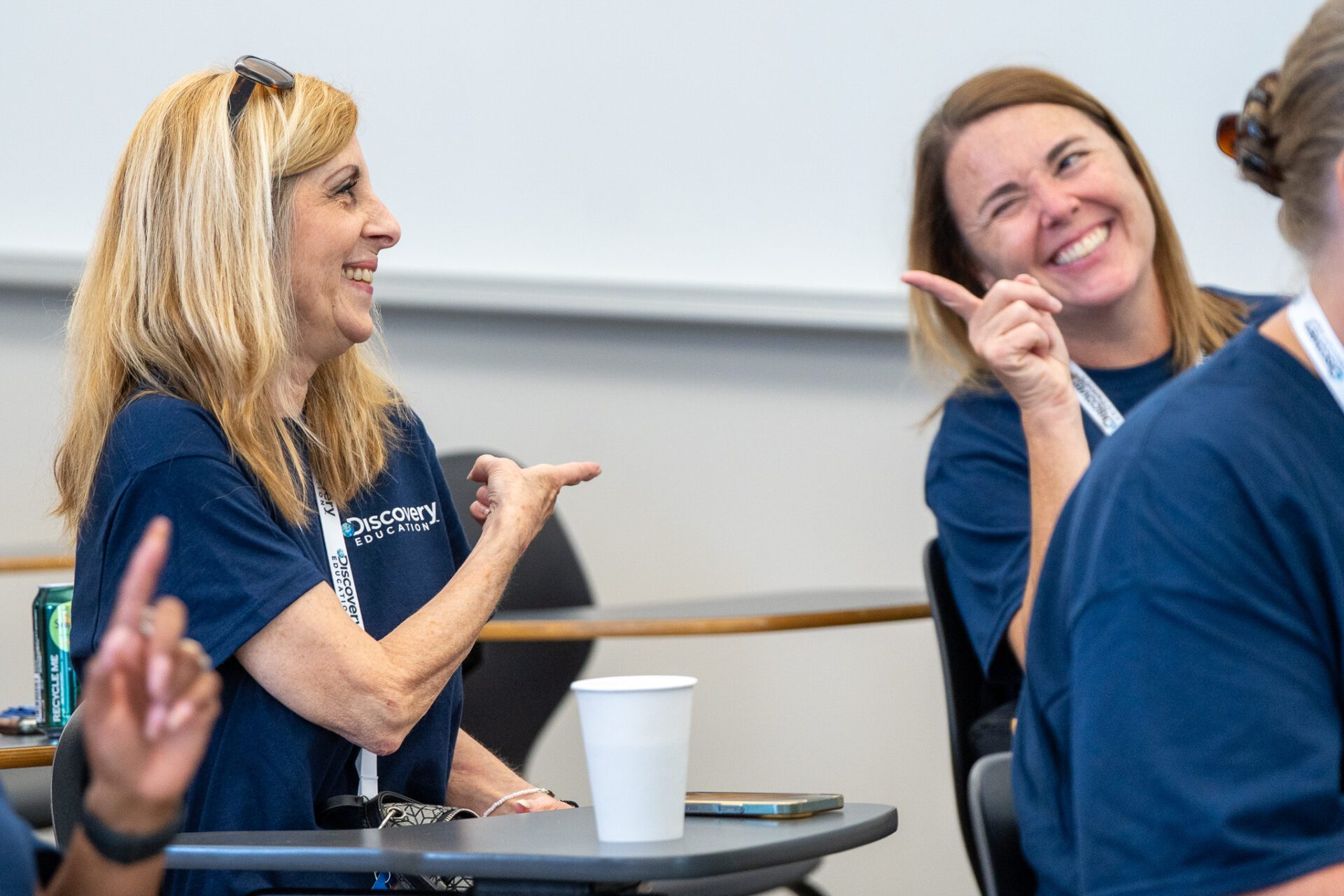
17. “My favorite memory from my time in the DEN is the connections I made during collaborative sessions at DENSI 2025. [DENSI, the DEN Summer Institute, is an immersive, residential-style professional development experience for educators.] I remember sitting around a table with educators from all over the country, sharing ideas, laughing, and realizing we were all driven by the same passion—to inspire and empower our students. That mix of learning something new, testing out creative tools, and building friendships that continue beyond the event really captures the DEN spirit for me.” -Natalia Rasavong, ESL Teacher, WI 

18. “DENSI (The DEN Summer Institute) is such a fun experience for teachers. You’re going to meet friends that you’ll keep for life, and you’re going to have so many ‘aha’ moments yourself.” -Heather Willsey, Teacher & Tech Coach, MI 

DSC04360 2

19. “When I first started interacting with Discovery Education, I was about 10 years into my career and starting to feel stuck. I wasn’t burnt out, and I wasn’t doing a bad job, but I was getting to the point that I wasn’t sure if this is what I wanted to do for the next 20 years. I knew that if it felt that way to me, it would certainly start to feel that way to my students. This is when I first learned about the DEN and Discovery Education. I was lucky enough to go to their STEM Institute in 2012, where I first really started talking to people who are in the DEN. I realized very quickly that these were people I needed to be around because they injected energy into me. Whenever I interact with people from the DEN, I leave feeling invigorated and more excited about going back to the classroom to try new ideas with my students.” -Rob Lamb, Teacher, MO 

20. “Becoming a DEN member has been the best decision of my career. It’s helped me grow professionally and opened new opportunities. I’ve presented at conferences, webinars, and been encouraged to become more of a leader. It’s empowered me as a teacher. It’s been truly wonderful.” Susan Barnes, 6th Grade Science Teacher, SC 

The post 20 Lessons from 20 Years of Professional Learning with the DEN appeared first on Discovery Education.

]]>
DSC04790-Edit -1 DSC04842 DSC03521-2 DSC04360-2
Stop the Summer Slide: 6 Engaging Resources to Keep Kids Learning https://www.discoveryeducation.com/blog/teaching-and-learning/discovery-education-cep-summer-learning/ Fri, 20 Jun 2025 14:00:00 +0000 https://www.discoveryeducation.com/?post_type=blog&p=192985 Summer’s here, and while the sun is blazing, so are the opportunities to keep young minds shining bright! Whether you’re a teacher sharing resources with families or a parent looking to keep the learning spark alive, we’ve rounded up six opportunities from our Corporate Partnerships that turn summer into a season of discovery!    From hammering […]

The post Stop the Summer Slide: 6 Engaging Resources to Keep Kids Learning appeared first on Discovery Education.

]]>
Summer’s here, and while the sun is blazing, so are the opportunities to keep young minds shining bright! Whether you’re a teacher sharing resources with families or a parent looking to keep the learning spark alive, we’ve rounded up six opportunities from our Corporate Partnerships that turn summer into a season of discovery! 


From hammering at Home Depot to swinging into STEM with LIV Golf, these activities are brain-boosting adventures that will keep that learning spark alive throughout the summer!

timely relevent Summer

Junior Fire Marshal® Training Academy

Equip students with vital fire safety and prevention skills, empowering them to protect their families. The Junior Fire Marshal® Training Academy offers K–3 students an exciting opportunity to delve into fire safety essentials and earn their Junior Fire Marshal Certificate. This program features a collection of standards-aligned classroom resources designed to make learning both fun and impactful.

Build, Learn, and Explore This Summer with Home Depot Workshops!

Home Depot’s free, hands-on Workshop Days are a fun and engaging way for kids to keep building their skills all summer long. From hammering to painting, each project sparks creativity and introduces STEM concepts in a playful, practical way. The free in-store kids’ workshops are held on the first Saturday of every month, 9:00 AM local time, while supplies last. 

Plus, explore a trove of digital resources at Science Fair Central to keep the discovery going. Whether you’re crafting in-store or learning online, have kids grow, create, and learn together this summer! 

LIV to Learn: Keep Minds Bright All Summer

Where curiosity meets adventure — on and off the golf course! Whether you’re exploring the wonders of science, diving into digital creativity, or unlocking new golf skills – LIV to Learn, a collaboration between LIV Golf and Discovery Education, keeps young minds active and engaged. 

This program turns summer into a season of exploration with backyard experiments and virtual field trips. With resources that blend sports, STEM, and real-world learning, LIV to Learn helps students stay sharp while having fun — because learning doesn’t stop when the bell rings, it just gets more exciting! 

Verizon’s Immersive Explorers: Your Summer Learning Hotspot

As we wrap up the school year, we’re excited to highlight the Immersive Explorers program, in collaboration with Verizon. This initiative uses immersive techniques, ready-to-use activities, resources, and professional development materials to create interactive and engaging learning experiences. 

The program goes beyond traditional teaching methods, encouraging active participation, critical thinking, and real-world application of knowledge. It’s a great opportunity for students to experience next-generation education. 

Keep Curiosity Cool with Media Literacy Bundles!

How do you determine what’s real or reliable online? With the Digital Citizenship Initiative’s new Media Literacy Bundles, you’ll empower learners to evaluate information critically and share responsibly. From fun activities like Digital Detectives to lessons like Going Viral, there’s something for every grade level.  

Help create informed digital citizens today. 

Virtual Field Trips: On-Demand and Perfect for Summer

de virtual field trips 768w

Summer is a fantastic time to explore our on-demand virtual field trips for engaging and educational experiences. Whether you’re looking to dive into history, sports, science, or art, virtual field trips offer a convenient way to learn and explore from the comfort of your home. 

Check out our most recent VFTs: 

Don’t Let the Learning Drift Away!

As the days get longer and the popsicles melt faster, remember summer is the perfect time to explore, create, and grow. These programs aren’t just a way to pass the time—they’re a passport to new skills, big ideas, and unforgettable experiences. Whether it’s building birdhouses, exploring virtual worlds, or becoming a Junior Fire Marshal, there’s something here for every curious kid. So share these resources, spark some summer joy, and keep the learning wave rolling all season long. 

Learn More about Discovery Education's Corporate Partnerships

The post Stop the Summer Slide: 6 Engaging Resources to Keep Kids Learning appeared first on Discovery Education.

]]>

timely_relevent_Summer Hartford-JFM-Google-1200×1200-1 Screenshot 2025-06-13 at 11-43-35 AM LIV-Golf-Social-1200×1200-B Screenshot 2025-06-13 at 12-01-37 PM sos-digital-citizenship-creativity-social-share de-virtual-field-trips-768w Picture of Lindsey Davis