Augmented Reality | Discovery Education Nurture Curiosity Thu, 11 Sep 2025 20:37:45 +0000 en-US hourly 1 https://wordpress.org/?v=6.8.3 Explore Mars, Anywhere: New TimePod Adventures Episodes Now Available on the Web https://www.discoveryeducation.com/blog/teaching-and-learning/explore-mars-anywhere-new-timepod-adventures-episodes-now-available-on-the-web/ Mon, 28 Jul 2025 21:20:31 +0000 https://www.discoveryeducation.com/?post_type=blog&p=195606 Discovery Education is thrilled to announce a major leap forward for TimePod Adventures – the multi-platform immersive learning series that sends students back and forward in time through story-rich, game-based adventures. Just in time for Back to School, educators and students can now access the Mars 2072 series of TimePod Adventures through web episodes on any device – no app required.  Available on Discovery Education’s new TimePod Adventures website and […]

The post Explore Mars, Anywhere: New TimePod Adventures Episodes Now Available on the Web appeared first on Discovery Education.

]]>

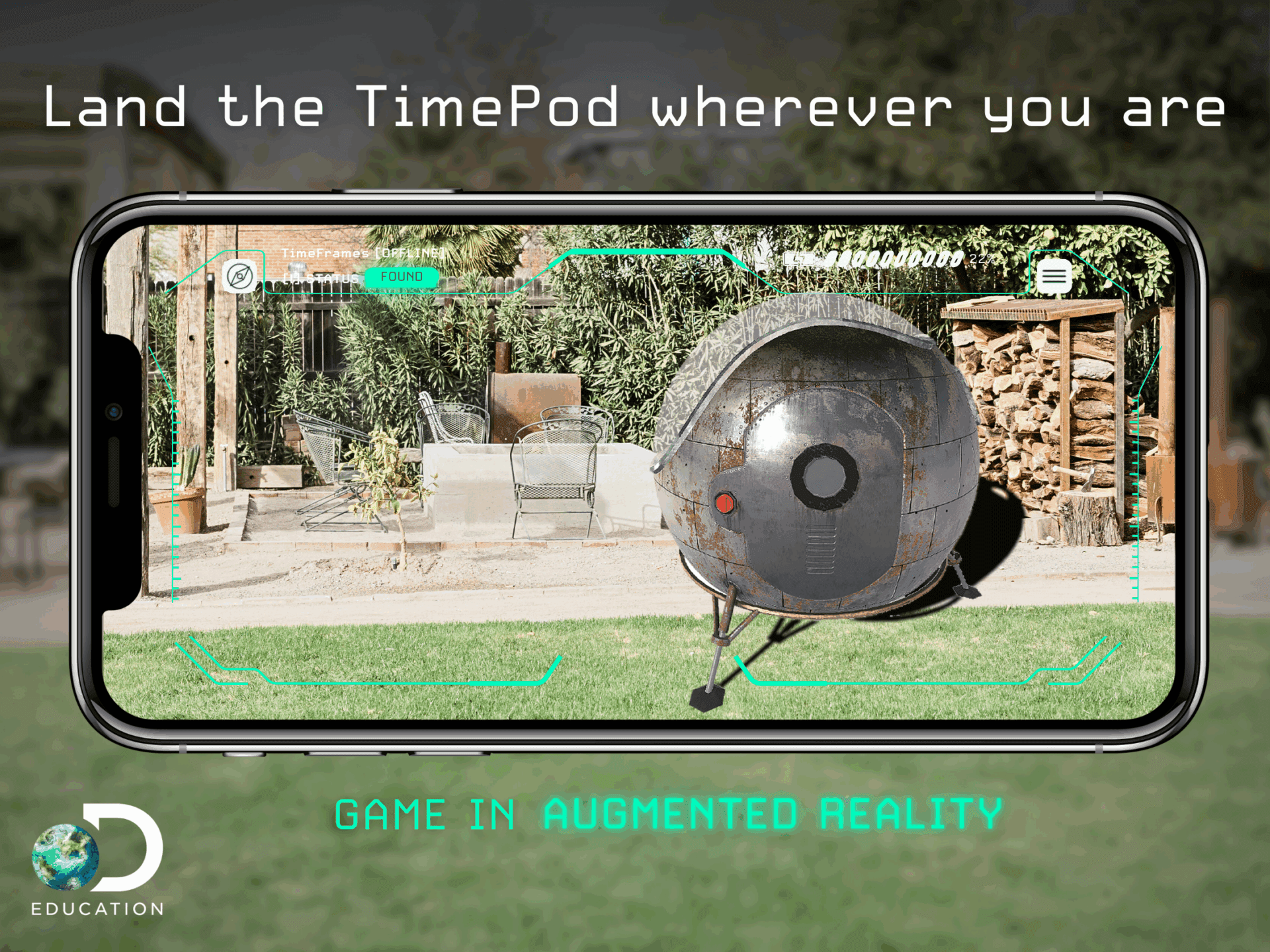
Discovery Education is thrilled to announce a major leap forward for TimePod Adventures – the multi-platform immersive learning series that sends students back and forward in time through story-rich, game-based adventures.

Just in time for Back to School, educators and students can now access the Mars 2072 series of TimePod Adventures through web episodes on any device – no app required. 

TimePod Hero Image

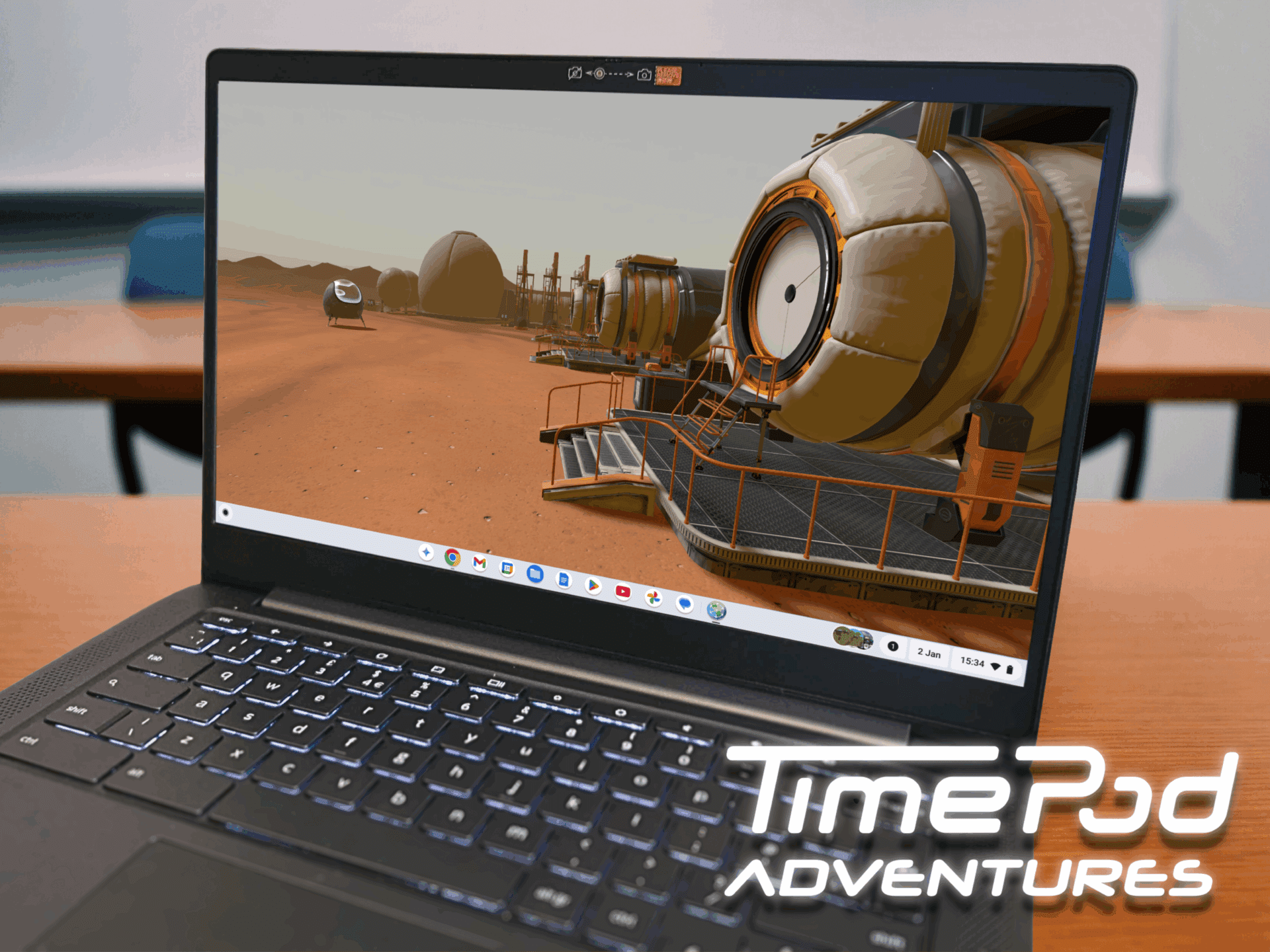
Available on Discovery Education’s new TimePod Adventures website and within the Discovery Education Experience platform, the essential companion for engaged PreK-12 classrooms, this exciting update brings the full experience of TimePod Adventures to any device with a web browser. Whether you’re using laptops, Chromebooks, tablets, or smartphones, the future of immersive learning is now just a click away. 

A New Chapter in the TimePod Journey

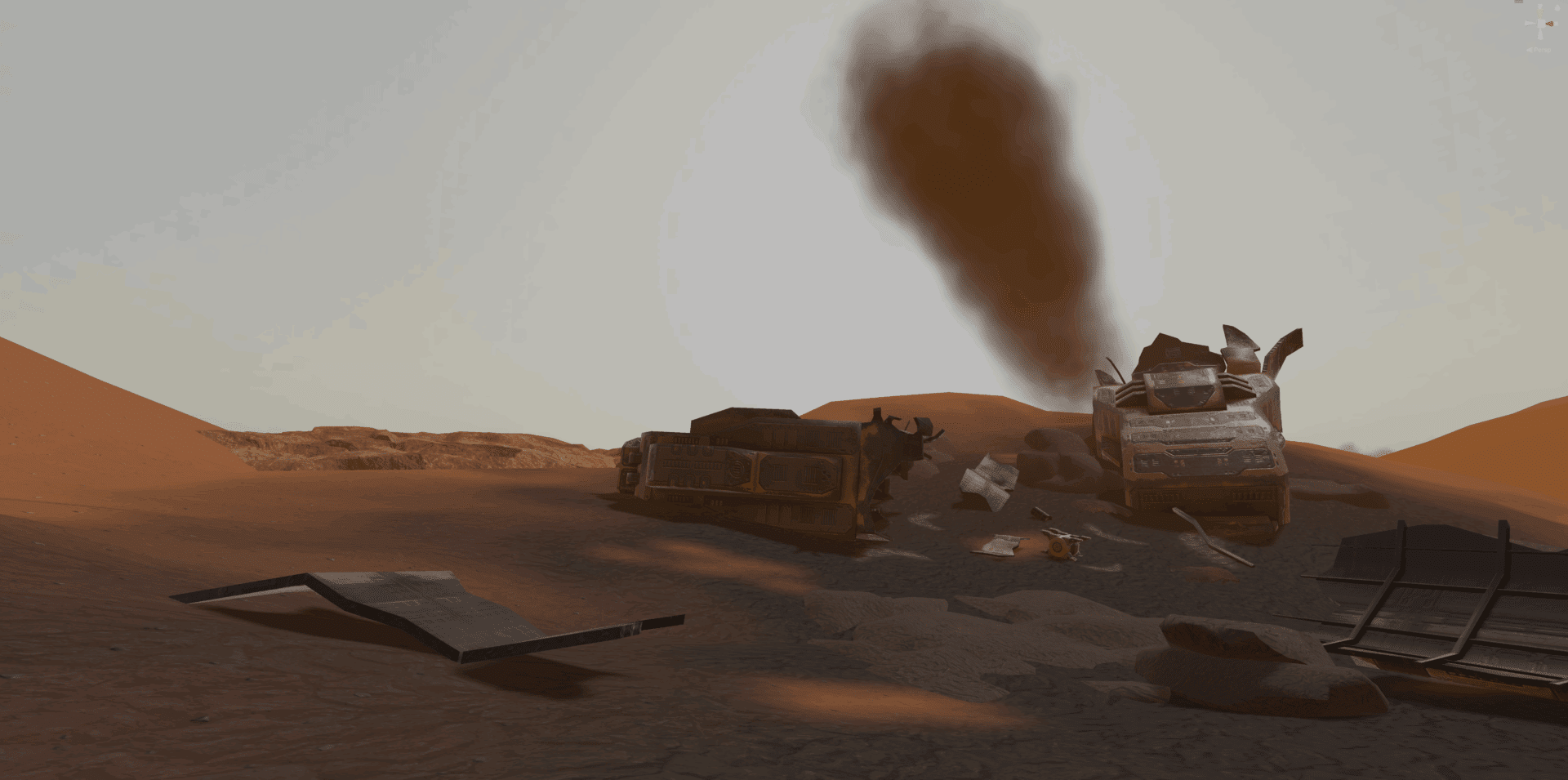
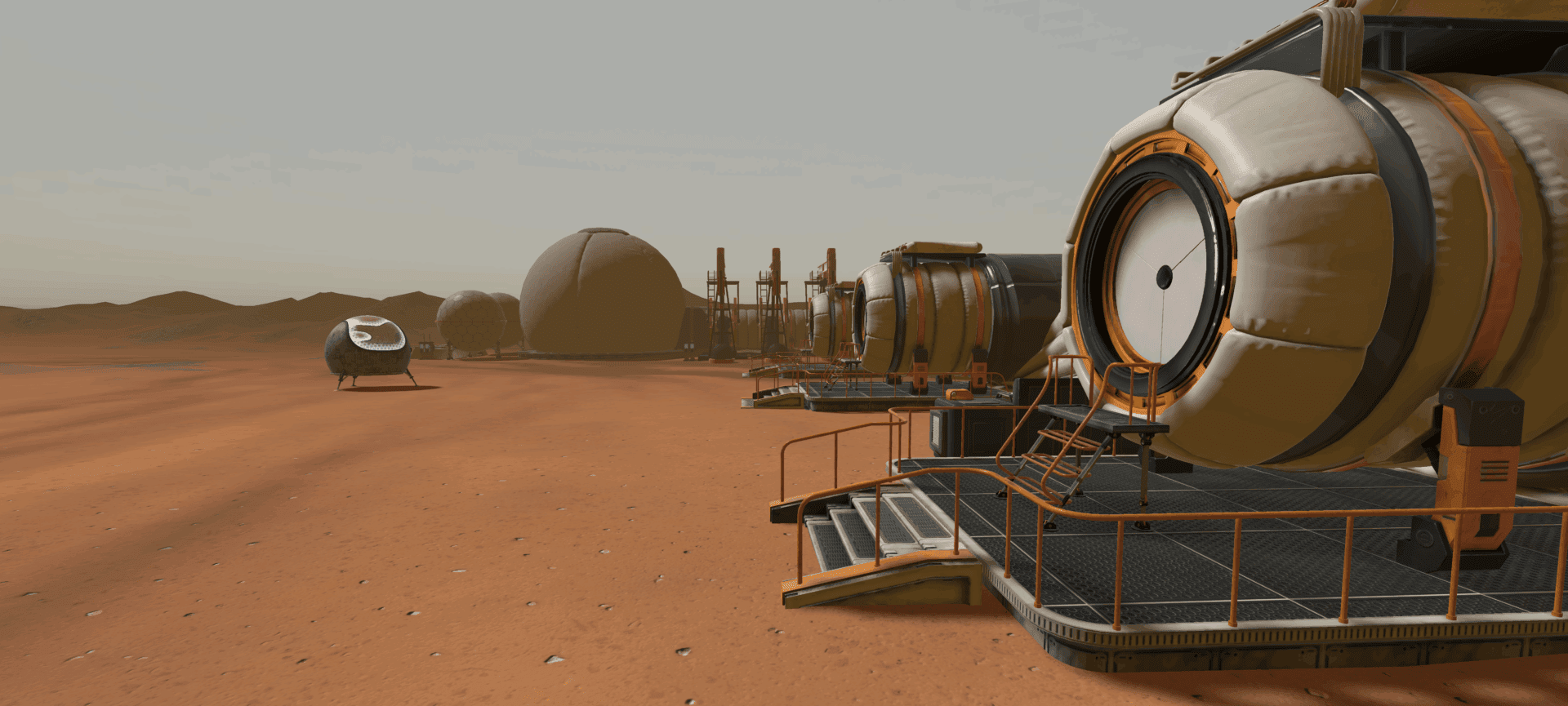
The latest release, created in partnership with Verizon, includes a web-based version of the Prologue and all three episodes of the Mars 2072 expedition, previously available only through the iOS app. These episodes follow a thrilling mission to secure water on the Red Planet and explore sustainability in space and on Earth. Each episode is approximately 10 minutes long, offering short, engaging bursts of learning that are perfect for classroom integration. Visit Verizon Innovative Learning HQ for educator support and micro-credentials relating to TimePod Adventures.

VFT3D Asset Thumbnail Large 2

Prologue  
A tutorial experience introducing students to the TimePod time machine and their virtual guide, ADA. 

Episode 1: Water Crisis  
Students investigate a water emergency on Mars and learn about water scarcity and conservation. 

Episode 2: Aquifer  
Learners repair a broken drill and uncover an underground water source through hands-on problem-solving. 

Episode 3: Heading Home  
A look at the future of the Mars colony and its sustainable practices, with reflections on Earth’s own resource challenges. 

This new trilogy of Mars episodes combines interactive gameplay with curriculum-linked learning, designed to support instruction in STEM, social studies, and Earth/space science. Each episode also builds critical thinking and problem-solving skillsno spaceship required. 

Why Web Access Matters

One of the most exciting aspects of this release is the move from app-only content to full web accessibility. This shift significantly increases classroom flexibility and equity, especially in environments where shared devices, Chromebooks, or BYOD policies are the norm. 

There’s no need to download anything or install software. Just visit DE Experience or timepod.discoveryeducation.com from your preferred device and start exploring. Students can dive into the experience from any device with an internet connection and audio output, making TimePod Adventures more accessible than ever before.

Chromebook mockup 3

The episodes are available in both English and Spanish, with fully translated audio and captions. Whether you’re teaching in a dual-language classroom or supporting multilingual learners, this added flexibility supports diverse learning needs and makes sure no student is left behind. 

Built for the Classroom, Supported by Educator Resources

Designed with educators in mind, TimePod Adventures comes with a suite of teaching materials to help you integrate these journeys into your curriculum with confidence. You’ll find: 

  • A step-by-step Educator Guide for the Prologue to help students get comfortable navigating the TimePod.
  • A comprehensive guide for the Mars 2072 series with detailed explanations, discussion prompts, and extension ideas. 
  • 12 classroom activities (four for each Mars episode) tailored to different grade bands – from K–2 up to 9–12.
Immersive Learning Explore Mars

These assets align with key curriculum standards and are perfect for sparking rich discussions about space exploration, sustainability, and ethical decision-making. 

Immersive Learning That Sticks

At its heart, TimePod Adventures is about more than just time travel. It’s about giving students agency to solve problems, explore historical and futuristic environments, and reflect on the real-world implications of their choices. 

The immersive nature of the episodes – cinematic visuals, a strong narrative voice, and interactive puzzles – makes the learning stick. Students aren’t just watching a video or reading a passage – they’re part of the story. 

When students experience the thrill of driving a Mars rover, uncovering ancient artifacts, or rewiring a broken machine, they engage deeply with scientific and social concepts. These experiences lead to meaningful conversations in the classroom and long-lasting understanding beyond it. 

Ready to Launch

The new TimePod Adventures content is live and ready to explore at timepod.discoveryeducation.com. Whether you’re using it to introduce environmental science, launch a unit on Mars, or enrich your technology curriculum, this tool gives students the chance to explore, analyze, and create meaning from immersive experiences. 

No subscriptions. No logins. No installs. Just incredible, standards-aligned learning – ready whenever you are. 

Screenshot 2025 06 17 at 09 00 33

Ready to Start Your Mission?​

Visit https://timepod.discoveryeducation.com or Discovery Education Experience to play the new episodes, download classroom guides, and bring immersive STEM learning to your students.

The post Explore Mars, Anywhere: New TimePod Adventures Episodes Now Available on the Web appeared first on Discovery Education.

]]>
TimePod Hero Image VFT3D Asset Thumbnail Large -2 Chromebook mockup -3 Immersive Learning Explore Mars Generic Decorative -2 Screenshot 2025-06-17 at 09-00-33
Measuring Engagement: Tools to Capture Learning Evidence with Sandbox https://www.discoveryeducation.com/blog/teaching-and-learning/measuring-engagement-tools-to-capture-learning-evidence-with-sandbox/ Mon, 07 Apr 2025 19:34:31 +0000 https://www.discoveryeducation.com/?post_type=blog&p=183933 What is Sandbox? Sandbox is an immersive learning tool that transports students to different times and places, helping them emotionally connect with the material they are exploring. This interactive approach leads to better knowledge retention and long-term interest in a topic. Students can choose from hundreds of 3D models—exploring ancient Greece, driving the Mars rover, […]

The post Measuring Engagement: Tools to Capture Learning Evidence with Sandbox appeared first on Discovery Education.

]]>
What is Sandbox?

Sandbox is an immersive learning tool that transports students to different times and places, helping them emotionally connect with the material they are exploring. This interactive approach leads to better knowledge retention and long-term interest in a topic.

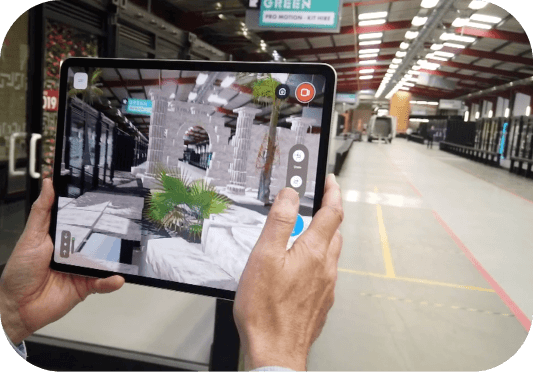
Sandbox AR factory jpg

Students can choose from hundreds of 3D models—exploring ancient Greece, driving the Mars rover, diving into ocean depths, or celebrating cultural events like Lunar New Year. Within Sandbox, students can build, explore, and record their learning, making abstract concepts tangible. To enhance the learning experience further, teachers can access classroom activities, instructional videos, and guides in Discovery Education Experience.

But engagement alone isn’t enough. 

While engagement is a crucial first step, it is only meaningful if learning can be measured. Teachers need evidence of student progress, just as they would with traditional lessons. The challenge lies in how to assess and document learning within an immersive environment like Sandbox.

How to Measure Learning in Immersive Experiences

Think of immersive learning in the same way you would approach field trips, lab experiments, or creative projects. The experience itself is engaging, but structured assessment ensures students absorb and apply what they’ve learned. Here are some effective ways to measure understanding:

  • Reflection Activities: After using Sandbox, students can write journal entries, reflections, or exit tickets describing what they built and what they learned.
  • Guided Questioning: Teachers can ask open-ended questions about student creations, encouraging them to articulate their learning process and justify design choices.
  • Comparative Analysis: Students can compare their Sandbox scene with historical accounts, scientific models, or artistic interpretations, demonstrating their understanding of accuracy and representation.
  • Peer Reviews & Discussios: Classmates can review each other’s work, providing constructive feedback and discussing different approaches to the same problem.
  • Concept Mapping: Have students create a concept map or diagram explaining how their Sandbox creation connects to broader topics or real-world applications.

Recording Learning Within Sandbox

Beyond measuring learning, teachers also need efficient ways to capture and document student work. Fortunately, Sandbox provides built-in tools for students to document and share their learning:

  • Screenshots: Students can take photos of their 3D work from any angle, then share, print, or save them for reference.
  • Video Recordings (iPads only): In Sandbox AR, students can record a video of themselves navigating their scene while narrating their design choices or roleplaying historical figures.
  • Text Panels: This tool allows students to place text labels within their 3D space, annotating their work before taking a screenshot.
  • Share Feature: The most powerful tool for documentation—students can generate a unique access code to share their work with teachers for later review.

The Share Feature: A Teacher's Best Friend

Manually collecting and reviewing every student’s device would be impractical, but Sandbox’s Share feature streamlines this process. Here’s how teachers can efficiently gather and review student projects:

  1. Students save their work: Before sharing, students should use the Rename tool to give their project a meaningful title, ideally including their own name.
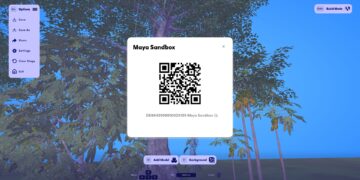
  2. Generate a share code: From the Options menu, students select Share, which generates a QR code and an alphanumeric access code.
  3. Teachers collect projects efficiently:
    • If using an iPad, the teacher can open Sandbox AR, tap Load from QR, and scan each student’s QR code. The projects will then appear in Recent Sandboxes on the teacher’s device.
    • If using Chromebook, students can write down or send their access codes, allowing the teacher to retrieve them later from a single device.

Get Started

Engagement is the key to unlocking deeper learning, but without meaningful assessment, its impact remains unseen. With Sandbox, teachers have a robust suite of tools to not only captivate students but also collect tangible evidence of their learning. By integrating screenshots, videos, text panels, and the Share feature into their lessons, educators can ensure that immersive learning experiences are fun, measurable, and impactful.

Sandbox is Now Available for Chromebook!

The award-winning Sandbox app has landed on the Google Play Store for Chromebook devices, bringing immersive learning to even more classrooms!

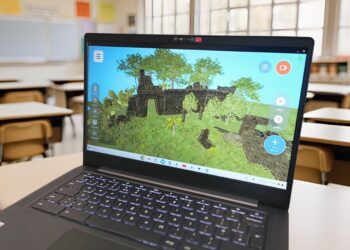
The Chromebook version matches the beloved features of Sandbox: students can create stages, use a vast library of 3D models, explore pre-made scenes, and share their creations between devices. In Sandbox for Chromebook, students shrink themselves down into their scenes and explore them in an interactive, video-game style using a keyboard and mouse. 

Designed for access and equity, Sandbox for Chromebook is helping us work towards every student experiencing hands-on immersive learning and exploring the universe from inside their classroom.

Learn More about Sandbox in the Classroom!

The post Measuring Engagement: Tools to Capture Learning Evidence with Sandbox appeared first on Discovery Education.

]]>

Sandbox-AR_factory.jpg
Intrinsic Motivation: Why It’s Lacking in Students and How to Foster It https://www.discoveryeducation.com/blog/teaching-and-learning/intrinsic-motivation-why-its-lacking-in-students-and-how-to-foster-it/ Mon, 07 Apr 2025 19:28:11 +0000 https://www.discoveryeducation.com/?post_type=blog&p=183372 The drive to engage and motivate students is a critical factor in their ability to learn and retain knowledge. Developing these for learners creates the conditions where they are giving their attention and want to learn. Motivation comes in two forms: extrinsic and intrinsic. Extrinsic is often related to a drive to finish, to achieve […]

The post Intrinsic Motivation: Why It’s Lacking in Students and How to Foster It appeared first on Discovery Education.

]]>
The drive to engage and motivate students is a critical factor in their ability to learn and retain knowledge. Developing these for learners creates the conditions where they are giving their attention and want to learn.

Motivation comes in two forms: extrinsic and intrinsic. Extrinsic is often related to a drive to finish, to achieve and obtain the rewards. It can also be driven by not so positive forces. Intrinsic on the other hand is all about pursuing learning for the interest, fulfilment, and even joy it can bring. I can still remember the moments in the classroom where my engagement turned to intrinsic motivation that has fueled a lifelong love of some subjects. 

Students who are intrinsically motivated tend to develop higher engagement levels and achieve greater academic success. It can also lead to a deeper involvement with learning across the board. In reality, we have to achieve learning through combinations of engagement and motivation and sometimes through sheer effort of will.

Extrinsic motivation is by far the easiest to generate. The push to achieve grades, avoid failure (real or perceived) and the desire to achieve rewards are relatively simple to execute in the classroom. These are the mechanics of motivation, and they are important to drive learning. Test scores must be achieved, but what about the more subtle intrinsic motivation? How do we trigger personal interest and enthusiasm for the inherent pursuit of learning?

Some of the barriers to developing intrinsic motivation are: 

  • Overuse of extrinsic rewards: a sole reliance on rewards and grades can diminish the intrinsic value of learning.
  • A lack of autonomy: students with little or no agency in how they learn or how they demonstrate their learning quickly become disengaged. 
  • An overcrowded curriculum: it’s hard to give space to developing intrinsic motivation when it counts. 
  • Engineering motivation: it takes planning and time to create the right conditions.

Curiosity

A great starting point is to create a moment that triggers a strong feeling of curiosity. Curiosity feeds motivation. The more curious, the more we need to engage and discover. One great way to do this is by using immersive content. Immersive content comes in all shapes and sizes, from full blown virtual reality, augmented reality, games based learning, to all the immersive content we have always loved such as books, films and music.

Curiosity Through Immersive Learning

Immersive content can provide a powerful, disruptive moment that makes students stop in their tracks, generating an intense level of curiosity and prompting full attention.

Immersive technologies like Sandbox AR provide an exciting opportunity to engage students on a deeper level. The app allows students to explore historical events, scientific scenarios, geographical environments, and their own created worlds in an interactive, virtual space. Once made, students can scale them up and inhabit them. This powerful sparking of curiosity works on so many levels. Students feel they are experiencing their created world in real life, and this fosters a strong connection with the underlying concept or topic. By making learning more tactile and engaging, students are drawn into the material and motivated to learn for the sake of discovery itself.

By integrating such innovative tools into the curriculum, educators can create meaningful connections between learning and the real world, fostering autonomy, curiosity, and a love of learning that lasts long after students leave the classroom.

AR experiences like those offered by Sandbox AR bridge the gap between abstract concepts and real-world understanding. These tools transform passive learning into active exploration, sparking curiosity and personal interest, the essential drivers of intrinsic motivation.

By integrating such innovative tools into the curriculum, educators can create meaningful connections between learning and the real world, fostering autonomy, curiosity, and a love of learning that lasts long after students leave the classroom.

The post Intrinsic Motivation: Why It’s Lacking in Students and How to Foster It appeared first on Discovery Education.

]]>
gamification-tile.jpg immersion-scuba.png Picture of Phil Birchinall
Augmented Reality: Meet the Makers https://www.discoveryeducation.com/blog/de-news/augmented-reality-meet-the-makers/ Sat, 05 Apr 2025 19:20:47 +0000 https://www.discoveryeducation.com/?post_type=blog&p=182861 Augmented Reality (AR) is technology that blurs the line between the digital and the real world. Using AR in education to replace a tabletop with a mountain range or the school hallway with the surface of the moon lets students interact with their surroundings in entirely new, immersive ways. Read on to go behind the […]

The post Augmented Reality: Meet the Makers appeared first on Discovery Education.

]]>

Augmented Reality (AR) is technology that blurs the line between the digital and the real world. Using AR in education to replace a tabletop with a mountain range or the school hallway with the surface of the moon lets students interact with their surroundings in entirely new, immersive ways. Read on to go behind the scenes with the makers of Discovery Education’s AR experiences, Phil and Dan Birchinall and check out Discovery Education’s collection of augmented reality apps and other immersive experiences on our Immersive Learning hub

Tell us a little bit about yourselves. How did your career lead you to working with Augmented Reality (AR)?

Phil: In the early 1990s, I started working in inner city schools in Manchester, teaching children from very diverse backgrounds as part of a technology project run by the UK government. Although at the time we were placing state of the art technology into the hands of teachers and students, it often failed to sustain engagement beyond the initial excitement. It was clear that a deeper understanding of engagement and newer ways to use the undeniable power of education technology to deliver it were needed. After developing projects that had technology-mediated storytelling at their heart, the students across the school district began to show a strong attachment to the subjects being taught, and an equally strong desire to go deeper into them. Teachers reported that student attention, attendance, and behavior were improving. From there I worked across the city, country, and the European Union developing projects and managing innovation before co-founding Inspyro with my son Dan, who is Discovery Education’s Head of Immersive Content.

Dan: I started working in the education content space when I left university. I was lucky enough to be surrounded by cutting-edge technology when I was growing up, and in my education work I was keen to integrate technology into the learning experience. Initially this took the form of video, animations, and audio, but as soon as I saw Augmented Reality in action for the first time, I knew it was an incredible tool to deploy in the classroom. 2023 is the 10th anniversary of launching my first Augmented Reality app and I haven’t looked back since.

What excited you the most about AR when it first began to emerge? How has it changed since then? Where is it going?

Phil: AR was, and still is, a misunderstood and misapplied technology in education. Too often it’s led by gadgets and gimmicks, with very little thought to the primary objective in the classroom—illuminating and inspiring learning. Technology, especially technology like AR, has a magical appeal and impact on those that use it. Any teaching and learning tool that can illicit gasps from teachers and students alike deserves a place in the classroom. We now weave these techniques into a broad range of content that we call “immersive,” based on how students and educators respond to it. Immersion is a feeling and happens on a scale; it can be purely instructional or can move you to tears of joy or sadness (and everything between).

Dan: The first time I saw Augmented Reality it felt like a glimpse of the sci-fi future Hollywood had been promising us for decades. Even in its early form, AR felt like magic. What excited me most was how AR could let us do things that no other medium could, and that’s why it’s so effective as a learning tool in the classroom. Looking ahead we’re going to see the merging of Virtual Reality and Augmented Reality with headsets from leading tech companies, which will only further blend our physical and digital worlds. It’s important to note, however, that you don’t need expensive headsets to have great experiences in AR; your smartphones and tablets can deliver transformative AR experiences too (like Sandbox AR)!

Walk us through the process of creating AR from initial concept to a functioning application. How long does it usually take? What stages must you work through?

Phil: We have strong guiding principles that we adhere to when making immersive content. We need to be sure that it’s worth the effort and that there is a clear focus for the content. We start by asking, “will the concept engage students?” Once we have decided that we have a good concept, it’s about designing an experience. We want the technology to draw students into the narrative or journey we have designed. This could be a narrative that contains elements that hook the user in, like episodes (as in TimePod Adventures) or the opportunity for students to create content and express themselves and their learning (like Sandbox AR). But it’s equally important to provide the standards and curriculum context to produce a successful learning outcome.

Dan: We follow one important rule when developing an Augmented Reality experience: don’t do anything that can be done better in an alternative medium. This philosophy drives the design process and ensures that our final product uses AR to its full potential. Development itself almost always begins with creating a simple prototype that demonstrates the core experience. We then build on this prototype to enhance the visuals and ensure the user experience is smooth and intuitive. We are lucky to have a core group of educators who help refine the experience and ensure it will work well in a classroom environment!

What is the most interesting project you’ve ever worked on?

Phil: We’ve worked on some fascinating projects over the years, and it’s allowed us access to some amazing people and places. Historical exploration is a very natural application of immersive content, so we’ve found ourselves in some interesting places! We’ve been in a cold museum basement with 20 dead ancient Egyptians, crawled into small spaces to film fossilized remains of a 90-million-year-old plesiosaur, and have pushed the boundaries of photogrammetry with detailed 3D models of tiny microliths (stone tools) used 11,000 years ago that we brought back to life on Lunt Meadows, the site of one of Europe’s most important Mesolithic settlements. With Discovery Education, we’ve created simulations and models of Haul trucks the size of a house, with a full mine to explore, mapped the surface of the moon and Mars, and are currently modeling the Edge experience at Hudson Yards for DE’s first VR experience! 

Dan: We‘ve been lucky enough to work on a great variety of projects using AR (and VR) from recreating ancient Mesolithic sites or transporting people to the trenches of World War I, to developing VR prototypes to improve the vision of people suffering from macular degeneration. The most exciting project for me is Sandbox ARwith Sandbox we built a toolbox for students and educators to see what amazing worlds they could create and share with each other. And they haven’t disappointed! 

How do you imagine AR use in the classroom will continue to change?

Phil: Any technology like Augmented Reality is driven by powerful hype cycles that cause great interest in the media and huge speculation amongst users. The current hype is around wearable technology like AR glasses. Remember Google Glass? The concept never went away and there is continued speculation around what Apple is about to bring to market this year. We keep an extremely close eye on these trends. We expect that AI will be integrated very soon into our experiences in ways that we couldn’t have imagined even months ago. Our innovation is continually driven by our users in the classroom, which helps us focus on the right thing: positive outcomes for learners and educators.

Dan: I would love to see AR being used in a collaborative manner in the classroom, with students and educators working together to build and explore new digital worlds. It’s certainly something we have on our roadmap for Sandbox AR and the possibilities are incredibly exciting!

Do you have any stories about teachers’ or students’ reactions to using AR?

Phil: My favorite story (which I bet Dan will tell as well) of bringing AR to education happened in 2013, ancient history in AR years. I was demonstrating to a room full of teachers how their iPad and our app could make objects appear on top of the worksheet they were using. As they used the app there was absolute astonishment and gasps around the room. Out if the corner of my eye, I spotted one teacher look around to check if anyone was watching, and when she was sure they weren’t, she carefully looked underneath the iPad to check that the 1920 London Cenotaph hadn’t materialized on the floor right there. I found that quite profound! The author Arthur C. Clarke famously said, “Any sufficiently advanced technology is indistinguishable from magic.” 

 Dan: Yes, that story of demonstrating our very first AR app to educators at a conference was something I’ll never forget! I noticed one teacher looked under the iPad to check we hadn’t put an object underneath it, and at that moment I knew we had something magical. 

What is your advice to young people interested in working with AR in the future?

Phil: Any technology like Augmented Reality is driven by cycles of interest in the media and speculation amongst users. For us, we keep an extremely close eye on trends. As I mentioned, we can expect that AI will be integrated into our experiences soon, and in incredible ways. We keep our management and exploitation of innovation driven by our users in the classroom, so we can stay focused on positive outcomes for learners and educators.

Dan: If you’re not familiar with Augmented Reality, play with some apps first. Sandbox AR is a great demonstrator of some core AR principles and it’s also free to use! AR works best when you play to its strengths, and you can only understand that when you’re familiar with the medium. On a technical level, our development team uses Unity to build our AR experiences and we do our programming in C#. Unity is free to use for students and is also an amazing tool for making all kinds of interactive content. To those who want to learn, my only advice is to start small and learn the basicsthats what I did! 

Augmented Reality (AR) is an evolving, exciting technology reaching classrooms thanks to makers like Phil and Dan! AR can help students have powerful, immersive learning experiences not possible through other media.

Picture of Phil Birchinall

Phil Birchinall

Senior Director, Immersive Content
Phil has been an educator and award-winning EdTech innovation leader for over 30 years, creating and delivering high-impact content into the classroom. In 2022, he was named as one of the pioneers of immersive learning and has led regional and national education and innovation initiatives in the UK as well as across the European Union. Phil was co-founder of the award-winning immersive company Inspyro that was acquired by Discovery Education in 2019.

Picture of Dan Birchinall

Dan Birchinall

Head of Immersive Content
Dan is Head of Immersive Content at Discovery Education where he leads an incredibly talented team of developers making interactive content for schools. Dan has over a decade's experience building cutting-edge experiences in augmented and virtual reality and is responsible for multiple award-winning products, including Discovery Education's own Sandbox AR.

The post Augmented Reality: Meet the Makers appeared first on Discovery Education.

]]>
AR.jpg AR-1.jpg AR-1200×675-1.jpg Picture of Phil Birchinall Picture of Dan Birchinall
Exploring Augmented Reality in Education https://www.discoveryeducation.com/blog/teaching-and-learning/exploring-augmented-reality-in-education/ Fri, 04 Apr 2025 19:34:02 +0000 https://www.discoveryeducation.com/?post_type=blog&p=183182 Augmented reality (AR) is entering the classroom with a roar! Educators and students everywhere are becoming immediately engaged and amazed by the endless possibilities these virtual worlds unlock. Now is a great time to familiarize yourself with this game-changing tech for your classroom and see what it can do for your learners. What is Augmented […]

The post Exploring Augmented Reality in Education appeared first on Discovery Education.

]]>

Augmented reality (AR) is entering the classroom with a roar! Educators and students everywhere are becoming immediately engaged and amazed by the endless possibilities these virtual worlds unlock. Now is a great time to familiarize yourself with this game-changing tech for your classroom and see what it can do for your learners.

What is Augmented Reality?

Augmented reality is a technology that uses the existing environment and overlays new digital information to enhance the real world. It can be as easy and user-friendly as downloading an AR app on your device. And great apps are available. Choose a path for your lessons, download an app, and play with it!

A Familiar Concept

Still can’t visualize it? I was first exposed to AR in 2015 while visiting my nephew and his family. His daughter couldn’t wait to show us her latest creation of her “dog dad.” She took a photo of her dad and, with the help of Snapchat, added a cartoon dog’s ears, nose, whiskers, and mouth over his image. Ta-da! Dog dad!

Not too long after that, the Pokémon Go craze swept the world. Kids and adults alike couldn’t wait to use their smartphones, follow the directions around town, and find the Pokémon creatures captured by their screens. Over one billion lifetime downloads occurred since its release in 2016.

EdTech companies soon realized the potential AR had for the classroom and began developing apps with pedagogical precision, consequently introducing an exciting new element to instruction and enhancing student achievement outcomes.

Top AR Tools to Explore First

Two new AR apps quickly gaining popularity are TimePod Adventures and Sandbox AR from Discovery Education. 

TimePod Adventures

TimePod Adventures offers a narrative-driven learning experience where students immerse themselves in three-dimensional storylines that spark their curiosity and inspire them to investigate, collaborate, and solve problems. To bring the magic to life, all you need is an iPhone or iPad and you’ll find students hooked and naturally engaged. 

Series 1 of TimePod Adventures: takes students to Mars in the year 2072, where colonists are facing problems relating to finding water. Over three 10-minute episodes, students will help their AI assistant ‘ADA’ to solve problems and drill for water, before skipping ahead a few weeks to see how their help has impacted the colony. 

Series 2 of TimePod Adventures: We follow ADA back in time – 67 million years, to be exact! This time, there’s something in our time that shouldn’t be there and it’s the student’s job to return it to prehistoric Montana. Come face to face with life-size dinosaurs in this thrilling new adventure! 

Sandbox AR

Sandbox AR is a “maker” app that allows students and teachers to create, share, and even inhabit a virtual environment. Imagine your students immersing themselves in ancient Egypt, or exploring space without ever leaving the ground! Once again, all it takes is an iPad, a flat surface, and augmented worlds come to life as students add artifacts, buildings, and scenery to create their own virtual “sandbox.”

IMG 0732 min png

If you have room, you can even scale up to life-size mode, letting students walk through this fascinating virtual world. What kid wouldn’t love that?! By using Sandbox AR in their work, students can create memorable moments that embed knowledge and understanding while fueling a deep desire to learn more.

To introduce this AR technology, take advantage of DE’s Sandbox Quick Start Guide and pre-made lessons that help lead augmented reality integration into classroom instruction. 

Get started by choosing a template like a city and have each student add 3D objects to the landscape until the scene is built out. Let them experiment with the app and unleash their own creativity. You’ll find students eager to not only explore the pre-built worlds in Sandbox AR, but build their own sandbox to dive deeper into lesson concepts and demonstrate what they’ve learned. The possibilities with AR in the classroom are truly endless.

Deeper Learning Through Immersive Experiences

DE’s Senior Director of Immersive Content Phil Birchinall, FRSA, sees all kinds of educational uses for this tech. “If they’re using and experiencing an Egyptian temple, students can write more expressively because they’ve actually been there.” He explains that their knowledge of the subject matter is deeper, adding to the sophistication of their understanding.

According to Birchinall, augmented reality has a firm place in the future of education. Using AR creates an emotional response in students “that really makes them stop in their tracks and go, ‘Whoa! What’s happening here?’” That intense, emotional reaction prepares them for learning, and as students continue to immerse themselves in the material, the quality, speed, and depth of understanding become manifest.

The Future of AR in Education

As with all technology, the landscape is constantly changing, and more exciting iterations are on the way. DE, for example, will add green screen capabilities to the app in the near future. Imagine a student taking classmates on a Virtual Field Trip to the Grand Canyon, or explaining a math concept using fun digital objects to present the material. Creativity is front and center. Additionally, companies are working on field-of-view optical displays (glasses and goggles) that will result in a hands-free interface. Eventually, the need to hold a phone or tablet up to experience AR will fade away.

Birchinall’s advice to new users: “Always, always play with it as an individual teacher. Understand the breadth and limitations of it.” He also recommends teachers give students time to really play with it. They’re naturally curious and “will take it to levels we would never think of!” “Be brave,” he urges. “Don’t feel you have to have the answers to everything; let [your students] take you on a journey. And don’t always be a ‘teacher.’ Be a learner and learn alongside your students.” Remember the popularity of the Pokémon Go and Snapchat craze? “Their minds are so open to it—it’s  their world!”

About the Author

Rose Lattanze is an educational consultant and writer helping educators blend technology with instructional growth. She trained in Dr. Robert Marzano’s research-based instructional strategies, serving schools and districts as they transformed from teacher-based to student-based instruction. Currently, she writes about all things education for various EdTech companies. 

The post Exploring Augmented Reality in Education appeared first on Discovery Education.

]]>
Discovery-Education-AR-iPad-1.png TimePod-scaled.jpg IMG_0732-min.png DE-AR-Anson-Elementary.png
25 Ways to Use Sandbox in the Classroom https://www.discoveryeducation.com/blog/teaching-and-learning/25-ways-to-use-sandbox-in-the-classroom/ Fri, 04 Apr 2025 19:33:37 +0000 https://www.discoveryeducation.com/?post_type=blog&p=182644 Technology can be a powerful tool for deepening engagement and enhancing student understanding. From exploring ancient civilizations to creating science labs and visualizing math concepts, Sandbox empowers students to design their own virtual and AR experiences, making learning not only interactive but also personalized and unforgettable. Sandbox is available for FREE from the Apple App […]

The post 25 Ways to Use Sandbox in the Classroom appeared first on Discovery Education.

]]>

Technology can be a powerful tool for deepening engagement and enhancing student understanding. From exploring ancient civilizations to creating science labs and visualizing math concepts, Sandbox empowers students to design their own virtual and AR experiences, making learning not only interactive but also personalized and unforgettable.

Sandbox is available for FREE from the Apple App Store and the Google Play Store.

Sandbox is installed on 1.3 million devices worldwide. So, how are educators using it effectively? Below are 25 creative ways to bring Sandbox into your lessons, helping students to connect, create, and learn like never before.

25 Ways to Bring Sandbox into the Classroom

Edit Content

1. Experiential Learning: 84% of math and science teachers think that using immersive technology improves student engagement and interest. Create simulations where students interact with their environment, like exploring a model of the solar system, or setting up a science experiment.

2. Labelling: Encourage students to label parts of scenes they build, such as the anatomy of an animal or parts of a diagram, reinforcing vocabulary and concept understanding. Alternatively, teachers can provide labels in the scene for students to match to the correct objects.

3. Self-Expression: Provide a blank canvas for students to express themselves by designing their own unique spaces, reflecting their interests, culture, and personality. Sandbox’s sharing feature means students can invite one another into their virtual worlds.

4. Scavenger Hunts: Set up scavenger hunts within a scene, encouraging students to search for hidden items or clues, promoting critical thinking and teamwork.

5. Collaborative Creation: Assign groups to co-create scenes, practicing teamwork and combining individual ideas into a shared virtual space. Pass around an iPad and have each student add something new – an engaging way to set up a scene that everyone is invested in.

6. Debates: Set up virtual “stages” for debates, where students can present visual evidence to support their arguments, and fully appreciate different perspectives. Why not stage a debate among pioneers at a real location on the Oregon Trail?

7. Create Your Own Virtual Field Trips: Open up the classroom and take students on augmented reality field trips – to the zoo; to the surface of Mars; to the depths of the ocean or to the Great Pyramid of Giza! Open Sandbox and check out the ready-made locations you can visit today. 

Edit Content

8. Fractions: Visually represent fractions by sorting groups of objects into equal parts, making abstract math concepts more concrete and understandable.

9. Identify and Describe the Properties of 3D Shapes: Place different 3D shapes in scenes, allowing students to physically walk around, examine and label properties like edges, vertices, and faces.

10. Sorting/Ordering Objects: Have students organize realistic objects by size, color, or type, promoting categorization skills and logical thinking.

11. Venn Diagrams: Create a virtual Venn diagram with overlapping spaces where students can sort and place objects based on shared characteristics.

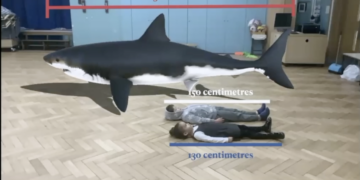
12. Measure, Add, and Subtract Lengths: Use the Sandbox AR measuring tool to compare lengths of objects in the scene, practicing real-world math skills in a hands-on way. 

13. Calculating Perimeter: Build shapes using walls and fences, walk around them in real space, and use Sandbox AR’s measuring tool to calculate perimeter, reinforcing geometry concepts through physical activity. 

Edit Content

14. Creating Poetry: Build a scene inspired by nature or emotions, then have students write poems that reflect their scene, connecting art and language through immersive experiences.

15. Storytelling: Let students create settings for their stories, imagining characters, plotlines, and outcomes, transforming their scenes into engaging narratives. 

16. Creative Writing: Spark imagination by having students explore a unique setting in Sandbox. You’ll find that true immersion leads to elevated descriptions and an emotional connection to the content. 

Edit Content

17. Historical Immersion: Recreate historical settings like ancient civilizations or landmark events to let students step into history and gain firsthand perspective. Use pre-made sandboxes to visit immersive environments such as the Roman forum or the Jamestown settlement, and stage insightful discussions about differing perspectives.

18. Religious Education: Build scenes that represent various religious buildings or traditions, allowing students to learn about and discuss different beliefs and practices in a more tangible way than ever before. Label the key symbols you find using the Text Panel tool.

19. Celebrate Calendar Events in a New Way: Design scenes that reflect seasonal changes or holidays, helping students connect with the time of year and its natural and cultural events.  

Edit Content

20. Animal Classification: Students can place animals into categories based on traits, habitats, or adaptations, building connections with biology and ecology studies.  

21. Observe Seasonal Changes: Design scenes to show the transformation of an environment over time, such as trees changing from spring blossoms to autumn leaves. 

22. Shadows: Experiment with light sources and objects in Sandbox AR to observe how shadows form and change. Place a tall object on the stage then use the Settings menu to change the sunlight angle and see what happens. 

Edit Content

23. Still Life Drawing: Use Sandbox to arrange digital still life scenes with objects that students can draw or sketch, building observational and artistic skills.

24. Create an Art Gallery: Download the free ‘Art’ content pack directly from the app, and ask students to create their very own artwork for your virtual gallery! Use text panels to create labels for the art and ask students to give you a tour around their creations.

25. Filmmaking: Have students use Sandbox AR as their set for creating short films, adding narration and music to enhance storytelling and technical skills. Sandbox AR carries a green screen feature so you can edit your own backgrounds into the film later.

Sandbox is Now Available for Chromebook!

The award-winning Sandbox app has landed on the Google Play Store for Chromebook devices, bringing immersive learning to even more classrooms!

The Chromebook version matches the beloved features of Sandbox: students can create stages, use a vast library of 3D models, explore pre-made scenes, and share their creations between devices. In Sandbox for Chromebook, students shrink themselves down into their scenes and explore them in an interactive, video-game style using a keyboard and mouse.

Designed for simple and easy access, Sandbox for Chromebook is helping us work towards every student experiencing hands-on immersive learning and exploring the universe from inside their classroom.
Sandbox AR 5 scaled

Discover more immersive learning strategies for the classroom!

The post 25 Ways to Use Sandbox in the Classroom appeared first on Discovery Education.

]]>
Sandbox-AR-5-scaled
Five Ways to Create Immersion in the Classroom https://www.discoveryeducation.com/blog/teaching-and-learning/five-ways-to-create-immersion-in-the-classroom/ Fri, 04 Apr 2025 19:33:35 +0000 https://www.discoveryeducation.com/?post_type=blog&p=182619 Educators today wear many metaphorical hats, especially as technology develops. They are expected to become film directors, vloggers, and coding experts, not to mention navigating the world of AI and feeling the burden of their students’ online safety. It can be easy to forget that a key part of the mission of educational technology (EdTech) […]

The post Five Ways to Create Immersion in the Classroom appeared first on Discovery Education.

]]>

Educators today wear many metaphorical hats, especially as technology develops. They are expected to become film directors, vloggers, and coding experts, not to mention navigating the world of AI and feeling the burden of their students’ online safety.

It can be easy to forget that a key part of the mission of educational technology (EdTech) is to create immersive experiences. In this article, we take immersion back to basics because, in truth, it’s possible to achieve immersion without any technology at all.

What Is Immersion, and Why Is It So Important?

Simply put, immersion is a feeling. It refers to an experience that deeply engages a person’s senses, emotions and attention, creating a sense of being fully surrounded and absorbed in a particular environment or activity. So, if you’ve ever read a good book, seen a particularly captivating performance, or smelled a scent that unlocked a memory, you’ve experienced immersion.

Research shows that learning gained through real experience carries far more depth and stays with us longer. On top of that, experiences which elicit an emotional response create stronger connections and memories. It is therefore beneficial to give students experiences which are personal and powerful, to amplify reactions and create long-lasting knowledge retention.

Find out more about immersion >

Educators have been teaching lessons through immersive moments for many years. The trick is to recognize an immersive moment for what it is, capture the window of opportunity, and take advantage of students’ open and receptive minds. Below, we’ll explain five of the teaching tools and techniques that every educator has at their fingertips.

de five ways blog 1

1. Use a Story

It might seem incredibly basic, but storytelling is one of the fundamental vehicles of immersion. An engaging narrative:

  • gives context to learning;
  • creates rich mental images;
  • promotes active listening;
  • arranges learning points in a way that creates connections, supporting easy recall;
  • provides a human viewpoint, and promotes understanding on a personal level;
  • prompts students to formulate opinions on the subject matter.

So, whether it’s a short tale or poem to cover in a single session, or a novel to base your entire unit of study on, I encourage you to find a narrative linked to your learning material. Don’t get hung up on how perfectly the story covers your objectives – just find something that will open students’ hearts and minds to the world inside the narrative. You’ll be amazed at the connections they’ll make between the story and the rest of your lessons.

Fuel curiosity with immersive storytelling >

de five ways blog 2

2. Stimulate the Senses

Our senses are incredibly powerful in creating memories, forming connections in our brain and developing emotional relationships. To help create lasting memories, why not try some of these ideas to amplify your learning activities?

  • Create a soundscape together by making sounds that you might hear in your chosen setting (e.g. at sea, exploring Antarctica, in ancient Rome)
  • Taste food or ingredients used by specific peoples or at key events
  • Introduce or replicate a smell that might transport students in their minds
  • Find an image, color or moodboard for students to interpret while listening to information
  • Mimic a change in temperature to help students imagine conditions somewhere else
  • Pass around an item for students to feel (e.g. the weight of a full backpack; a type of fabric; a fossil)

Research shows that cutting out one or more of our senses allows us to concentrate more on the senses available to us. Encourage students to close their eyes while listening to a story; turn out the lights or close the blinds when students are watching a video; mimic a deserted landscape by creating a prolonged, complete silence.

The Five Senses: Immersion in the Classroom >

3. Get Moving

It’s no news that movement can be a powerful tool in learning. The feeling of ground moving under a student’s feet can quickly turn them into the protagonist in their own story so that, in combination with these other techniques, they can be convinced that they are walking around an ancient settlement or on the surface of Mars. Try some of these activities:

  • Ask children to experiment with lower gravity on other planets/the Moon, incorporating percentages work as you imagine turning the gravity up and down and walking with lighter or heavier steps.
  • Ask children to stand in a certain area to represent their opinion. Ask them to explain why they are standing there, then invite others to change their mind by moving if they want to.
  • While telling a story, invite students to behave as if they were the main character. Allow them to walk around the space, sit down, hide, run and experience the physical feelings of the protagonist.
  • Try a pre-made Augmented Reality experience like TimePod Adventures.
de five ways blog 4

4. Gamification

This suggestion is a very simple one: make a game of it. Introduce a score, an element of competition, a prize or a level progression, and watch students return time and time again to better their score and firm up their knowledge. The emotions evoked through play are strong and memorable, and games of any type can promote a love of a subject that could last a lifetime. Try it:

  • Encourage (friendly) competition
  • Create a way for students to come back and do better
  • Add a time limit or a stopwatch
  • Add open-ended extensions for those who just can’t get enough
  • Create ‘levels’ that tie in even more instructional content
  • Get them creating their own games!

Gamification: Breaking Down the Buzzword >

5. Do It Yourself

Creating immersive experiences doesn’t always require elaborate setups or expensive tools. Often, the most impactful learning moments are those that are hands-on and directly involve the students in the process of discovery. By allowing students to actively engage in their own learning, you foster a deeper connection to the material and enhance their ability to retain knowledge. Here are some strategies you can employ to create powerful experiential learning opportunities:

  • Let students do it themselves. It might be daunting, but kinesthetic and tactile learners will benefit from being given the chance to dive in, even if you lose a little bit of structure in the process.
  • Promote active listening with challenges, or by putting the students in charge of the exercise with some clear scaffolding.
  • Use ready-made digital experiences such as 3D Virtual Field Trips.
  • Have fun!

Read about an example of experiential learning >

de five ways blog 3

A Word of Caution

By its nature, immersion can elicit emotional responses from students. Always be aware of the potential triggering effect of any of the above on specific students in your setting, and exercise due care and attention.

The post Five Ways to Create Immersion in the Classroom appeared first on Discovery Education.

]]>
de-five-ways-blog-1 de-five-ways-blog-2 de-five-ways-blog-4 de-five-ways-blog-3