Gamification | Discovery Education Nurture Curiosity Thu, 11 Sep 2025 20:37:45 +0000 en-US hourly 1 https://wordpress.org/?v=6.8.3 The Transformative Power of Games in Learning https://www.discoveryeducation.com/blog/educational-leadership/the-transformative-power-of-games-in-learning/ Fri, 04 Apr 2025 19:34:30 +0000 https://www.discoveryeducation.com/?post_type=blog&p=183727 The 2024 ASU+GSV Summit was filled with conversations about innovations in technology, teaching, and education as a whole. David Wees, Discovery Education Senior Curriculum Designer, participated in a panel at ASU+GSV about game-based learning and assessment. Keep reading to hear his thoughts on using games in learning and the panel at ASU+GSV: At the ASU+GSV […]

The post The Transformative Power of Games in Learning appeared first on Discovery Education.

]]>

The 2024 ASU+GSV Summit was filled with conversations about innovations in technology, teaching, and education as a whole. David Wees, Discovery Education Senior Curriculum Designer, participated in a panel at ASU+GSV about game-based learning and assessment. Keep reading to hear his thoughts on using games in learning and the panel at ASU+GSV:

At the ASU+GSV summit this year, I spoke on a panel about the transformative nature of games in assessment. Assessment of learner performance is closely related to learning, so when we spoke on the panel, we often drifted between the two topics. Wikipedia defines the critical attributes of games as that which has goals, rules, challenge, and interactions.

Here are the top 7 points I wrote in preparation for this panel discussion.

1. Game-based assessment already exists!

Game-based assessment is nothing new. My son, a swim instructor, uses games in his assessment all the time in his lessons. Instead of asking his students to put their heads under water or blow bubbles, he plays “Find the Treasure” and can quickly assess whether his students have the skills he wants to assess. The game creates a context for why performing the skills is important. Using games as part of assessment and to drive learning is older than our species!

2. Games feature a gradual increase in difficulty.

Games like Super Mario Brothers let you make choices and slowly and gradually scaffold the gameplay so that it increases in challenge but in a special way. The last level of any world is the hardest, but the first levels are easier and usually easier than the previous levels in the last world. Also, students can and do go back to levels they have completed over and over again because sometimes doing something better than you know you can do is more fun than struggling over and over again to complete a level you can’t yet do.

Digital games work partly because the game’s challenge level varies between easier and harder concepts, ideally moving up and down in a cadence that captures the learner’s interest and engagement.

3. Games should be authentic.

We need to avoid game designs where students do some fun stuff, then pause and step out of the game to do some math problems, and then jump back into the game. This doesn’t lead to authentic learning and makes math a roadblock to having fun rather than part of the fun.

I designed a very simple graph game where students move a little stick man across a horizontal bar while trying to mimic a particular graph given on Cartesian coordinates. One axis is time, and the other is the distance the little stick person is away from their starting point. The game provides instant feedback that one has matched the graph by showing the position of the stick man in two places, one on the bar and one on the distance-time graph. It’s an extremely engaging and interesting little game, and it makes learning mathematics an integral part of the game rather than a side dish.

Not everything is a good fit for a game, but an awful lot of stuff we do is. We need to find ways to make the concepts we want students to learn authentically a part of the game and have a purpose for advancing the game. Often, these purposes can be drawn from our original invention of the concepts. When Descartes lay in bed watching the flies on the ceiling, he wanted a way to describe where the fly was on the ceiling, so he invented our modern coordinate system.

4. Depth of gameplay should be evaluated (and revised when necessary).

Really good games teach their creators, too. I once played a simple probability game where students placed ten tokens each on the numbers from 2 through 12. They take turns rolling the dice and taking off their tokens with the goal of removing all of their tokens before their opponent. After playing this for a couple of days, I built a simulation that allows students to place their ten tokens (or any arbitrary number) wherever they want and simulate playing this game 10,000 times. From this simulation, I learned that my intuition about the best distribution across the eleven numbers was wrong.

5. Digital games can enable connection.

We must not forget that digital games can and should enable connection between students rather than separating them all the time by screens while they work in their own environments. The best games are played with other people. Both of my sons always prefer to play their games with other people, often spending hours online playing Roblox or Minecraft. Collaborative learning is also known to be a very powerful learning experience. We should support this innate desire to connect with other humans.

6. Assessment should be invisible.

Assessment should be invisible to the learner, but we should also give them control of the results. Every child who plays Super Mario Brothers knows which levels and worlds they have completed successfully and which ones they still have left to do, but they never stop playing the game to “take an assessment” before moving on—the game is the assessment.

7. Games offer agency.

Learners should have agency. Education should be done with the learner, not to them. Games give their players choices, and these choices are part of what makes the game fun.

Picture of David Wees

David Wees

David designs interactive mathematics lessons and works on assessment and adaptivity for DreamBox Math at Discovery Education. During his career as a teacher, he taught mathematics and science in NYC, London, Bangkok, and Vancouver. He has led professional development and coached teachers for ten years. He is the co-author of a textbook designed for the International Baccalaureate program. He has his Bachelor of Science (Mathematics), Bachelor of Education (Secondary Mathematics), and Master of Educational Technology, all from the University of British Columbia.

He has been published in the Bangkok Post, Dialogue Online, Educational Technology Solutions, Leading and Learning, Software Developer’s Journal, and Edutopia. He has also been consulted for stories in the Globe and Mail, the CBC, the Vancouver Sun, and The Tyee. He has been a guest on CBC’s On the Coast and CKNW’s The Bill Good show. He has presented on Technology in Mathematics, Computer-Based Math, Social Media, Change in Education, and other topics related to the use of technology in education. He blogs regularly at http://davidwees.com and can be found on Twitter at @davidwees.

Read about Game-Based Learning Experiences

The post The Transformative Power of Games in Learning appeared first on Discovery Education.

]]>
graph-game.jpg Picture of David Wees
Five Guiding Principles of Successful Immersive Learning https://www.discoveryeducation.com/blog/teaching-and-learning/five-guiding-principles-of-successful-immersive-learning/ Fri, 04 Apr 2025 19:34:03 +0000 https://www.discoveryeducation.com/?post_type=blog&p=183183 In today’s classrooms, creating immersive learning experiences is more than just a trend—it’s a powerful tool for engaging students in a way that amplifies understanding and retention. But what makes an experience truly immersive, and why does it matter? Below, we’ll outline five key principles to help educators evaluate how immersive an experience is for […]

The post Five Guiding Principles of Successful Immersive Learning appeared first on Discovery Education.

]]>

In today’s classrooms, creating immersive learning experiences is more than just a trend—it’s a powerful tool for engaging students in a way that amplifies understanding and retention. But what makes an experience truly immersive, and why does it matter? Below, we’ll outline five key principles to help educators evaluate how immersive an experience is for their students and the lasting impact it can have on learning.

The Learning Amplifier – Why Immersive?

It’s often assumed that immersive experiences—and especially those which involve shiny tech—are beneficial only to students’ interest levels. But it’s not true; engagement is just the starting point in any learning environment. While keeping students engaged is essential, turning that engagement into a deep investment in learning leads to much greater outcomes. Immersive experiences take students beyond surface-level interaction and encourage them to fully absorb and connect with the material.

When students feel immersed in an experience, they are more receptive to the content, which enhances retention, fosters deeper understanding, and creates a lasting connection with the subject. Immersion can also accelerate learning, allowing students to grasp complex concepts more quickly. This is why, at Discovery Education, we call immersion ‘the learning amplifier’.

“We're amplifying their depth of understanding, we're amplifying the speed of understanding, we're amplifying the quality of the learning, and we're amplifying the quality of what comes back."

"How Immersive Is It?"

Immersion is subjective—what captivates one student may not have the same effect on another. While some students are drawn in by an engaging story, others may thrive on competition or sensory stimulation. To help assess where a learning tool or experience falls on the “immersive scale,” and to help elevate an activity in small ways, educators can ask themselves these guiding questions:

1. Stimulation: How Many Senses Are Engaged?

One of the key components of immersion is sensory engagement. The more senses an experience stimulates, the more likely it is to immerse the student. No matter what you want your students to immerse themselves in, there is always more you can do to appeal to their senses. Here are a few ways to enhance sensory stimulation:

  • Audio: Thoughtful use of voiceovers, music, and sound effects can transform an experience.
  • Movement in Real Space: Pairing visual content with physical movement, such as walking or using life-sized augmented reality (AR), greatly enhances immersion.
  • Affect the Air: Introduce a scent; create a cold breeze; turn up the heat.
  • Virtual Reality (VR): Fully immersive environments where students can interact with the content in 360 degrees can have a profound effect.

2. Gamification: How Compelling Is the Experience?

Gamification taps into students’ natural desires for competition and achievement. Educators can ask themselves “Does this experience make students want to keep going?” Some elements that make gamification effective include:

Scoring and Timing: Rewarding students with points or time-based goals can maintain engagement and encourage repeat participation.

Progression: Experiences that involve skill development and level progression keep students motivated to return and continue learning.

Content Integration: Tie learning objectives to game progress so that students are motivated to consume educational content as they advance.

3. Narrative: Is There a Strong Storyline?

Learning which stems from a well-told story is remembered more accurately, and for far longer, than learning derived from facts and figures. A strong narrative can anchor students in an experience, making it more memorable and meaningful. Ask:

  • Does the experience have events or a storyline that students can follow?
  • Are these events instructional, entertaining, or both?
  • Is the story relatable and exciting enough to engage students emotionally?

A well-told, relatable story not only grabs students’ attention but also fosters a deeper connection to the learning material.

4. Production Quality: How Believable Is the Environment?

A crucial aspect of immersion is the realism of the environment in which students learn. If the surroundings are believable and match the expectations of students, they are more likely to stay immersed. Consider:

  • How realistic is the design of the environment? Does it move or appear interactive?
  • Is the environment explorable, or are there restrictions? In a fully immersive experience, students should feel they can explore freely, without bumping into limitations that break the immersion.

5. Student Agency: How Much Control Do Students Have?

Agency—how much control students have over their learning experience—is a key factor in immersion. The more control students have, the more likely they are to feel engaged. Educators should ask:

  • Physical Agency: Can students move around the space freely, or are they on a predetermined path?
  • Interaction: Can students manipulate objects or their surroundings?
  • Decision-Making: Do students have the power to make choices that impact outcomes? Are there opportunities for students to interact with elements that may not directly affect the learning objective but enhance the overall experience?

Climbing the Immersive Scale

Immersive learning environments go beyond traditional classroom engagement, tapping into students’ emotions, senses, and personal interests. By climbing the immersive scale—whether through sensory stimulation, gamification, storytelling, or student agency—educators can create experiences that transform passive learning into active, deeply rooted knowledge.

Consider the ways in which these example activities can be made to climb the scale and amplify learning: knowledge gathering in Geography, understanding perspectives in History, and repetitive skills practice in Math. Do you agree with placement of the following exercises on the immersive scale?

Immersive Scale Examples png

Incorporating these five principles into educational tools and strategies can significantly impact student learning outcomes, making the content more memorable, enjoyable, and effective. There’s no need to try and nail them all at once, but the next time you consider a learning product or experience for your classroom, ask yourself: how immersive is this, and how can I drive it up the scale and make it even more so?

The post Five Guiding Principles of Successful Immersive Learning appeared first on Discovery Education.

]]>
Immersive-Scale-Examples.png
Five Tips for Creating Experiential Learning Opportunities https://www.discoveryeducation.com/blog/teaching-and-learning/five-tips-for-creating-experiential-learning-opportunities/ Fri, 04 Apr 2025 19:34:03 +0000 https://www.discoveryeducation.com/?post_type=blog&p=183184 Experiential learning transforms abstract concepts into tangible experiences, fostering a deeper curiosity and understanding for students. Below you’ll find some information about experiential learning, and five tips for successfully creating engaging learning opportunities that captivate students and encourage a lifelong love of discovery.  What Is Experiential Learning and Why Is It Important? As the name […]

The post Five Tips for Creating Experiential Learning Opportunities appeared first on Discovery Education.

]]>

Experiential learning transforms abstract concepts into tangible experiences, fostering a deeper curiosity and understanding for students. Below you’ll find some information about experiential learning, and five tips for successfully creating engaging learning opportunities that captivate students and encourage a lifelong love of discovery. 

What Is Experiential Learning and Why Is It Important?

As the name suggests, Experiential Learning Theory is the process of an experience transforming into a learning moment. David A. Kolb defined learning as:  “…the process whereby knowledge is created through the transformation of experience.”  

Just as a student driver must practice on a real road before taking a final test, so should any student experience “the real thing” to learn most effectively. You wouldn’t want to be a passenger in an airplane piloted by someone who had only learned out of a book. The same goes for surgeons, builders, artists . . . you get the idea. 

Of course, in the classroom, the ‘real thing’ can be hard to come by. It isn’t, after all, so easy for educators to walk students around the first Jamestown settlement, or experience zero-gravity, in order to absorb knowledge of the lessons being taught. But using immersive learning techniques and principles can help educators come closer to true experiential learning than ever before. 

So how do we go about creating these experiences? How do we set ourselves, and our students, up for success? 

Here’s an anecdote of an engaging experiential learning experience I planned for my students:  

When teaching the abstract concept of ancient Egyptian embalming to students ages 7-8, my partner teacher and I dressed up in white coats and wheeled in a paper-mâché body. We then began to pull fake organs out of the body and put each one into a “canopic jar” before wrapping the figure in toilet tissue. The learning objective was to understand the process of, and the reasons behind, ancient Egyptian embalming and mummification.

There are several reasons why this lesson was a success—here are five tips for experiential learning opportunities like this one.

1. Let Students Do It Themselves

pexels itfeelslikefilm 695963 scaled jpg

During this lesson, we collectively embalmed and mummified a paper-mâché body, and every single student in the room was attentive. This is because the students were being selected one by one to come up and extract body parts made from wet sponges and spaghetti, and they all wanted to be next. Not only is this attitude infectious, but it also supports your classroom management as you have a ready-made reward for positive behavior. 

Don’t forget that students can participate in lots of ways, so make up as many opportunities as you can. Why not ask a student to stand beside the display board and highlight each step in the process as you go along, or choose a student to pass the correct tool from a tray? That student will remember the part they played and the responsibility they were given, which will also help them feel more connected to the lesson as a result. 

2. Promote Active Listening

So, what was it about the mummification lesson that made every student confident enough to raise their hand and participate? 

The secret lay in the teachers’ performance. As teachers, we displayed the correct instructions for the embalming process where everyone could see them, and it was the students who directed the experiment, giving them agency and confidence as a group. They could only come and participate in the embalming if they knew what stage came next in the sequence, and active listening was encouraged by the teachers’ pretending not to know which step came next. 

Educators must find ways to scaffold student learning, so that they are not tempted to step in and correct students’ actions. One way to try this is by allowing students to correct the educator! In the mummification experience, before each student removed an organ, the teacher told the class loudly (and incorrectly) which organ they thought should come next. When the group called back that the teacher was wrong and corrected them, the active student knew which body part to extract and why. Avoiding negative experiences for the active student meant that with each extraction, even the most reserved students grew more confident to take part.

3. Use Ready-Made Digital Experiences

I won’t pretend that this lesson didn’t include a lot of prep work. If you don’t have time to paper-mâché or your topic can’t physically be recreated in the classroom, then don’t give up!  

Enter the world of digital immersive learning experiences. There are many digital resources available that are fundamentally based on experiential learning theory and can transport students to impossible times and places. Students can try out real career roles, and experience dangerous scenarios in complete safety thanks to technology. 

Explore 3D Virtual Field Trips for experiential learning opportunities, complete with facilitator guides and standards-aligned activities:

timepod plesiosaur jpg

TimePod Adventures: Plesiosaur Encounter

A once in a lifetime mission awaits with TimePod Adventures! Travel to the Cretaceous Period and journey through the depths of the vibrant prehistoric ocean. On this adventure students will collect evidence of prehistoric creatures, including the magnificent plesiosaur.
3D VFT Channel blog tile jpg

3D Virtual Field Trips Channel

3D Virtual Field Trips are new interactive experiences that take students on impossible journeys. Travel to ancient Egypt, the bottom of the sea, the Moon, and more incredible places right from your web browser! Students will solve problems, try out real careers, discover artifacts, and complete objectives in these exciting cross-curricular games.

4. Have Fun

Whatever experience you plan for your students, make sure you enjoy it too.  

Immersive experiences hold power because they elicit emotional responses from students, and a personal connection to the learning. You are the role model in this session. Model the enthusiasm and the curiosity that you want to see from the students. I didn’t stop them from exclaiming when I was hooking my cadaver’s “brain” (an unraveled net shower sponge soaked in jelly) out through its nose. I pulled faces too, and showed all the concentration that I would expect from a top surgeon. I explained why it was so important to get this right on behalf of the deceased person – and saw that when my students took part, they showed the same care and attention too. 

Be confident (or pretend to be), and you can’t go wrong. My paper-mâché body didn’t look anything like a real person. Ancient Egyptians didn’t wear lab coats and plastic goggles, or wheel their subjects around on lunch carts, but the experience was well worth the inaccuracies. The students were fully engaged and allowed themselves to be swept along, absorbing knowledge along the way. They showed frustration in all the right places and shouted “STOP!” when we pretended to do the process wrong.

5. Make It Memorable

One of the ways in which immersive experiences can amplify learning is they help students to retain information much longer than lessons that are all the same and become a blur. This lesson was such a new format for my students that they came away talking about it, remembering which organ belonged in which jar, why the jars had animal heads, which organs remained in the body, and much more. They also became more curious—memorable experiences often spark questions and a desire to explore the topic further. 

It is also important to understand that in these situations, the lesson’s learning outcome is not the end point. When taking part in an activity as memorable as this, my students would take the story home with them, teach the information to someone else, recreate the activity later, and learn even more deeply as a result. The more they think over that exciting day, and whichever part of it resonated most with them, the better for their overall development. Who knows, maybe it inspired a future surgeon!

When planning lessons, there are always two major aspects to consider: What skill will my students learn in this lesson? How will the information be presented to them?

Experiential learning can take your students from just absorbing the content in a lesson to actively participating in learning with a hands-on opportunity to practice skills and learn new things!

Picture of Hannah McNaughton-Hussain

Hannah McNaughton-Hussain

Hannah McNaughton-Hussain is a UK primary school teacher, experienced digital publisher and manager of Discovery Education’s Immersive Learning Hub. Hannah manages exciting products like Sandbox and TimePod Adventures, and is passionate about the power of transformative learning experiences.

A Word of Caution 

Immersion can (and should) elicit emotional responses from students. Always be aware of the potential triggering effect of any realistic experience on specific students in your setting, and exercise due care and attention. There will also always be one child who thinks you really have brought a dead body into the classroom and pulled out its brain through its nose. 

The post Five Tips for Creating Experiential Learning Opportunities appeared first on Discovery Education.

]]>
pexels-itfeelslikefilm-695963-scaled.jpg timepod-plesiosaur.jpg HAUL.jpg 3D-VFT-Channel-blog-tile.jpg Picture of Hannah McNaughton-Hussain
8 Ways to Gamify Your Classroom Instruction https://www.discoveryeducation.com/blog/teaching-and-learning/8-ways-to-gamify-your-classroom-instruction/ Fri, 04 Apr 2025 19:33:37 +0000 https://www.discoveryeducation.com/?post_type=blog&p=182666 It’s an easy assumption to make that in order to incorporate game elements into your teaching, you need to find a fully functional, ready-made game that fits your topic or objective. But thankfully, this level of investment into game-based learning isn’t necessary. You can elevate your lessons and discover the benefits of gamification without spending […]

The post 8 Ways to Gamify Your Classroom Instruction appeared first on Discovery Education.

]]>

It’s an easy assumption to make that in order to incorporate game elements into your teaching, you need to find a fully functional, ready-made game that fits your topic or objective. But thankfully, this level of investment into game-based learning isn’t necessary. You can elevate your lessons and discover the benefits of gamification without spending money, scouring the web for games or pulling out any devices.

All gamification in the classroom should have a purpose and support the learning objectives so that students are personally connected to learning and retain the information. Here are 8 ways to boost your classroom instruction with gamification techniques.

1. Set an Objective

Every game ever designed has an objective, and since every lesson does too, this is probably the easiest thing to implement in daily teaching and learning.

The key to setting gamified objectives is to identify the most passive section of your lesson, and give the children a personal objective to complete, turning the learning from passive to active. This shouldn’t take away from your main lesson objective but scaffold it and give students more opportunities to see their own progress. This means that throughout the activities in your lesson, students are enjoying small successes, spurring them onward through the session.

Need children to sit and listen to an extract, or watch a video? Promote active listening by giving them a bingo sheet of key vocabulary to listen out for, or three questions to listen out for the answers to. Come back to your objective once the video has ended, to draw out the learning you want to see.

This list’s following points rely on your lesson having clear, achievable objectives, so it’s worth spending some time to make sure children know the goal and the rules.

2. Establish Point Systems

Point systems can be applied to almost any setting with a bit of imagination. You can provide students with points every time they: write ten sentences using adverbs, underline a heading, identify a double negative, complete a math equation… the list is endless!

It’s up to you how you record these points, and who keeps score. If it’s distracting or time-consuming, then it’s not right for the situation. Perhaps the most fluid method is a tally on the display board, so that you decide when the class gets a point. Or, put a leaderboard on the wall with levels for children to move their own names up through, with your permission. There are also some interactive apps that allow you to allocate points to students and allows them to do it themselves, too.

The key is not to overuse this technique, or it loses its meaning. Pick something that students might do once or twice a day, but no more. Why not change the focus & rules every week so that all children get an opportunity to shine, and the challenge stays fresh?

3. Reward Successes

Try to make the points important for some reason – what do points lead to? Perhaps when the class gets to 20 points, they get five minutes of reward time at the end of the day?

Here are some ideas for how to reward your class or individual students:

  • Extra recess
  • Learning outside
  • Show and tell session
  • Classroom jobs
  • Positive notes home
  • Stickers/merchandise
  • No homework

You could also allow students to choose their own reward from a limited number of options, creating an even more personal incentive.

4. Encourage Healthy Competition

Many educators have a love-hate relationship with competition in the classroom. It can bring out the best in some children and is certainly motivating. Studies show that high-achieving students are highly motivated by competition – but it can also send the message that winning is the most important objective, and alienate less able students. Alex Murray explains the positives and negatives of competition in his article ‘Competition as a Teaching Strategy’ (2019). So, how do educators get around the concerns related to competition and allow everyone to benefit?

Don’t forget that students can compete against themselves, too! Consider allowing students to track their own score, and celebrate personal bests. Here is an example of a multiplication exercise where the student must fill in the empty squares to complete the chart – and all they have to do is complete it in a faster time than the previous week.

What’s great about this technique is that you can differentiate the exercise for every student. It doesn’t matter if two children have a different level of challenge, because they are not competing against each other. 

5. Set a Time Limit

Time limits help to keep students focused on the task at hand. If you want the students to clean up, challenge them to be back in their seats with a tidy desk by the time the timer goes off.

Give students visibility on the time remaining for longer tasks, so they can see how long they have left and can learn to divide up their time and prioritize. There are lots of free countdown timers online. As mentioned in the last point, encouraging them to beat a previous time brings an additional level of gamification.

Also, as a bonus – setting time limits helps to keep you organized and your day on track!

6. Tell a Story

Gamification requires us to employ some of the ideas that game designers use to engage players. We’ve talked about the importance of having an objective to strive for – and an objective is something that all good stories have.

You might assume that storytelling is meant for ELA, or Social Studies – but that’s not necessarily true. In fact, for students whose preconception is that Math is dull or difficult, adding a story element can completely change the game.

And it doesn’t have to be complicated. If you want them to solve 30 division problems, start with something like this: “Today, we’re on a mission. This government building contains a map to a wonderful treasure – but it’s been torn into 30 pieces, each one hidden behind a locked door. Each door requires us to solve a problem to open it.”

Combined with rewards for opening each door such as a torn piece of map (a piece of A4 paper torn into 30 pieces) and some sort of final discovery (see our list of rewards ideas above), students will work together to complete the mission because it simply doesn’t feel like work any more. Why not play ‘spy mission’ music while you introduce the idea?!

7. Use Classic Game Elements

This technique requires a little more preparation but likely involves objects that are already available in school. A simple way to shake up activities is to employ common features that many games share. You may already use some of these in your teaching, as many have already made the transition from classic games into common classroom practice:

8. Provide Feedback

Feedback doesn’t have to mean a graded assignment, or a conversation. All students need is to visibly see their own progress, in order to foster some intrinsic motivation. Here are some ways that you can provide instant feedback while students are working on their objectives:

  • Display a leaderboard visible to everyone
  • Allow students to move themselves along a track or through levels
  • Give out points 
  • Present repetitive tasks such as math questions on cards that can be turned over or otherwise marked as complete
  • Use interactive tools which provide instant feedback on students’ decisions

Gamifying your lessons doesn’t have to mean you throw your existing plans out the window, instead, there are many structures you can establish into your classroom to bring gamification across all lessons and learning opportunities!

The post 8 Ways to Gamify Your Classroom Instruction appeared first on Discovery Education.

]]>
Image-1.png Image-2.png
Game-Based Learning Experiences https://www.discoveryeducation.com/blog/teaching-and-learning/game-based-learning-experiences/ Fri, 04 Apr 2025 19:33:35 +0000 https://www.discoveryeducation.com/?post_type=blog&p=182609 While gamification is the art of embedding game mechanics into everyday learning, game-based learning is an experience that is embedded within a game framework. Keep reading to learn more about the benefits of game-based learning and how it can amplify learning across the curriculum. What is Game-Based Learning? Discovery Education’s immersive game-based experiences are available […]

The post Game-Based Learning Experiences appeared first on Discovery Education.

]]>

While gamification is the art of embedding game mechanics into everyday learning, game-based learning is an experience that is embedded within a game framework. Keep reading to learn more about the benefits of game-based learning and how it can amplify learning across the curriculum.

What is Game-Based Learning?

50 png
Discovery Education's immersive game-based experiences are available for free through a web browser.

Simply put, game-based learning means learning by playing a game. Since devices like iPads and Chromebooks became commonplace in schools, digital educational games have started appearing thick and fast.

In practice, this might be a one-off digital game designed to teach students a specific skill, allow them to try out a career role virtually, or transport them to an impossible time or location.

It could also be a learning platform that takes the form of a game, such as a Coding course with a linear or narrative structure and levels to complete. Games like these can take students on a longer journey over an entire course, a school year, or even follow them up through school, building on their profile and achievements.

5 Reasons Educators Turn to Game-Based Learning

1. They’re motivating.

A new report from Pew Research Center suggests that 47% of teachers think students show little or no interest in learning (and 58% in high school). The top reason teachers say students are struggling to stay engaged is lack of intrinsic motivation. Intrinsic motivation is what drives each of us to explore, ask questions, and succeed simply for the satisfaction and self-affirmation that it brings – and not because of the proverbial carrot and stick. While many gamification techniques rely on external motivators such as rewards and badges, true game-based learning is able to immerse students so deeply into an experience that their internal desire for accomplishment takes over, and they learn along the way.

2. They’re up-to-date. 

While textbooks remain a popular teaching resource, they don’t change with the times very often – games (especially web-based ones) are quick to update as new information is discovered, as trends develop, or as new practices are favored.

3. They’re familiar. 

Some educators may feel more at home with digital games than others, but students have shown a 38% increase in game playing outside of school since Oct 2020. The rules, features and interfaces present in educational games are almost always grounded in classic gaming styles, and students take to them like ducks to water.

4. They’re experiential.

With game-based learning, students are learning to problem-solve, make decisions and think critically at the same time as absorbing the topical content. Consider a game which asks students to build the best habitat for an endangered creature. Not only are they analyzing the adaptations and needs of the animal, but they may also be: learning to use trial and error to achieve success; improving their computing skills; creating fair tests by controlling variables; taking on the role of a real career professional and developing an ambition for the future… the list goes on.

5. They’re personal.

Teacher workload and shortages is a constant concern. Games can differentiate content for the learner and allow the student to carve their own memorable journey through the learning. They can also provide real-time, personalized, visually engaging feedback to students immediately and suggest next steps. Inside the game, students have the safety to fail and try again, learning from their mistakes and testing their skills.

How Often Is Too Often?

Worried about screen time? That’s not surprising – research suggests that the average preschooler in the US spends just under two days a week using screens. By the time children are 15 years old, this jumps up to 4.5 days per week.

But no one is saying that the entire curriculum should be taught through a screen. You’re still the teacher: just as you might select a text extract to read, you can select game-based learning experiences that you see value in. For everything else, there’s always gamification, which can be integrated into your teaching without a single screen or device.

Game-based learning creates a game to help students learn a specific skill or information, and educators are infusing this type of experience into their lessons to reinvigorate their students. Some of the best learning can occur when it feels like play!

The post Game-Based Learning Experiences appeared first on Discovery Education.

]]>
50.png
Five Ways to Create Immersion in the Classroom https://www.discoveryeducation.com/blog/teaching-and-learning/five-ways-to-create-immersion-in-the-classroom/ Fri, 04 Apr 2025 19:33:35 +0000 https://www.discoveryeducation.com/?post_type=blog&p=182619 Educators today wear many metaphorical hats, especially as technology develops. They are expected to become film directors, vloggers, and coding experts, not to mention navigating the world of AI and feeling the burden of their students’ online safety. It can be easy to forget that a key part of the mission of educational technology (EdTech) […]

The post Five Ways to Create Immersion in the Classroom appeared first on Discovery Education.

]]>

Educators today wear many metaphorical hats, especially as technology develops. They are expected to become film directors, vloggers, and coding experts, not to mention navigating the world of AI and feeling the burden of their students’ online safety.

It can be easy to forget that a key part of the mission of educational technology (EdTech) is to create immersive experiences. In this article, we take immersion back to basics because, in truth, it’s possible to achieve immersion without any technology at all.

What Is Immersion, and Why Is It So Important?

Simply put, immersion is a feeling. It refers to an experience that deeply engages a person’s senses, emotions and attention, creating a sense of being fully surrounded and absorbed in a particular environment or activity. So, if you’ve ever read a good book, seen a particularly captivating performance, or smelled a scent that unlocked a memory, you’ve experienced immersion.

Research shows that learning gained through real experience carries far more depth and stays with us longer. On top of that, experiences which elicit an emotional response create stronger connections and memories. It is therefore beneficial to give students experiences which are personal and powerful, to amplify reactions and create long-lasting knowledge retention.

Find out more about immersion >

Educators have been teaching lessons through immersive moments for many years. The trick is to recognize an immersive moment for what it is, capture the window of opportunity, and take advantage of students’ open and receptive minds. Below, we’ll explain five of the teaching tools and techniques that every educator has at their fingertips.

de five ways blog 1

1. Use a Story

It might seem incredibly basic, but storytelling is one of the fundamental vehicles of immersion. An engaging narrative:

  • gives context to learning;
  • creates rich mental images;
  • promotes active listening;
  • arranges learning points in a way that creates connections, supporting easy recall;
  • provides a human viewpoint, and promotes understanding on a personal level;
  • prompts students to formulate opinions on the subject matter.

So, whether it’s a short tale or poem to cover in a single session, or a novel to base your entire unit of study on, I encourage you to find a narrative linked to your learning material. Don’t get hung up on how perfectly the story covers your objectives – just find something that will open students’ hearts and minds to the world inside the narrative. You’ll be amazed at the connections they’ll make between the story and the rest of your lessons.

Fuel curiosity with immersive storytelling >

de five ways blog 2

2. Stimulate the Senses

Our senses are incredibly powerful in creating memories, forming connections in our brain and developing emotional relationships. To help create lasting memories, why not try some of these ideas to amplify your learning activities?

  • Create a soundscape together by making sounds that you might hear in your chosen setting (e.g. at sea, exploring Antarctica, in ancient Rome)
  • Taste food or ingredients used by specific peoples or at key events
  • Introduce or replicate a smell that might transport students in their minds
  • Find an image, color or moodboard for students to interpret while listening to information
  • Mimic a change in temperature to help students imagine conditions somewhere else
  • Pass around an item for students to feel (e.g. the weight of a full backpack; a type of fabric; a fossil)

Research shows that cutting out one or more of our senses allows us to concentrate more on the senses available to us. Encourage students to close their eyes while listening to a story; turn out the lights or close the blinds when students are watching a video; mimic a deserted landscape by creating a prolonged, complete silence.

The Five Senses: Immersion in the Classroom >

3. Get Moving

It’s no news that movement can be a powerful tool in learning. The feeling of ground moving under a student’s feet can quickly turn them into the protagonist in their own story so that, in combination with these other techniques, they can be convinced that they are walking around an ancient settlement or on the surface of Mars. Try some of these activities:

  • Ask children to experiment with lower gravity on other planets/the Moon, incorporating percentages work as you imagine turning the gravity up and down and walking with lighter or heavier steps.
  • Ask children to stand in a certain area to represent their opinion. Ask them to explain why they are standing there, then invite others to change their mind by moving if they want to.
  • While telling a story, invite students to behave as if they were the main character. Allow them to walk around the space, sit down, hide, run and experience the physical feelings of the protagonist.
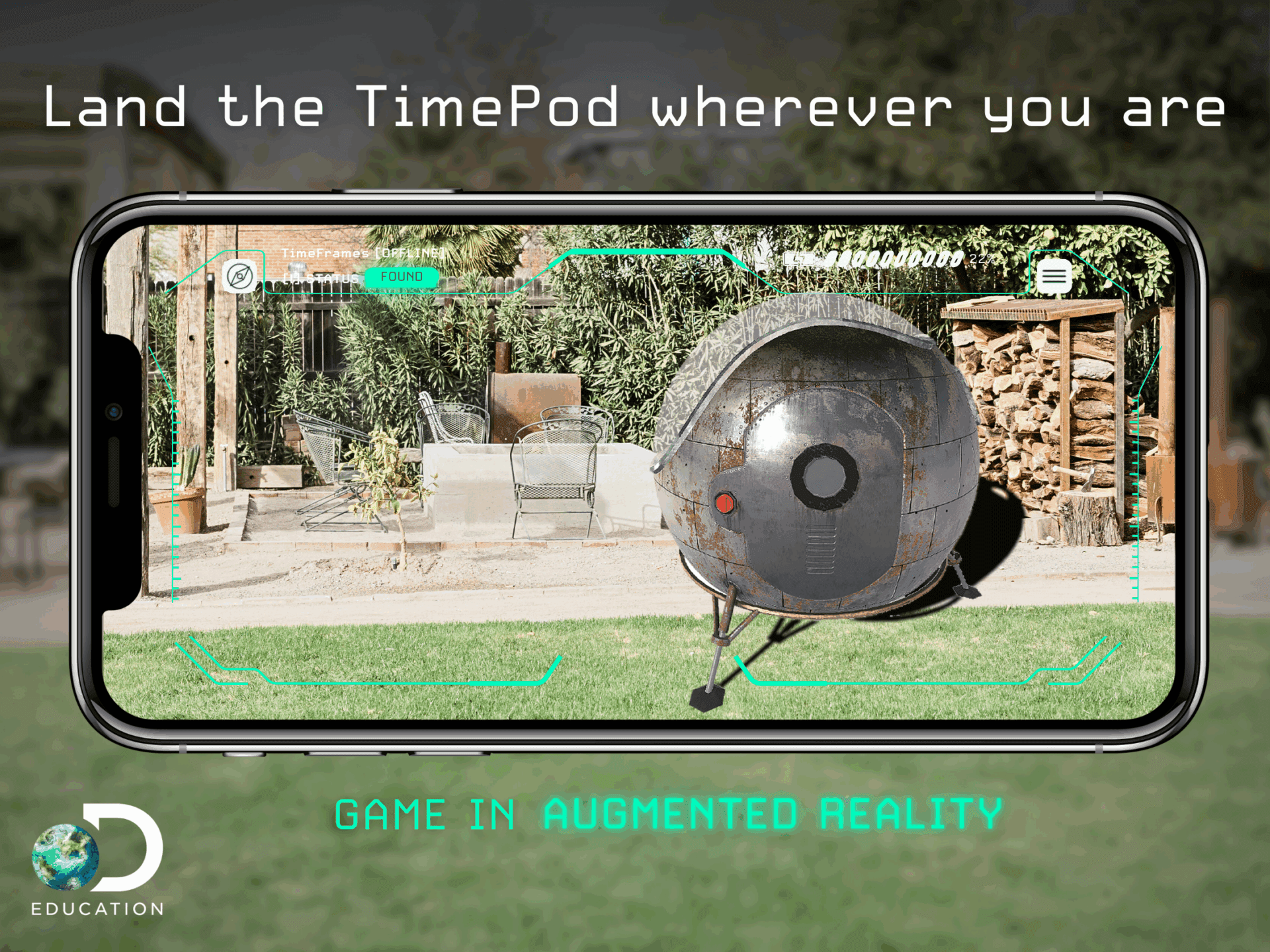
  • Try a pre-made Augmented Reality experience like TimePod Adventures.
de five ways blog 4

4. Gamification

This suggestion is a very simple one: make a game of it. Introduce a score, an element of competition, a prize or a level progression, and watch students return time and time again to better their score and firm up their knowledge. The emotions evoked through play are strong and memorable, and games of any type can promote a love of a subject that could last a lifetime. Try it:

  • Encourage (friendly) competition
  • Create a way for students to come back and do better
  • Add a time limit or a stopwatch
  • Add open-ended extensions for those who just can’t get enough
  • Create ‘levels’ that tie in even more instructional content
  • Get them creating their own games!

Gamification: Breaking Down the Buzzword >

5. Do It Yourself

Creating immersive experiences doesn’t always require elaborate setups or expensive tools. Often, the most impactful learning moments are those that are hands-on and directly involve the students in the process of discovery. By allowing students to actively engage in their own learning, you foster a deeper connection to the material and enhance their ability to retain knowledge. Here are some strategies you can employ to create powerful experiential learning opportunities:

  • Let students do it themselves. It might be daunting, but kinesthetic and tactile learners will benefit from being given the chance to dive in, even if you lose a little bit of structure in the process.
  • Promote active listening with challenges, or by putting the students in charge of the exercise with some clear scaffolding.
  • Use ready-made digital experiences such as 3D Virtual Field Trips.
  • Have fun!

Read about an example of experiential learning >

de five ways blog 3

A Word of Caution

By its nature, immersion can elicit emotional responses from students. Always be aware of the potential triggering effect of any of the above on specific students in your setting, and exercise due care and attention.

The post Five Ways to Create Immersion in the Classroom appeared first on Discovery Education.

]]>
de-five-ways-blog-1 de-five-ways-blog-2 de-five-ways-blog-4 de-five-ways-blog-3
Gamification in the Classroom: Learning through Play https://www.discoveryeducation.com/blog/teaching-and-learning/gamification-in-the-classroom-learning-through-play/ Fri, 04 Apr 2025 19:33:34 +0000 https://www.discoveryeducation.com/?post_type=blog&p=182583 It’s news to no one that kids like gaming. Say the word ‘game’ in an elementary school classroom and watch children’s ears collectively prick up, suddenly interested. Historically, games may have been reserved for the end of the school day or otherwise ‘bonus’ time. Nowadays, however, they are becoming a fundamental part of everyday instruction. […]

The post Gamification in the Classroom: Learning through Play appeared first on Discovery Education.

]]>

It’s news to no one that kids like gaming. Say the word ‘game’ in an elementary school classroom and watch children’s ears collectively prick up, suddenly interested.

Historically, games may have been reserved for the end of the school day or otherwise ‘bonus’ time. Nowadays, however, they are becoming a fundamental part of everyday instruction. Some educators of the past may have raised their eyebrows at such things, assuming that if children are playing games, then they are not working. But whoever said children only learn while they are working?

gamification tile jpg

Game-based learning, and gamification, are likely to be the next big growth area in education, gaining more and more formal acceptance as a learning strategy. We can expect to see more and more research appearing that explores how introducing game elements can improve results – but how does the working educator replicate these results in the classroom? The key is to understand why gamification is so effective, and how to implement it with purpose.

Whether you’re already tired of hearing the word, or it’s still a bit of a mystery to you, it’s worth asking: what do we mean when we say ‘gamification’? Let’s break down this buzzword to find out why it’s creating so much… well, ‘buzz’.

What is Gamification in Learning?

Gamification is the practice of strategically adding some game elements into a learning experience in order to boost motivation, create a heightened sense of achievement, encourage a growth mindset, and aid with knowledge retention. Through gamified experiences, students can become more receptive to learning.

In practice, this might look like:

  • Introducing a point-scoring system to encourage self-improvement
  • Using dice to generate a random number or decide the order of activities
  • Promoting healthy competition using teams or a leaderboard to elevate performance
  • Setting a time limit to boost focus
  • Creating a compelling storyline to tie learning points together
  • Promoting active listening with a bingo sheet of key vocabulary
  • Inventing incentives such as badges, medals and new challenges to unlock
  • Giving instant feedback to allow students to track their own progress

Note that you can achieve gamification in the classroom without playing a full-blown game – and you’ve likely done it before without realizing. If you’ve ever used a countdown timer to help students clean up the classroom quickly or allowed students to score points for good behavior leading to a reward, then you’ve employed gamification techniques.

Why Is Gamification So Big in Education Right Now?

According to student trends research, the number of 2-15 year olds playing games on smartphones has jumped up 93% since October 2020 [Dubit Limited, 2023]. Children are attracted to games when they are outside of school, and this means that when familiar game elements are brought into the classroom, students respond to them automatically in the same focused and motivated way.

Gamified learning can impact outcomes for many reasons, but some of the most popular are:

According to the 2021-22 Speak Up Research Project, 50% of students say they are not engaged in what they are learning in school most of the time. Above all else, teachers believe that students lack intrinsic motivation [2023 Gradient Learning Poll].

While traditional methods may rely on the students’ intrinsic motivation to read or concentrate, gamification elements provide external motivations such as competition and rewards, and foster intrinsic motivation through a sense of continuous achievement.

Multiplayer elements, shared challenges and healthy competition make for a more collaborative learning environment.

Students’ individual journeys through gamified elements are unique and create an emotional investment, compared with traditional ‘one size fits all’ teaching methods.

Traditionally periodic and separated from the main experience, assessment can instead be integrated into the learning journey continuously and activities provide on-the-spot feedback.

Gamification strategies are growing across many disciplines and industries, from fitness programs and military recruitment to combatting disinformation. Gamification can be achieved with little or no technology, but is an art which requires careful planning. If educators can embrace it and embed it into their instruction, it has the potential to transform students’ attitudes to learning.

The post Gamification in the Classroom: Learning through Play appeared first on Discovery Education.

]]>
gamification-tile.jpg Atom ColorBlock Bumblebee jpg Screenshot 2024 06 21 at 1 24 53 PM png Screenshot 2024 06 21 at 1 24 06 PM png Screenshot 2024 06 21 at 1 25 37 PM png
Unlock Student Curiosity with Immersive Storytelling https://www.discoveryeducation.com/blog/teaching-and-learning/fuel-curiosity-with-immersive-storytelling/ Fri, 04 Apr 2025 19:33:33 +0000 https://www.discoveryeducation.com/?post_type=blog&p=182500 Immersive moments have been happening in classrooms for many years. As new technology comes along, we can easily forget that immersion can be achieved with something as simple as a good story. Let’s consider the profound impact that traditional storytelling can have on students. Storytelling has been used for millennia to ensure that knowledge and […]

The post Unlock Student Curiosity with Immersive Storytelling appeared first on Discovery Education.

]]>
Immersive moments have been happening in classrooms for many years. As new technology comes along, we can easily forget that immersion can be achieved with something as simple as a good story. Let’s consider the profound impact that traditional storytelling can have on students.

Storytelling has been used for millennia to ensure that knowledge and wisdom are passed between people and last eternally. As a teaching method, storytelling captures the imagination, fosters deep understanding, and creates memorable connections to what is being taught. It provides prompts, grounded in context, and an inviting space for students to act on their natural curiosity. This, along with some of the benefits we’ll see below, is what makes storytelling such an important tool for classroom instruction.
2 TimePod Adventures 1

How Learning Theories Support the Use of Storytelling

de icon box filled png

Constructivist Learning

This theory claims that learners construct knowledge through experiences and reflections. Stories provide experiences that students feel like they have had and provide a framework for students to make connections and reflect on new information.

de icon brain filled png

Cognitive Load Theory

This theory suggests that storytelling can help manage cognitive load by organizing information into a coherent structure, making it easier for students to process and remember.

de icon hand plant filled png

Social Learning Theory

According to Social Learning Theory, students learn by observing and emulating others’ behaviors and decisions. Narratives in stories often include social contexts and interactions that students can observe and analyze.

de icon gradcap filled png

Emotional Engagement

Emotions play a critical role in memory retention and learning motivation. When students are emotionally engaged, they are more likely to invest effort and curiosity in the subject matter. Stories, as we all know, have the power to evoke powerful emotions and leave lasting impressions on us all. 

5 Benefits of Storytelling in the Classroom

1. Contextual Learning:

Stories provide a context that makes abstract concepts more tangible and understandable. They help students see the relevance of what they are learning in the real world, further fueling their curiosity about how things work. 

2. Enhanced Memory:

The structure and emotional engagement of stories make information easier to remember. Students are more likely to recall facts and concepts presented within a narrative. 

3. Active Listening:

Storytelling promotes active listening, a crucial skill for academic success and interpersonal communication. 

4. Critical Thinking:

Analyzing stories helps develop critical thinking skills as students consider characters’ motivations, plot developments, and underlying themes. 

5. Cultural Awareness:

Stories from diverse cultures broaden students’ perspectives, spark their curiosity, and foster appreciation for different viewpoints.  

So, whether it’s a short tale to cover in a single session, or a premise to base your entire unit of study on, I encourage you to find a narrative linked to your learning material. Don’t get hung up on how perfectly the story covers your objectives – just find something that will open students’ hearts and minds to the world inside the narrative. You’ll be amazed at the connections they’ll make between the story and the rest of your lessons. Embrace the power of narrative and watch your students’ curiosity and understanding flourish

A Word of Caution

By its nature, immersion can elicit emotional responses from students. Always be aware of the potential triggering effect of any of the above on specific students in your setting, and exercise due care and attention. 

The post Unlock Student Curiosity with Immersive Storytelling appeared first on Discovery Education.

]]>
2–TimePod-Adventures-1 de-icon-box-filled.png de-icon-brain-filled.png de-icon-hand-plant-filled.png de-icon-gradcap-filled.png